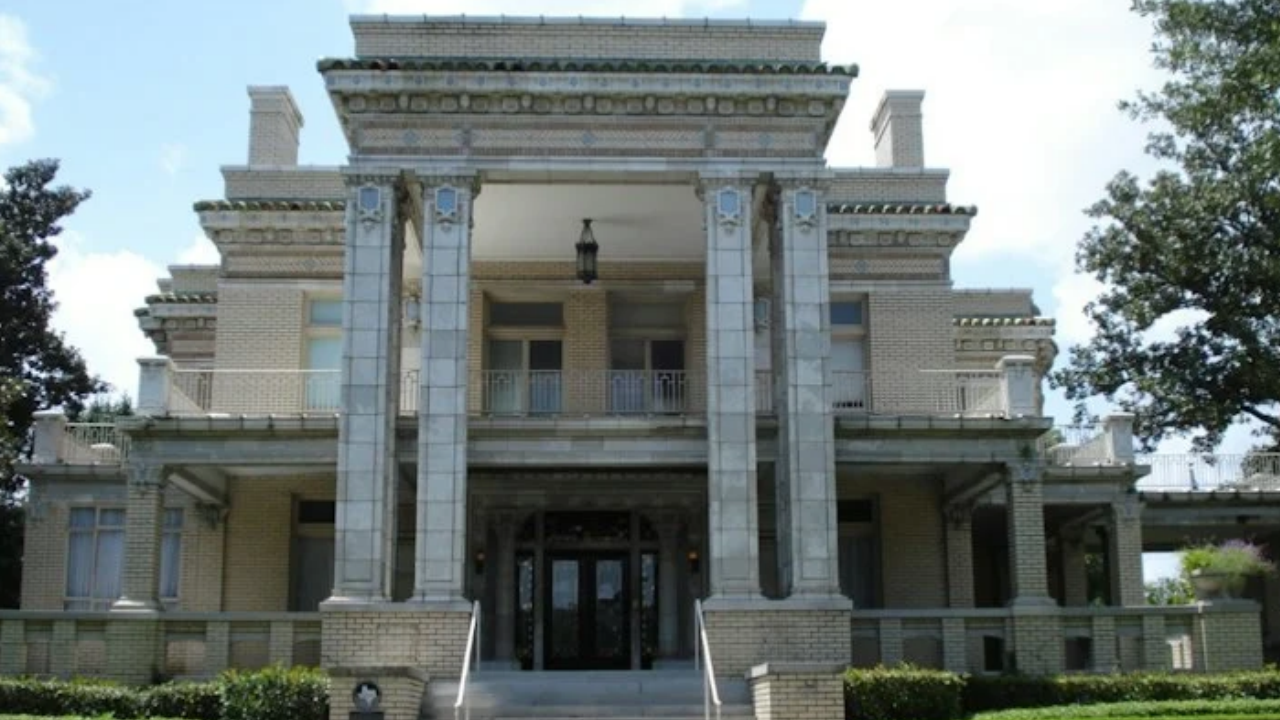
Owning a piece of early twentieth-century architecture isn't just about square footage. It's about preserving a fragile physical link to the past that modern suburban developments simply can't manufacture. When a historic property like the Cleveland mansion on Houston's Courtlandt Place pops up for sale at $3.995 million, it forces real estate watchers to look past the fresh paint and examine how century-old luxury actually holds up in today's market.
Built back in 1911 for Alexander Sessums Cleveland—better known as Sess Cleveland, whose family dominated Texas wholesale groceries and cotton brokerage—this 5,700-square-foot residence has only changed hands a few times. Most recently, it sold in 2015 after sitting on the market with a $2.35 million asking price. Now, a little over a decade later, the price tag has jumped by roughly 70 percent. That kind of appreciation sparks immediate debate among buyers trying to figure out if historic preservation is a smart financial move or an expensive labor of love.
The Architecture And The Pedigree
You don't get a pedigree like this by accident. The original plans came from Sanguinet and Staats, a powerhouse architectural firm that stamped its signature aesthetic across Texas during the boom years. But the property's evolution didn't stop there. In the 1920s, renowned Houston architect John F. Staub stepped in to redesign elements of the house. Staub's name carries serious weight in Texas real estate, especially in wealthy enclaves like River Oaks, where his residential designs set the gold standard for southern elegance.
Living in a home shaped by Staub means dealing with architectural details you rarely see in modern builds. The interior still boasts original hardwood and parquet floors, heavy plaster walls, and traditional millwork that took craftsmen months to carve by hand. The formal living room leans into old-world drama with rich wood paneling and black marble detailing, while the dining room features a rugged Texas limestone hearth designed to anchor cold winter evenings.
The Cleveland family stayed in the house for about six decades. That kind of long-term continuity is rare. It means the property escaped the careless cosmetic flips that ruin so many historic homes during successive ownership changes.
Balancing Heritage With Modern Living
Let's be honest. Nobody actually wants to live in a dark, drafty museum. Historic homes only survive if they adapt to how people live right now. The current owners walked that fine line carefully during their tenure.
While the historic library and original service staircase remain untouched, other spaces got the twenty-first-century treatment. The kitchen and butler's pantry now feature sleek quartzite countertops, custom cabinetry, and heavy-duty Wolf and Sub-Zero appliances. Bathrooms got modern fixtures and custom closets without wiping out the home's structural character. Outside, the landscaped grounds feature an outdoor entertaining area and a fireplace, alongside a four-car garage complete with a separate garage apartment.
That combination of preserved heritage and high-end upgrades explains part of the hefty asking price. You aren't just paying for wood and brick. You're paying to avoid the five-year headache of a historically sensitive renovation project.
Inside Courtlandt Place
Location is everything, and Courtlandt Place isn't just any street. Planned back in 1906 and starting construction in 1909, this private gated enclave near Westheimer Road and Bagby Street was designed from day one to house Houston's economic royalty. Architects like Birdsall Briscoe and Alfred C. Finn filled the neighbourhood with sprawling estates that reflected booming early-century fortunes.
The street earned a spot on the National Register of Historic Places in 1980, protecting its distinctive streetscape from the relentless sprawl of the surrounding urban grid. Buyers in this pocket aren't looking for a quick flip. They want exclusivity, privacy, and a front-row seat to Houston's architectural heritage. Market activity backs this up. High-end transactions in the enclave continue to command serious numbers, evidenced by nearby 15 Courtlandt Place listing for $4.6 million.
Is The Price Tag Justified?
Jumping from a $2.35 million list price in 2015 to nearly $4 million today sounds steep. Critics will point out that historic homes come with massive insurance costs, high property taxes, and endless maintenance bills that can drain a bank account faster than a leaky roof during a Texas thunderstorm.
Yet, unique assets defy standard real estate math. You cannot build a 1911 Sanguinet and Staats-designed mansion with John F. Staub modifications in a historic gated enclave anywhere else. For the right buyer, paying four million dollars isn't an overpayment. It's the cost of admission for a permanent piece of Houston history.


