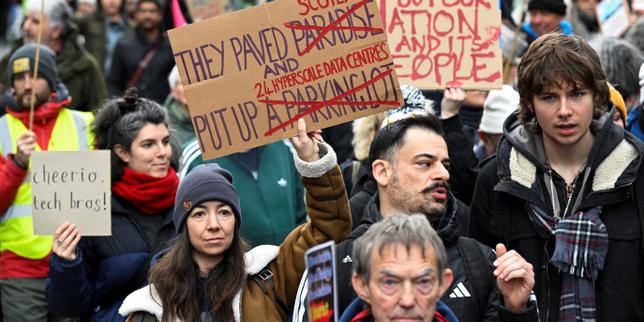
Voters don't care about silicon chips or neural networks until a data center sucks dry their local water supply or an unvetted algorithm costs them a job. Political parties know this, and the battle for the future of artificial intelligence policy ahead of the 2028 presidential race is already heating up.
Democratic strategists are betting big that they can own the safety and regulation narrative. A political group named Together Tomorrow launched a $1.1 million initiative focused entirely on researching public sentiment regarding artificial intelligence and shaping how candidates talk about it. They want to ensure tech policy isn't written by Silicon Valley executives behind closed doors.
The Shift in Political Trust
At the start of recent electoral cycles, technology policy felt like a neutral playing field. Voters weren't sure which political faction had their backs when it came to automation, data privacy, and the massive energy demands of server farms.
That ambiguity is fading fast. Democratic leaders like Rob Flaherty and Karthik Ganapathy argue that contrasting stances have given their party a clear opening. While some conservative figures lean heavily into an unfiltered, pro-industry deregulation stance, public anxiety around job displacement and unregulated tech giants continues to grow.
Voters across party lines actually support sensible guardrails. When local communities face massive power grid strains or environmental pushback from nearby data center construction, abstract tech optimism crashes into everyday reality. Regulating technology has quietly transformed from a niche nerd topic into a winning populist message.
What the Data Center Backlash Means for 2028
You can't talk about artificial intelligence policy without talking about physical infrastructure. Training massive models requires enormous amounts of electricity and water. Communities in Pennsylvania, Virginia, and across the country are pushing back against the sudden proliferation of power-hungry server warehouses in their backyards.
Political groups are taking notice. Organizations spent millions during the midterms backing candidates who demanded tighter oversight on data centers and carbon footprints. This infrastructure crunch bridges the gap between high-tech policy and kitchen-table politics. When someone's electricity bill spikes because a new server farm opened down the street, tech policy becomes personal.
The Risk of Moving Too Slow
Technology moves at a blistering pace, whereas government moves at a crawl. Leaders pushing for regulation face a massive hurdle: preventing incidents before they cause systemic damage. Program chiefs like Maddie Kriger have pointed out that severe artificial intelligence mishaps—ranging from automated financial fraud to critical infrastructure failures—are entirely possible in the coming years.
If lawmakers wait until a major disaster unfolds before acting, they've already failed. The objective of current policy pushes is proactive positioning. By framing tech accountability as a consumer protection issue, parties hope to build a durable coalition that resonates through 2028.
Watch how candidates handle local infrastructure grievances over the next twenty-four months. The path to the White House won't just run through traditional economic issues; it will be paved by who convinces voters they can manage the digital transition without breaking local communities.
NY lawmaker launches group to focus Democrats' messaging on AI
This short video clip provides helpful context on how state and national figures are aligning messaging strategies around artificial intelligence safety.