You think you can hide from a crime forever, but the American justice system occasionally proves that it has an incredibly long memory.
A federal judge in Manhattan just handed down a massive 42-year prison sentence to Haji Najibullah, a 50-year-old former Taliban commander. His crimes date back nearly two decades. He orchestrated the brutal 2008 kidnapping of Pulitzer Prize-winning journalist David Rohde and ran a cell of insurgent fighters responsible for killing three American soldiers in Afghanistan. You might also find this connected story insightful: Why the Belfast Stabbing and Late Night Violence Mark a Broken Flashpoint in Northern Ireland.
This case is a stark reminder that the fallout from the war in Afghanistan is still being settled in federal courtrooms today. It answers a fundamental question for anyone watching the legacy of the war: does the US ever stop hunting those who targeted its citizens? The answer is a definitive no. Acting Attorney General Todd Blanche made that clear after the sentencing, stating that anyone targeting Americans will be hunted down, no matter how long it takes.
But this wasn't just another routine, dry legal proceeding. It was a raw, deeply emotional day in court where a survivor confronted his captor face-to-face. As extensively documented in detailed reports by Reuters, the results are notable.
The Con that Led to a Seven Month Nightmare
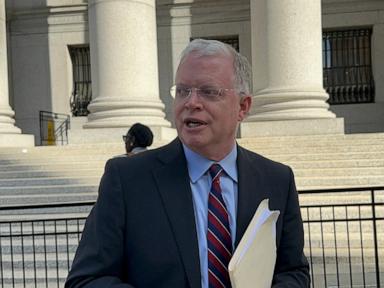
David Rohde, who now works as a national security reporter for MSNOW and previously wrote for The New York Times, stood just feet from Najibullah at a courtroom lectern. He laid out exactly how the commander used deception to lure him into a trap.
In 2008, Rohde was trying to do his job. He wanted to understand the Taliban's worldview, their hopes, and their lives. He thought he was walking into a legitimate interview with a local commander. It was all a con. Najibullah lied to him, turning a journalism opportunity into a terrifying ambush.
Najibullah and his crew took Rohde, another local journalist, and their driver hostage. They dragged them across the border into Pakistan's lawless tribal areas and held them inside a Taliban-controlled compound for more than seven months.
During that time, Najibullah forced the hostages to make agonizing ransom calls and produce proof-of-life videos. The goal was simple: terrorize their families to extort massive sums of cash and force the US government to release Taliban prisoners.
Rohde told the judge that hostage-taking is uniquely cruel and cowardly. It forces families to live under the illusion that they have the leverage to save their loved ones. In reality, they are completely powerless against the ransom demands of a terrorist network.
Rohde and his companions eventually pulled off a cinematic, high-stakes escape from the compound, but the trauma didn't end when they crossed back into safety.
A Bitter Confrontation in Manhattan Federal Court
Najibullah pleaded guilty in April 2025 to conspiracy to take hostages and providing material support for acts of terrorism resulting in death. Yet, during his sentencing, he tried to dodge the full weight of his choices.
Using an interpreter, Najibullah offered an apology. He said what happened to Rohde was terrible and that he deeply regretted his role. He tried to blame his actions on the chaotic circumstances of war and shifted the fault to others.
Rohde didn't buy it. He told U.S. District Judge Katherine Polk Failla that he was deeply disappointed by Najibullah's refusal to take real responsibility.
The defense tried to frame Najibullah as a patriot just doing what was necessary to protect his homeland. They begged for an 18-year sentence, arguing that six years of harsh pretrial detention—including during the height of the pandemic—was punishment enough.
Judge Failla rejected the defense's attempt to sanitize his record. She made it clear that the men under Najibullah's direct command weren't just fighting a clean war. They were operating a ruthless cell that targeted civilians and military convoys alike.
The True Cost of Najibullah's Campaign
While the kidnapping of a high-profile journalist drew global headlines, Rohde explicitly stated in court that his suffering was dwarfed by a much larger tragedy.
Najibullah provided the weapons and logistical support for a separate, coordinated attack on an American military convoy between 2007 and 2009. That specific ambush killed three U.S. servicemembers and their Afghan interpreter.
Rohde choked up as he read the names of those fallen soldiers out loud in the courtroom. He called his decision to arrange that fateful 2008 interview the biggest mistake of his life, stating he never would have gone through with it if he knew Najibullah had American blood on his hands.
Federal sentencing guidelines actually called for a mandatory life sentence for these crimes. Judge Failla ultimately stopped short of that, landing on 42 years followed by five years of supervised release. She gave him a slight break because his 2025 guilty plea spared the victims the trauma of a full trial, and because of his grueling years in lockup awaiting the final judgment.
At 50 years old, a 42-year sentence means Najibullah will likely spend the rest of his natural life behind bars.
What This Verdict Means Moving Forward
If you are following the intersection of national security, journalism, and international law, this case offers a couple of major takeaways that you can take to the bank.
First, it proves that the Department of Justice and the FBI's Joint Terrorism Task Force treat terrorism cases as open-ended files. They don't have an expiration date. If an insurgent commander harms an American citizen abroad, the US government will wait out decades, change administrations, and track suspects across borders until they are sitting in a US courtroom.
Second, it highlights the extreme danger independent journalists face when trying to cover conflict zones. Terrorist groups don't view reporters as neutral observers; they view them as high-value currency for political leverage and financial extortion.
For the families of the soldiers killed by Najibullah's men, the sentence doesn't undo the loss. But as federal officials noted after the court adjourned, it provides a rare, definitive moment of legal accountability for a war that many Americans have already moved on from.