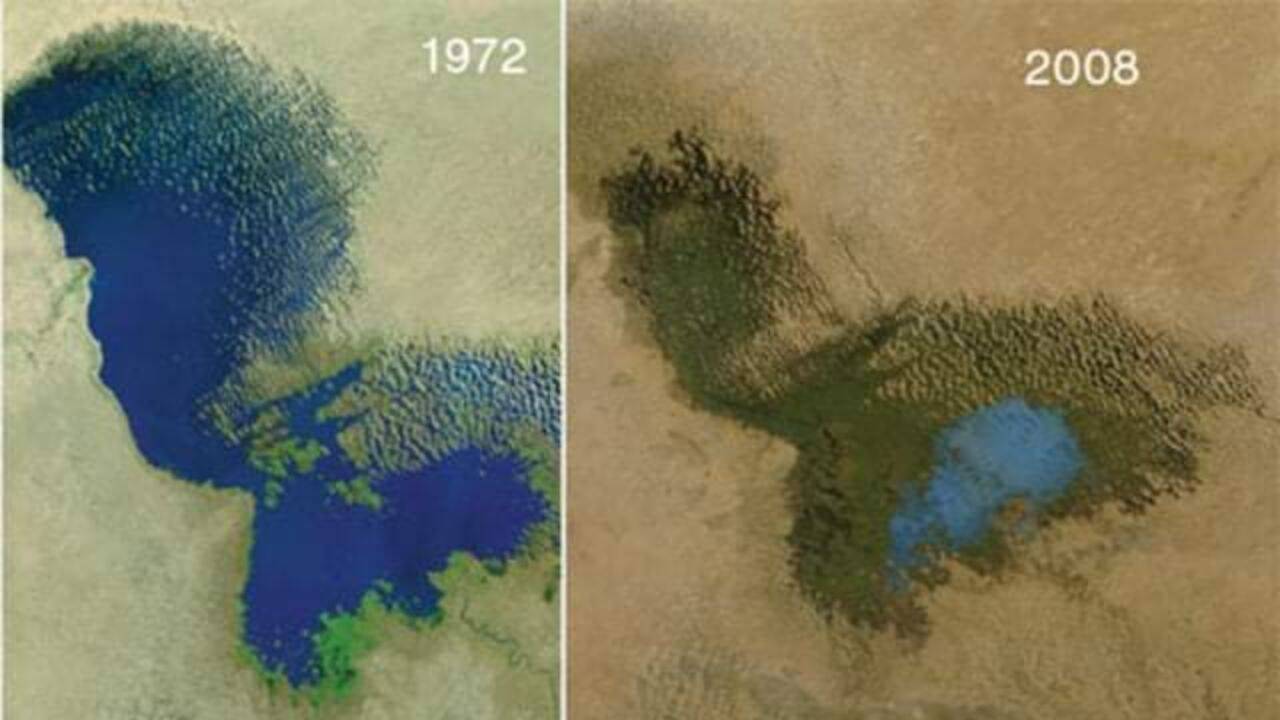
Lake Chad used to cover roughly 25,000 square kilometres. Today, it has shrunk by an astonishing 90 percent, leaving behind a shallow puddle of its former self. This ecological collapse threatens the daily survival of nearly 50 million people spread across Cameroon, Chad, Niger, and Nigeria. Governments aren't sitting around watching it dry up anymore. They are pushing a massive 50 billion dollar engineering gamble known as the Transaqua project to pipe water thousands of kilometres from the Congo River Basin.
If you want to understand modern hydro-politics, you need to look at how Africa plans to move an entire river across international borders. If you enjoyed this article, you might want to look at: this related article.
The Anatomy Of An Environmental Disaster
Why did Lake Chad vanish? Most casual observers blame climate change entirely, but the reality is messier. Rising temperatures and shifting rainfall patterns certainly sting, but human extraction does the real damage. Millions of farmers upstream pull water from the feeding rivers—chiefly the Chari and Logone—to grow crops in hyper-arid zones.
Population growth around the basin exploded over the last few decades. More mouths mean more irrigation, and more irrigation means less water reaches the lake. For another angle on this story, refer to the recent coverage from Associated Press.
When British explorers first documented the region in the 1820s, they found a sprawling inland sea. Right now, local fishermen haul nets over dry cracked clay where boat engines once roared. Fish stocks crashed. Fertile grazing lands turned to dust. When livelihoods evaporate, young men look for alternative survival, making the region a fertile recruiting ground for extremist groups like Boko Haram. The crisis isn't just about water. It's about regional security.
Enter Transaqua: Moving Water Across A Continent
First drawn up by Italian engineers at Bonifica Spa back in 1982, the Transaqua project sounds like science fiction. The blueprint calls for a 2,400-kilometre canal system. This massive channel would capture runoff water from tributaries in the Congo River Basin—one of the wettest regions on earth—and redirect it north toward the Chari River, eventually spilling into Lake Chad.
For decades, the idea sat on dusty shelves. It was too expensive, too complex, and politically impossible. Nations couldn't agree. Then the Lake Chad Basin Commission signed a memorandum of understanding with POWERCHINA, bringing the 50 billion dollar price tag into active political discussions.
Supporters claim the project will do more than just refill a puddle. They argue it will:
- Restore historical water levels across the entire basin
- Generate massive amounts of hydroelectric power
- Revive commercial agriculture and cattle ranching
- Build a trans-African transport and industrial corridor
The Fierce Debate Over River Diversion
Not everyone is popping champagne. Geopolitical tensions are already boiling under the surface. The Democratic Republic of Congo and other nations situated within the Congo River Basin are pushing back. They ask a blunt question: why should they hand over their water to fix an ecological crisis hundreds of miles north, especially when they face their own infrastructure and water deficits?
Environmental scientists also sound loud alarms. Diverting millions of cubic meters of water from a complex tropical ecosystem carries unknown risks. Messing with the hydrology of the Congo Basin could trigger unintended consequences for downstream ecosystems and local species.
Smaller steps are happening right now while the mega-project fights through feasibility studies. Institutions like the African Development Bank launched smaller technical assistance programs, such as PARFEBALT, to improve water tracking and governance. Recovery projects have already helped over a million residents adopt climate-resilient farming.
Fixing Lake Chad will take decades of tense negotiations, billions in foreign and domestic capital, and unprecedented African cooperation. Watch how leaders handle the Congo River negotiations over the next few years. That outcome decides whether Transaqua becomes reality or remains the ultimate unbuilt canal.