Disasters usually measure their tragedy in big numbers. Twelve hundred lives gone. Thousands missing. Entire towns turned to thick gray mud. But sometimes, an entire catastrophe gets filtered down to a single frame.
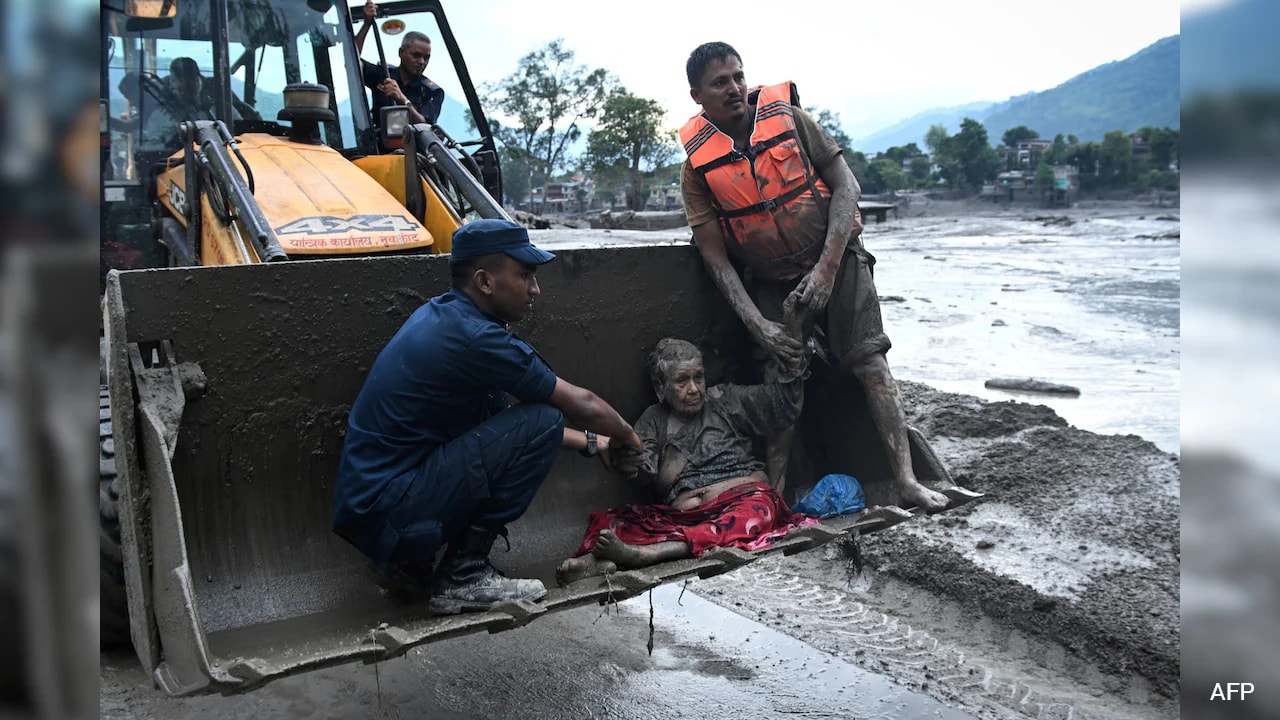
Think about the image of 91-year-old Guna Maya Bohara sitting inside the heavy steel bucket of a JCB excavator. Covered in silt, she became the accidental symbol of human endurance after catastrophic flash floods tore through Nepal. While headlines obsess over the staggering death tolls across the country and Tibet, her story cuts through the statistical noise. It is raw, terrifying, and remarkably stubborn. Meanwhile, you can find other stories here: Why Giorgia Meloni Breaking Italy Politics Record Changes Everything.
Let's look at what actually happened in Devighat, a riverside town in Nuwakot, and why this nonagenarian's survival defies simple logic.
The Morning the Mountain Broke Down
Disaster doesn't knock. It rushes in while you are eating breakfast. To understand the complete picture, check out the detailed report by NPR.
At the Senior Citizens Welfare Foundation in Devighat, residents were starting their day when the river broke its bounds. There was no polite warning. Just the terrifying sound of a roof shaking and tons of water moving downhill.
Seven senior citizens living at the care home never made it out. The ground floor vanished under rushing mud and debris. Guna Maya Bohara, wheelchair-bound or dealing with severe mobility issues in her legs, was trapped right in the path of the torrent.
She didn't run. She couldn't.
Instead, she fought back using the only square inch of space left. She opened her room's window and kept her head above the rising water line. For hours, she stood or balanced there while silt filled the room around her. When local volunteers finally reached the obliterated structure two or three hours later, they found a sea of mud with one face sticking out, still breathing.
From Mud to Kathmandu Shelters
Pulling someone out of a collapsed, flooded old age home is only step one.
After local volunteers extracted Bohara and her surviving peers, they were rushed to a local Ayurvedic hospital for initial treatment. From there, authorities flew the survivors to a temporary shelter in Kathmandu.
The immediate logistics of survival are brutal. When you uproot elderly people from a home they thought was their last, the emotional toll often matches the physical one. Volunteers in Kathmandu set up essential supplies, medical tests, nursing care, and basic clothing. Yet, the psychological weight remains heavy.
Survivors report missing seven of their closest friends who perished downstairs when the water hit. It is one thing to survive a flash flood. It is entirely another to sit in a dry room miles away and realize your daily companions are gone.
The Wider Crisis Behind the Headline
Guna Maya's story is incredible, but it sits inside a massive humanitarian breakdown.
The death toll from these flash floods in Nepal has climbed past 1,250, with thousands still unaccounted for. Rescue teams, including specialized foreign units and the Nepali army, are digging through ruined hydropower tunnels using heavy equipment. In neighboring regions, the missing count continues to tick upward.
Infrastructure failures are everywhere. Bridges are washed away, relying on temporary ziplines to keep isolated towns connected. Experts estimate that rebuilding parts of Nepal will cost billions, while international climate funds lag far behind actual needs.
When you strip away the politics and the funding debates, you are left with individuals. A 12-year-old boy waiting for parents who will never come home. A 91-year-old grandmother breathing through a window frame while mud fills her bedroom.
Guna Maya Bohara didn't ask to become a symbol. But her choice to keep her face above the water line tells you everything you need to know about human survival when the world literally caves in around you.
If you want to support relief efforts for the families and survivors affected by the floods in Nepal, look up verified local humanitarian organizations currently supplying food, medical aid, and temporary housing in Kathmandu and Nuwakot. Every bit of aid directly reaches people who lost everything overnight.