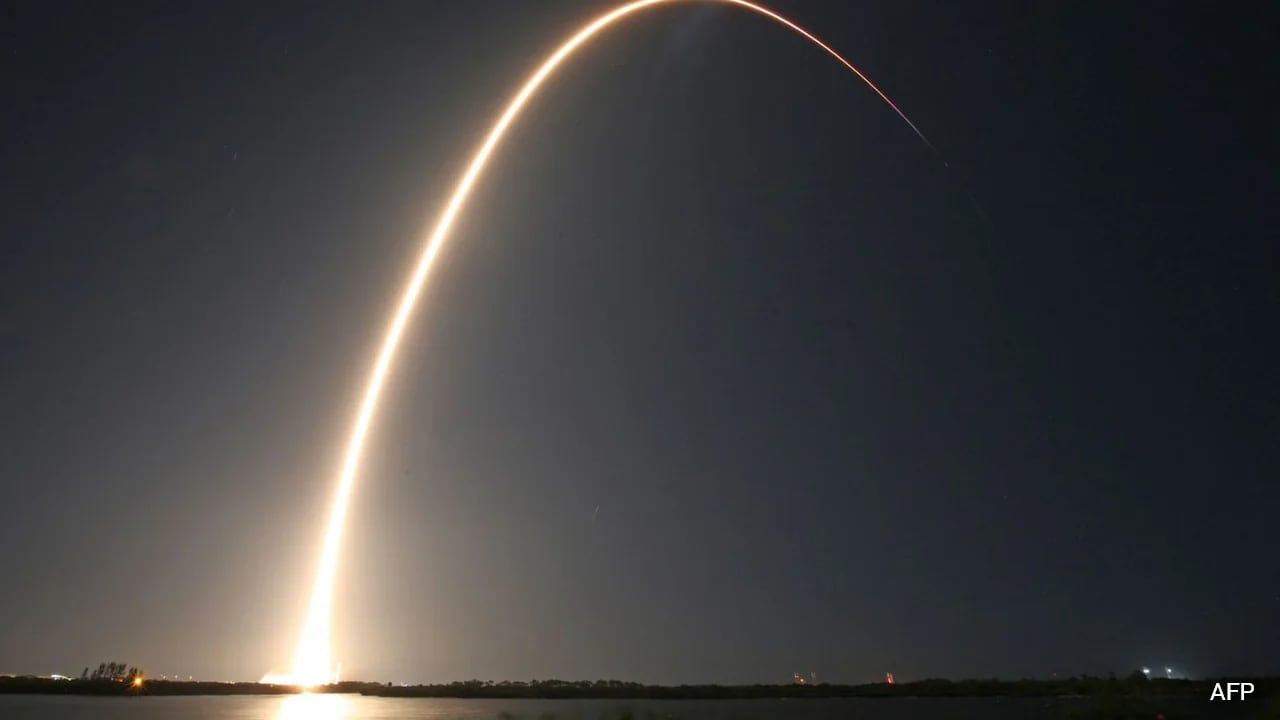
A four-tonne chunk of metal just smashed into the lunar surface at roughly 5,400 miles per hour.
It wasn't planned. It wasn't a controlled science experiment. It was a discarded Falcon 9 upper stage from a SpaceX launch back in January 2025 that spent more than a year drifting through deep space before gravity and solar radiation finally dragged it down. Expanding on this idea, you can also read: Why Nobel Laureate Daron Acemoglu Warns Ai Unemployment Could Triple.
Astronomer Bill Gray first flagged the impending collision, using custom tracking software to calculate that the dead booster would hit near the Einstein Crater on the Moon's western limb.
Space junk is getting out of hand. We are turning the space between Earth and the Moon into a cosmic junkyard, and this crash proves we need to pay attention. Experts at Ars Technica have also weighed in on this trend.
How a Rocket Stage Ends Up on the Moon
Normally, a Falcon 9 second stage finishes its job, deorbits, and burns up harmlessly in Earth's atmosphere or splashes down into an ocean. Deep-space missions change the math entirely.
When SpaceX launched a mission carrying commercial lunar landers in January 2025, the upper stage had to provide an immense amount of velocity to push those payloads toward the Moon. Once that fuel burned out, the leftover rocket body was left stranded in an eccentric, high-energy orbit.
It didn't have enough propellant left to steer itself, and it missed Earth's atmospheric drag during subsequent flybys. Over many months, gravitational nudges from the Earth-Moon system and pressure from solar radiation slowly altered its path.
Independent trackers realized months ago that this trajectory intersected directly with the lunar surface. NASA confirmed the impact poses zero threat to Earth, but it guarantees a brand-new scar on the Moon.
What Happens When Four Tonnes Hits the Regolith at 8,700 Kilometers Per Hour
Physics doesn't care about corporate logos or public relations. When an 8,800-pound cylinder of aluminum and steel impacts rock at seven times the speed of sound, things break violently.
Researchers like Benjamin Fernando from the Los Alamos National Laboratory estimated that the collision would carve out a crater roughly 20 to 30 meters wide and several meters deep. Because the Moon lacks an atmosphere or wind, the kinetic energy of the impact instantly vaporizes local material and flings a massive plume of dust and debris high into the thin lunar environment.
You won't see it with the naked eye from your backyard. The impact zone was heavily illuminated by the sun during the crash, making optical flashes nearly impossible to spot from Earth-based telescopes.
Instead, orbital assets like NASA's Lunar Reconnaissance Orbiter and South Korea's Danuri probe will have to do the detective work. By comparing high-resolution imagery taken before and after the event, scientists can map the exact shape of the new crater and figure out how high-velocity space debris alters the lunar regolith.
The Real Problem With Lunar Traffic
This is only the second time humanity has accidentally crashed a major piece of space hardware into the Moon. A rogue Chinese rocket stage hit the lunar far side back in 2022, leaving behind an unusual double crater.
Two impacts might not sound like a crisis. Consider the scale.
There are now roughly 3,000 human-made objects lingering in the space surrounding the Moon, adding up to nearly 190 total tonnes of material. As NASA and international space agencies push forward with the Artemis program to establish permanent human outposts on the lunar surface, that clutter becomes an active hazard.
Untracked or abandoned rocket bodies moving through cislunar space operate like high-speed bullets. If we don't change how rockets are disposed of after deep-space missions, future astronauts and lunar habitats will face unnecessary risks from stray industrial waste.
Space agencies need stricter orbital disposal protocols immediately. Letting dead boosters wander untracked until they hit something isn't a strategy, it's negligence.