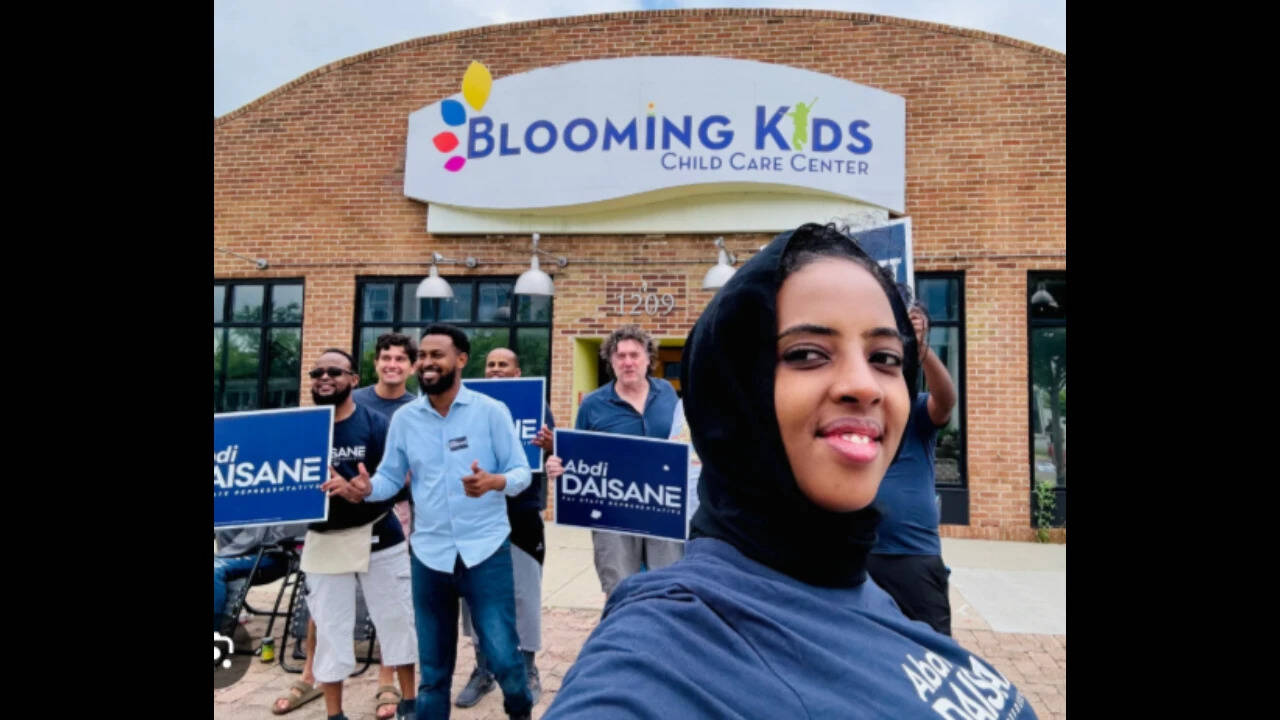
Politics is messy, but few stories capture the chaotic intersection of personal life, immigration policy, and public office quite like what's happening in Minnesota right now.
Abdi Daisane just made history. He flipped a decades-old Republican stronghold and won election to the Minnesota House representing District 14A, becoming the first Somali-born lawmaker to take that seat. But the celebration didn't last long. Barely had the dust settled on his victory when the Department of Homeland Security dropped a massive bombshell regarding his wife, Ayan Ahmed Aidid.
According to federal immigration officials, Aidid crossed the southern border on foot back in April 2023, entered the country illegally, and was subsequently released into the US by authorities. The revelation immediately sparked a firestorm, especially after resurfaced interviews showed Aidid openly discussing how she climbed a border fence to reunite with Daisane.
If you look past the standard political shouting match, this case exposes the deep complexities of how local political figures intersect with federal immigration enforcement. Daisane became a US citizen back in 2014, establishing his own legal path in America. Yet his wife's unorthodox entry has instantly turned him into a focal point for national debates over border security and vetting processes under past federal administrations.
The Border Crossing That Stays in the Spotlight
Most
What the Abdi Daisane Immigration Story Actually Means for Minnesota Politics
news
Political scandals rarely arrive quietly. They hit the news cycle with a loud bang, dividing communities before anyone even checks the paperwork.
When Abdi Daisane stepped into his role as a new lawmaker in Minnesota, he probably expected the usual baptism by fire involving budget debates or zoning laws. Instead, he found himself staring down a federal spotlight. The Department of Homeland Security flagged his wife's immigration status, pointing out that she entered the United States unlawfully in 2023. Public quotes from her saying she jumped a wall for love quickly spread across digital platforms, turning a local political victory into a massive national talking point.
People love a dramatic headline. Love, borders, and political ambition make for a potent mix. But if you strip away the social media outrage and look at what is actually happening, the situation reveals a lot about how immigration bureaucracy, local governance, and diaspora politics collide in America today.
The Reality of Diaspora Politics in Minnesota
Minnesota holds a unique place in the American political landscape. It is home to the largest Somali-American community in the country, primarily centered around Minneapolis and St. Paul. Over the past two decades, this community has transitioned from being newcomers to becoming a major voting bloc and a fixture in local government.
Abdi Daisane represents this generational shift. When someone from an immigrant background wins public office, they carry the hopes of their community. They also carry a target on their back. Every piece of personal history, family background, and legal technicality gets scrutinized in ways that traditional politicians rarely experience.
Immigration lines are long, messy, and often broken. Millions of families live with mixed legal statuses or deal with relatives caught in administrative purgatory. When a high-profile figure's family gets pulled into these disputes, it sparks intense debate. Critics point to the rule of law. Supporters point to a broken system that forces people into desperate measures just to stay together.
How DHS Scrutiny Changes the Game
Government agencies do not operate in a vacuum. When the Department of Homeland Security makes statements regarding the family members of elected officials, it changes the political calculus overnight.
Local politics is supposed to be about fixing potholes, funding schools, and managing community resources. Yet, national immigration policy constantly bleeds into local races. Lawmakers find themselves forced to answer for federal policies they did not write and cannot change.
The revelation about Daisane's wife throws open a window into a common struggle. People cross borders for all sorts of reasons, but family reunification remains one of the strongest human motivations. Acknowledging that reality does not solve the legal debate, but it explains why these stories resonate so deeply with ordinary people on both sides of the aisle.
Moving Past the Headlines
If you want to understand why this story matters, stop looking at the partisan shouting matches. Look at the friction points.
First, local representation is expanding into communities that have direct, personal experiences with global migration. Second, federal enforcement agencies hold massive leverage over public figures simply by releasing file details to the media. Third, public opinion remains deeply split on how to balance strict border enforcement with human empathy.
Daisane's tenure as a lawmaker will now be defined as much by how he navigates this personal storm as by any legislation he introduces. Politics is brutal, and for immigrant politicians, the test is often twice as hard.
Keep your eye on how local constituents react. In places like Minnesota, community loyalty often runs deeper than national talking points. Daisane's supporters aren't looking at this through the lens of cable news; they are looking at it through the lens of lived experience.
The noise will fade, but the structural questions about immigration, family, and public office are here to stay.