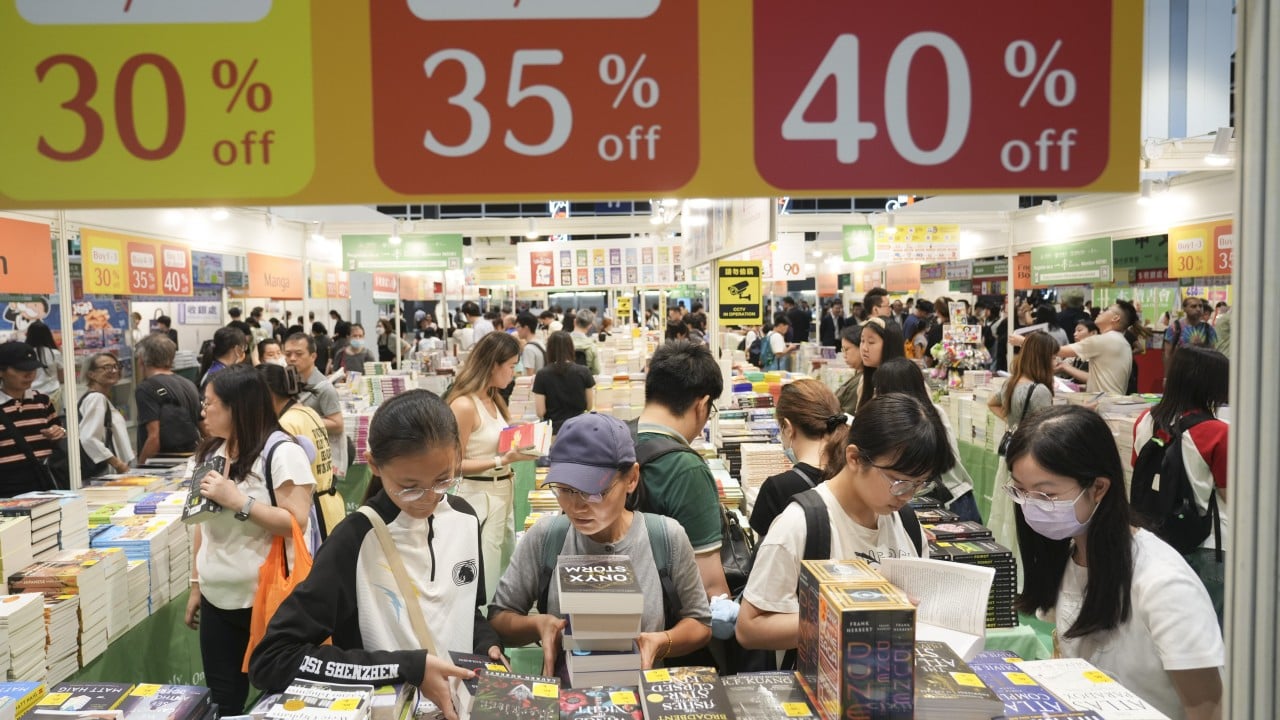
Walk into the Hong Kong Convention and Exhibition Centre during the middle of July and you're usually met with a wall of noise, crushing crowds, and suitcases on wheels banging against your shins. It's the annual Hong Kong Book Fair, a massive summer tradition that draws hundreds of thousands of people. But let's be totally honest about the experience. Searching for a truly life-changing book in that massive sea of discounted exercise books and mainstream bestsellers is like searching for a needle in a typhoon. Most people leave with identical piles of the same hyped-up titles, completely missing out on lesser-known literary gems.
The upcoming 36th Hong Kong Book Fair, running from July 15 to 21, wants to change that. The organizers at the Hong Kong Trade Development Council (HKTDC) just announced their plan to use artificial intelligence to solve the age-old problem of book fair overwhelm. This year's theme focuses on cultural legacy and joyful journeys. Instead of just stacking books high and hoping for the best, the fair is introducing smart interactive tech to help you actually find words that match your specific personality.
It is a necessary shift. Book fairs have historically relied on physical layout and sheer luck. This new approach might alter how you navigate literature entirely.
The Chaos of Choice at the Wan Chai Exhibition Halls
The numbers behind the event are staggering. We are talking about over 770 exhibitors from nearly 30 countries and regions crammed into one venue. Last year alone, the fair brought in roughly 890,000 visitors. When you drop that many people into a space with hundreds of thousands of titles, choice paralysis sets in almost instantly.
Human brains aren't built to process that much literary data under pressure. You get distracted by the loudest marketing displays or the deepest discounts. The quiet, profound indie novels from local writers or niche travel memoirs from international authors get completely buried.
Traditional category signs like "Fiction" or "History" don't help much either. They are too broad. They assume everyone reading a history book wants the same thing. They ignore the subtle moods, specific historical eras, or writing styles that actually make a reader fall in love with a page.
How the Fair Is Using Algorithmic Discovery
The main playground for this new tech experiment is the World of Art and Culture zone. Inside, the HKTDC is setting up a special exhibition called World in Words, A Voyage of the Heart. This space splits its focus between a Local Eye and a Global Eye, trying to connect home-grown Hong Kong narratives with global literature.
They built six distinct interactive stations driven by recommendation engines. You don't just type in a keyword or scroll through a digital catalog. The system looks at your personal preferences, your current reading mood, and even your travel aspirations.
It analyzes these data points to hand you custom book suggestions alongside tailored travel itineraries. If you love stories about historical architecture, the system won't just point you toward a textbook on the theme. It will connect a local narrative about old Hong Kong buildings with international travel writing, then sketch out a physical path for you to explore.
This is smart because it treats reading as an active experience. It breaks the old habit of treating books as static objects sitting on a shelf.
Balancing Smart Tech With Cultural Legacy
Some purists might worry that relying on algorithms ruins the romance of stumbling upon a random book by accident. That is a fair critique. If an algorithm only feeds you what it thinks you already like, you end up in a cultural echo chamber.
The organizers seem aware of this trap. They are using the tech as a bridge rather than a replacement for human curation. The fair still features a massive lineup of live human thinkers. Heavyweight Chinese-language authors like Liu Zhenyun and Su Tong are flying in to speak. Award-winning British poets and top Southeast Asian writers from the new ASEAN Literary Festival will be sharing physical stages.
The algorithms are meant to guide your footsteps through the physical halls so you don't waste three hours wandering down the wrong aisle. They act like a knowledgeable friend who knows every single booth by heart and points you toward something unexpected.
The Impact on Local and Independent Publishing
This shift could be a massive win for smaller local publishers. Independent presses in Hong Kong operate on razor-thin margins. They can rarely afford the premier, front-row booths near the main entrances. They get pushed to the back corners where foot traffic thins out.
Smart recommendation tools don't care about booth rental prices. They only care about content alignment. If a reader expresses a deep interest in a niche topic, the system can point them directly to an independent publisher stall on the third floor that they never would have found on their own. It levels the playing field in a way that physical marketing never could.
Actionable Next Steps for Navigating the Fair
If you are planning to hit the Wan Chai halls this July, don't just dive blindly into the crowds. Use a strategic approach to get the most out of the new tech options.
- Head to the Culture Zone First: Start your visit at the World of Art and Culture zone before your energy drops. Use the interactive setups early to generate your personalized reading and booth list.
- Take Advantage of Re-entry Rules: The fair is keeping adult tickets at an accessible HK$30, and they offer special free re-entry slots for later evening sessions if you buy tickets for the opening days. Use your first entry to scan the tech recommendations and your second entry to make your final purchases when crowds thin out.
- Look Past the Top Bestsellers: When interacting with the digital stations, give specific, honest inputs about your weirdest interests. The more precise your data, the better the system will perform at digging up hidden titles.
Relying on old-school browsing in a venue hosting nearly a million people is a recipe for exhaustion. Letting data handle the heavy lifting of discovery lets you focus on the actual joy of the text.