Drones are back in the Golden State, whether local airspace watchdogs like it or not. Amazon is officially restarting its Prime Air drone delivery operations in California, picking Tracy as its brand-new testing ground after hitting the abort button on its previous Lockeford site back in April 2024. If you thought aerial e-commerce was a dead fad, think again.
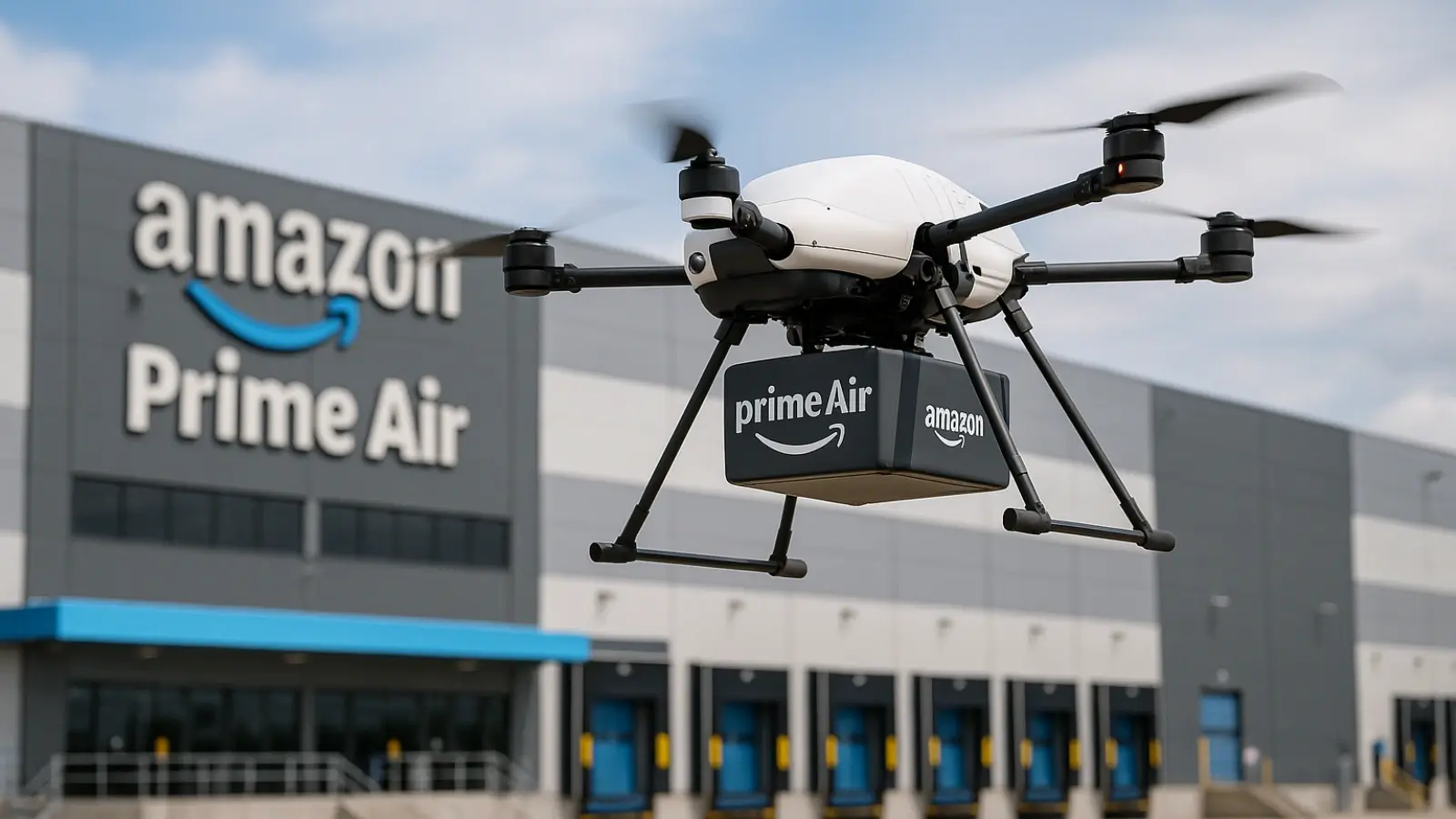
The retail giant announced that flights from its Tracy distribution center will launch within a month. This isn't a tiny, hand-scouted rural backyard experiment anymore. Tracy sits in San Joaquin County, roughly 35 miles southwest of Lockeford, and the new model launches autonomous MK30 drones directly from an existing, high-volume fulfillment facility.
What the New Tracy Drone Hub Looks Like
If you live within a 7.5-mile radius of the Tracy facility, you are sitting right inside a 175-square-mile aerial delivery zone. The mechanics are straightforward, but the operational scale is changing fast.
Eligible customers can order items weighing up to 5 pounds. That covers millions of everyday essentials, from phone chargers and makeup to urgent prescriptions. Prime members get free drone delivery on orders over $50, while smaller orders cost $2.99. Non-members will pay $4.99 per drop. Most packages are slated to hit front yards in about 60 minutes, with some blazing-fast routes clocking in under 30 minutes.
Erik Robertson, Prime Air's regional operations manager for the West, laid out the stakes in a recent interview, emphasizing that every flight relies on FAA-authorized Part 135 air carrier rules. On-site flight monitors keep eyes on the sky to coordinate with local air traffic.
Why Amazon Fled Lockeford and Why Tracy is Different
Let's be honest about the past. Lockeford was a rocky start. The rural setup relied on custom-built backyard pads and tedious manual scoping. It felt more like a clunky PR stunt than a scalable supply chain solution.
Tracy changes the logistical blueprint. By embedding drone dispatch directly into an active, sprawling distribution center, Amazon skips the clunky middle steps. It turns an industrial fulfillment floor straight into an airstrip. Prime Air is pushing to scale its nationwide footprint to nearly 500 cities and towns by the end of 2026. Ironically, California was missing from the initial master list of cities published during that nationwide rollout announcement, making this Tracy launch a sudden pivot back into a market the company briefly abandoned.
The Real Challenges Facing Prime Air
Tech demos look great on YouTube, but reality is messy. Critics and residents have legitimate concerns about noise pollution, privacy, and aviation safety.
Prime Air has not escaped turbulence. Recent mishaps, including an MK30 dropping a package into a Texas swimming pool and past FAA scrutiny over incidents in Arizona and Texas, prove that autonomous flight is far from foolproof. Wind shears, backyard pets, power lines, and unexpected obstacles can turn a routine drop into a neighborhood headache.
If you live in the Tracy drop zone, you will likely see these electric aircraft buzzing overhead between 250 and 400 feet. Amazon is betting that consumer addiction to speed will outweigh the noise complaints.
Keep an eye on your local airspace. The corporate race to automate the last mile isn't slowing down, and California is officially back in the flight path.