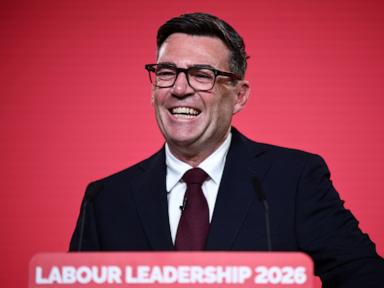
Keir Starmer is out, and Andy Burnham is officially in. After a swift and brutal internal rebellion, Andy Burnham is declared leader of UK's Labour Party, clearing the final runway to become Britain's 59th prime minister on Monday.
The announcement at the Trades Union Congress headquarters in London wasn't a surprise. It was a done deal. Burnham secured a crushing 379 nominations out of 403 Labour lawmakers, leaving absolutely no room for a challenger. He ran completely unopposed.
If you think this is just another standard changing of the guard in Westminster, you're missing the bigger picture. This shift represents a fundamental rewriting of how the British government operates. For the last two years, Starmer's administration staggered through unforced errors, policy flip-flops, and a collapse in public trust that saw the party tanking in local elections and bleeding support to Reform UK. Burnham isn't just inheriting a government. He's inheriting a rescue mission.
Voters are exhausted by the endless political churn. Burnham knows it. His acceptance speech bypassed the usual stage-managed platitudes, promising instead to bring "hope in every heart" and "good growth in every post code". It sounds great on television, but the reality hitting his desk next week is incredibly grim.
The Brutal Fall of Keir Starmer
You can't understand Burnham's sudden ascension without looking at the wreckage of the previous two years. Labour won a massive landslide victory in 2024, yet managed to squander that historic mandate at record speed. Starmer's rigid, legalistic style failed to connect with a public facing a brutal cost-of-living squeeze.
The turning point arrived in May 2026. The local election results were nothing short of catastrophic for the governing party. Panic spread through the backbenches. Lawmakers realized that if they stayed on this trajectory, they'd face total annihilation at the next general election. The internal party rebellion wasn't a quiet affair; it was a fast, coordinated strike that left Starmer with no choice but to announce his exit.
Starmer will walk down to Buckingham Palace on Monday morning to formally tender his resignation to King Charles III. Shortly after, the King will invite Burnham to form a new government. The transition is clean on paper, but the internal scars within the party run deep.
Decoding Manchesterism and the Northern Shift
For nearly a decade, Burnham has been operating outside the Westminster bubble as the Mayor of Greater Manchester. That distance is his single greatest political asset. He built a reputation as the "King in the North," frequently clashing with both Conservative and Labour leadership in London to defend local interests.
His political ideology is frequently labeled "Manchesterism". It's a blend of soft-left socialism, heavy focus on public infrastructure, and an unshakeable belief that Whitehall shouldn't run the country. He wants to dismantle the hyper-centralized nature of British governance.
In his speech, Burnham made his core thesis clear. He intends to strip power away from London and hand it directly to towns, cities, and regions. We're talking about giving local leaders direct control over life's essentials: transit networks, housing strategies, and regional development funds.
This isn't just about regional pride. It's an economic strategy. Burnham argues that the British economy has remained sluggish because it relies almost entirely on the financial engine of London while starving the rest of the country. By spreading growth across every single postcode, he wants to build economic resilience from the ground up.
The Crushing To-Do List at 10 Downing Street
The honeymoon period for this new administration will last about five minutes. When Burnham enters Number 10 on Monday, he faces a mountain of structural crises that have defeated multiple previous leaders.
Fixing the Social Care Nightmare
Britain has an aging population, and the system designed to look after them is utterly broken. Previous Conservative and Labour governments avoided the issue because fixing it requires serious capital and political risk. Burnham has pledged to spend his political capital immediately on a comprehensive plan to repair social care. He points out that every year politicians drag their feet, thousands of vulnerable people fall through the cracks.
The Housing Shortage
You can't build a stable society when an entire generation is locked out of homeownership and crushed by skyrocketing rents. Burnham's stated fix leans heavily on a new generation of council and social housing. He wants to roll back decades of housing policy that prioritized speculative developers over actual communities.
Public Ownership of Utilities
Expect a radical departure from the pro-market consensus of the last few decades. Burnham has explicitly signaled a desire to move public utilities back into public hands. This means reversing aspects of 1980s Thatcherism that privatized essential services. It's a move that will delight the party's left wing but will trigger massive resistance from corporate interests and the right-wing press.
Fighting the Right-Wing Surge
The rise of Reform UK is a direct threat to Labour's traditional working-class base. Starmer tried to neutralize this by adopting a sterile, cautious approach to immigration and identity politics. It backfired completely. Burnham plans to fight the new right by delivering tangible material improvements to peoples' daily lives. He believes that if you fix the local economy and restore public services, you take away the oxygen that fuels right-wing populism.
Stopping the Factional Warfare
Labour is a notoriously difficult party to manage. It's a broad church that frequently resembles a battleground between the centrist blairites and the hard-left socialists. Starmer spent much of his leadership purging the left, which created an atmosphere of deep resentment.
Burnham is pleading for a ceasefire. He declared that factionalism has bedeviled the movement for too long and that this moment represents Labour's last chance to get things right. He wants a single, unified team.
Achieving that unity will be incredibly difficult. Already, there's severe anxiety building among the party's left wing regarding his potential appointment of Shabana Mahmood as Chancellor. Mahmood, who currently serves as the chair of the party's ruling executive, is a formidable figure, but her economic alignment makes progressives nervous. Burnham will have to balance these competing internal forces while simultaneously managing demanding trade unions like Unison and Usdaw, both of which have already issued public warnings demanding swift action rather than vague promises.
The Right's Immediate Attack Line
The Conservative Party isn't wasting any time. They're already attacking the method of Burnham's selection. Because parliament is currently not sitting for the summer recess, Burnham won't face direct questioning from opposition MPs in the House of Commons for weeks.
Conservative Party Chair Kevin Hollinrake has publicly challenged Burnham to release the exact details of his plan immediately and answer questions on Monday. The opposition's narrative is predictable: they're framing Burnham as the frontman for a high-tax, high-spend Labour faction that will drive the country deeper into debt. Burnham has to counter this by proving his regional investment strategy actually generates wealth instead of just burning through taxpayer money.
Real Steps for Tracking the New Government
If you want to understand whether Burnham's government is succeeding or failing over the next few months, ignore the daily media theater in London. Watch these specific markers instead.
First, look at the Cabinet appointments on Monday afternoon. Pay attention to who gets the housing and health portfolios. If Burnham distributes these roles across different factions of the party, it shows he's serious about building a unified team rather than rewarding personal loyalists.
Second, watch the upcoming King's Speech for concrete legislative bills regarding regional devolution. If we don't see immediate legal frameworks allowing cities to seize control of local transport and planning budgets, then the promises of "Manchesterism" are just rhetoric.
Third, track the local council funding allocations in the autumn statement. If money starts shifting significantly away from southeastern development projects toward the Midlands, the North, and devolved nations, you'll know the structural rebalancing of the British economy has actually begun.

.jpg?width=1200&auto=webp&trim=0%2C0%2C0%2C0)