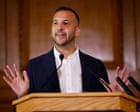
Grief has a strange way of bringing politics to a grinding halt. When Prime Minister Andy Burnham lost his father, Roy Burnham, to Alzheimer's disease at the age of 86, the Westminster machine paused.
Engagements were cancelled. Schedules were cleared. And public figures from across the political spectrum laid down their weapons to send messages of condolence. For a more detailed analysis into similar topics, we recommend: this related article.
Andy Burnham didn't stay silent for long. He took to social media to thank well-wishers, stating that the public's warmth and compassion meant a great deal to his family during a dark week. He specifically pointed out the cross-party support from rival political leaders. It was a raw, human moment in an industry usually defined by synthetic hostility.
The Real Cost of Dementia
Roy Burnham’s passing wasn't just a private family tragedy. It cast a harsh light on a crisis affecting millions of British families. Roy lived with advanced Alzheimer's for years. The condition was so severe that when his son walked into Number 10 Downing Street as Prime Minister earlier this year, Roy couldn't comprehend it. For additional information on this issue, in-depth analysis is available on Reuters.
Care home staff had to show him video footage of his son entering Downing Street. Imagine that reality. Your child achieves the highest office in the country, but dementia robs you of the ability to understand or celebrate it.
This personal heartbreak is precisely why Andy Burnham has made social care reform a cornerstone of his political platform. He has spoken openly about wanting to help "my dad and the millions like him" who suffer under a fractured, unfair system. Dementia UK’s chief nursing officer, Paul Edwards, noted that the Prime Minister's transparency has shone an essential light on the profound toll the condition takes on households.
Looking Back at Roy's Life
Roy wasn't born into political privilege. He worked as a telephone engineer, starting with the Post Office before moving to BT. Alongside his wife Eileen, he raised Andy and his two brothers in a close-knit home in Culcheth, Cheshire.
In his 2024 book Head North, written alongside Liverpool City Region Mayor Steve Rotheram, Burnham detailed his modest upbringing. Neither Roy nor Eileen attended university, blocked by the barriers of their era. Yet they poured quiet encouragement, music, and love into their sons, pushing them toward educational opportunities they never had.
That background shapes how the Prime Minister views domestic policy today. When politicians talk about fixing social care, it often sounds like sterile spreadsheet math. But when it stems from watching your own father slip away behind the iron curtain of Alzheimer's, the urgency changes entirely.
What Happens Next
The immediate outpouring of support shows that humanity still exists in public life. But the real test begins now.
Politicians send nice tweets when a leader loses a parent. They offer thoughts and prayers. What they rarely do is fix the systemic failures that made Roy Burnham's final years—and the lives of thousands of other dementia patients—so needlessly difficult.
If this tragedy means anything, it means turning political sympathy into actual structural reform for adult social care. Anything less is just noise.