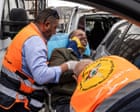
Journalists covering the occupied West Bank face a grim reality where wearing press insignia no longer offers protection, but rather paints a target on their backs. When armed Israeli settlers set upon 58-year-old Agence France-Presse photographer Jaafar Ashtiyeh near Aqraba, beating him with rifle butts while a dozen Israeli soldiers stood roughly 500 metres away without intervening, it wasn't an isolated accident. It was the predictable outcome of an environment where impunity rules and documentation is treated as a threat.
Ashtiyeh was simply doing what veteran photojournalists do: recording the annual olive harvest violence. For Palestinian farmers, the autumn harvest is both an economic lifeline and a deep cultural anchor. For extremist settlers, it's an opportunity to seize land, vandalize groves, and intimidate rural communities. When a quad bike raced toward the journalists and live rounds were fired—wounding a Palestinian in the foot—the situation escalated instantly. At least six armed men rushed the crew. Ashtiyeh tried to dive into a car clearly marked "Press," but attackers hauled him out, battered him repeatedly with rifle butts, and stole his gear while soldiers watched from a distance.
The Anatomy of Impunity in the West Bank
Why do armed personnel watch assaults happen yards away? The answer lies in the structural dynamics governing the West Bank today. Roughly 500,000 Israeli settlers live across the territory among three million Palestinians, guarded by military forces whose priorities rarely align with the protection of local civilians or independent reporters.
Prosecutions for settler violence remain statistically rare. When attackers wear military-adjacent gear—such as the long white shirts, fatigue trousers, and boots noted by AFP photographer John Wessels—the line between state forces and vigilante actors blurs completely. This overlap shields perpetrators from accountability. International bodies like the Foreign Press Association and media watchdogs issue strong condemnations after every incident, yet the cycle persists because there are zero deterrent consequences for inaction.
Press Freedom Under Siege
Let's look at the broader picture. Israel was the world's leading killer of journalists in recent years, with the UN Human Rights Office documenting hundreds of media workers killed in Gaza and Lebanon since late 2023. In the West Bank, Reporters Without Borders notes that authorities have detained nearly two dozen journalists since that same turning point.
Physical assaults, camera seizures, and persistent intimidation are calculated moves designed to blind international audiences. If there are no cameras in the olive groves, the land grabs happen in silence. If reporters are hospitalized with head bruises and concussion watch, local stringers think twice before heading out into the field.
Phil Chetwynd, AFP's global news director, called the attack unacceptable and demanded a full investigation. But seasoned observers know how these investigations usually end: closed files, institutional deflection, and empty promises.
Ashtiyeh spent his night in a Nablus hospital undergoing observation while his camera gear remained in the hands of his attackers. The olive harvest continues, the soldiers remain stationed on the hills, and the systematic silencing of the press grinds forward unabated.