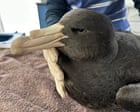
Australia's streak of perfect biosecurity luck just ran out. For years, our isolated continent stood as the world's last fortress against the devastating H5N1 bird flu strain that has ravaged global wildlife and agricultural sectors since 2020. That safety net evaporated when a sick migratory seabird, a brown skua, was found on a remote beach at Cape Le Grand National Park near Esperance.
The CSIRO Australian Centre for Disease Preparedness in Geelong officially confirmed the worst. It is the highly pathogenic H5 strain. Soon after, a second wild bird, a northern giant petrel in the same coastal region of Western Australia, flagged a suspect positive.
The fallout was instant. Australia's biggest poultry producer, Inghams Group, immediately triggered an absolute lockdown across all its Western Australian poultry farms and processing facilities. They slammed the gates on non-essential access and are pushing the state government for an emergency regional housing order to force free-range flocks indoors.
If you think this is just a story about a couple of sick seabirds on a remote beach, you're missing the bigger picture. This changes the calculus for every single livestock producer, commercial farmer, and backyard chicken owner in the country. The barrier has fallen.
What's Actually Happening on Western Australian Poultry Farms
Let's get the immediate facts straight because panic spreads faster than disease. Right now, there are zero confirmed cases of H5N1 bird flu in commercial Australian poultry. The virus hasn't breached a single chicken shed yet. Food Standards Australia New Zealand has been clear that your chicken meat and eggs are perfectly safe to eat, provided they're cooked properly.
But the commercial poultry industry isn't waiting around for a disaster to hit. Inghams moving its entire Western Australian network into lockdown is an aggressive, preemptive strike. Their breeding facilities and grower networks actually sit hundreds of kilometers north of where the infected seabirds were found near Esperance. Yet they locked everything down anyway.
Why the extreme reaction? Because overseas history shows that once high-pathogenicity avian influenza gets inside a commercial shed, the game ends. In the United States alone, farmers had to cull more than 200 million chickens to contain the spread. Culling means destroying entire flocks instantly. If it gets into the Western Australian commercial network, it will devastate family businesses and spark supply shocks that make previous food crises look mild.
Inghams is demanding the state government allow them to move free-range birds inside. It's a pragmatic move, but it highlights a massive operational headache. Our entire modern farming industry has shifted toward consumer-demanded free-range systems. Now, those open-air fields are the exact places where domestic flocks are most vulnerable to wild bird drop-offs.
The Sub-Antarctic Connection Everyone Missed
To understand how the virus reached a beach in Western Australia, you have to look thousands of kilometers south. The two species that tested positive, the brown skua and the northern giant petrel, are long-distance ocean travelers. Their breeding grounds include Australia's external sub-Antarctic territories, specifically Heard Island and the McDonald Islands.
The virus tore through those frozen islands in late 2025. It wasn't a quiet event. Scientists visiting Heard Island reported a biological catastrophe, estimating that the virus killed 13,359 southern elephant seal pups out of a total population of just over 17,000. That's a staggering death toll. It proved the virus had developed a terrifying ability to cross species boundaries into marine mammals.
Those same infected islands are where these migratory birds mingle. The birds then flew north to the Australian mainland, carrying the pathogen with them. Federal Agriculture Minister Julie Collins noted that authorities are working overtime to determine if these are just two isolated, unlucky birds or if the virus has already quietly established itself in local wild populations.
Local wildlife has absolutely zero immunity to this strain. Groups like the Invasive Species Council are sounding major alarms. The government's own risk assessments suggest that if H5N1 takes hold in native wild populations, the impacts on black swans, wild ducks, pelicans, and even land mammals like Tasmanian devils could be absolutely brutal.
This Is Not Just a Poultry Problem
One of the biggest mistakes people make when looking at avian influenza outbreaks is assuming it stays in the chicken coop. The Victorian Farmers Federation quickly issued warnings to all livestock sectors, not just bird owners.
This specific H5 strain has shown a bizarre and troubling knack for jumping into unexpected hosts. In North America, it managed to sweep through dairy cattle herds, infecting milk supplies and forcing massive overhauls in dairy farm biosecurity. It has shown up in wild foxes, skunks, and domestic cats.
If you run a piggery, a dairy farm, or a cattle station in Australia, you can't look at the Western Australian lockdowns and think it's someone else's problem. A shared water trough or a wild bird landing in a feedlot is all it takes to introduce the pathogen to your stock. The agricultural sector is already dealing with intense economic pressures, and a multi-species disease outbreak is the last thing anyone needs.
Why Standard Biosecurity Is No Longer Enough
For decades, Australian biosecurity relied on our geographic isolation. We checked shoes at airports and monitored shipping ports. But you can't put a customs border in the sky. You can't issue a quarantine order to a migratory petrel flying over the Southern Ocean.
The arrival of H5N1 means the old baseline of farm management is dead. Commercial operations have to think like bio-research labs. It means completely eliminating any points where wild birds can interact with domestic stock, food, or water.
The Immediate Rules for Bird Owners
If you own birds, whether it's a commercial shed of ten thousand or three silkies in your backyard, your daily routine has to change today.
First, stop feeding your birds outside in the open. Open feeders are basically an open invitation for wild sparrows, pigeons, and ducks to drop by, eat, and leave behind infected feces or saliva. Move all feed and water systems completely inside covered enclosures where wild birds cannot physically enter.
Second, think about your footwear. Walk through a park or a paddock where wild ducks congregate, and you can easily pick up viral particles on the soles of your boots. Walking straight into your chicken pen afterward transfers the virus directly to your birds. Implement a strict boot-change policy. Keep a dedicated pair of boots inside the coop area, or use a disinfectant footbath at the entrance.
Third, look at your water source. If your birds are drinking from a dam or an open tank that wild waterbirds visit, that water is a biohazard. Switch to clean, enclosed town water or treated underground water systems wherever possible.
The Financial Reality Facing the Industry
Let's talk about the money because that's what keeps farmers awake at night. The federal government has spent roughly $100 million on preparedness and developed over a hundred specific response plans for vulnerable sites and species. That sounds like a lot of cash, but it thins out incredibly quickly when spread across an entire continent's agricultural network.
If a farm gets infected, the financial hit is immediate and total. The government-mandated response to a high-pathogenicity detection is stamping out, which means killing every bird on the property, sanitizing the structures, and leaving the farm empty for months. While there are some compensation frameworks, they rarely cover the true cost of lost business, shattered supply lines, and the immense mental toll on the farming families who have to witness their livelihoods destroyed in a single afternoon.
Insurance policies for infectious animal diseases are notoriously expensive and full of exclusions. Most small to medium producers are essentially flying without a net. That's why Inghams went to maximum security immediately. They know that an ounce of prevention right now is worth millions of dollars in survival later.
What to Watch For on the Ground
We're in a critical window over the next few weeks. State and federal agricultural agencies are running intensive surveillance across the southern coast of Western Australia to see if the virus has jumped into local resident bird populations. Private veterinarians have been placed on high alert.
You need to know what the disease actually looks like. It doesn't present as a simple cough or a slow decline. High-pathogenicity strains cause sudden, catastrophic drops in flock health.
Watch for a sudden, unexplained spike in deaths within a 24-hour window. Look for birds exhibiting severe neurological distress, such as a complete lack of coordination, swimming or walking in circles, twisted necks, or an inability to stand or fly. Physical symptoms include severe watery diarrhea, heavy breathing, coughing, and swelling or distinct blue-purple discoloration around the head, comb, and eyes.
If you spot any of these signs in domestic birds, or if you come across a cluster of dead wild birds, do not touch them. Do not try to move them. Keep your distance, record the exact location, note the species and numbers if you can do so safely, and immediately call the 24-hour Emergency Animal Disease Hotline on 1800 675 888.
The coming months will test the resilience of Australia's agricultural systems. The lockdown of Western Australian poultry facilities is a necessary wake-up call. The safety buffer of our geographical isolation is officially gone, and the survival of our livestock industries now rests entirely on how strictly we manage our farm gates.
Actionable Next Steps for Australian Animal Producers
- Conduct an immediate audit of all animal housing to identify and patch any structural gaps where wild birds or rodents can gain entry.
- Relocate all feeding and watering stations to fully enclosed, covered areas inaccessible to wild fauna.
- Establish a strict biosecurity zone at the entrance of animal enclosures, requiring a complete change of footwear or the use of a fresh chemical footbath.
- Discontinue the use of surface water from dams or open ponds for livestock consumption unless it undergoes a verified sanitization process.
- Train all farm staff to recognize the acute clinical signs of avian influenza and ensure the Emergency Animal Disease Hotline number is visibly posted across the property.
- Limit property visits to essential service personnel only, verifying their recent farm visitation history before granting entry.