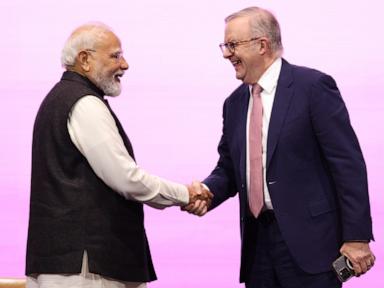
Australia just made a massive geopolitical bet. After more than a decade of bureaucratic paralysis, diplomatic tiptoeing, and intense non-proliferation debates, Canberra finally pulled the trigger. Prime Minister Anthony Albanese and Indian Prime Minister Narendra Modi stood together in Melbourne on July 9, 2026, to announce an administrative deal that greenlights the immediate export of Australian uranium to India.
It is a stunning shift. For years, this deal was stuck in limbo. Australia holds the biggest known uranium reserves on the planet. India has a massive, power-hungry population of 1.4 billion people and an economy growing at a breakneck pace. Yet, because of historical nuclear anxieties and rigid international treaty structures, the two nations couldn't close the gap.
This isn't just about resource trading. It is a direct reflection of how fast the security situation in the Indo-Pacific is shifting. It tells you exactly who Australia trusts right now, and more importantly, who it doesn't.
The Twelve Year Waiting Game
To understand why this Melbourne announcement matters, you have to look at how we got here. This deal didn't happen overnight. Former Australian Prime Minister Tony Abbott actually signed an initial export framework with Modi way back in 2014. Then, everything ground to a halt.
The primary roadblock was simple. Canberra panicked about where that uranium might actually end up. Australia has a strict, long-standing policy of not using nuclear power or nuclear weapons domestically. Every single ounce of uranium mined in the red dirt of the Australian outback gets shipped overseas, and the government has historically demanded ironclad guarantees that its exports only fuel civilian power grids, not weapons programs.
For twelve long years, negotiators traded technical paperwork. They argued over tracking mechanisms, verification procedures, and bilateral safeguards. This new administrative pact essentially cuts through that red tape. It establishes the specific legal and logistical channels required to start shipping the material while satisfying the International Atomic Energy Agency safeguards.
We don't know the exact shipping dates or total tonnage yet. The leaders kept those details under wraps during their press conference. But the message is clear. The technical roadblocks are gone. The supply chain is open.
The NPT Problem and Why Rules are Bending
The real elephant in the room has always been the Nuclear Non-Proliferation Treaty. Australia is a staunch signatory. India is not.
Under traditional Australian foreign policy, you don't sell nuclear material to non-signatory states. Period. India has refused to sign the treaty for decades, calling it inherently discriminatory. New Delhi points out that the treaty creates an elite club, recognizing only the nations that tested nuclear devices before January 1967 as legitimate weapons states. Those countries are the United States, Russia, China, Britain, and France.
Because India tested its own weapons later, notably during the high-profile 1998 tests, it was slapped with severe global technology sanctions and uranium trade bans. New Delhi argues that signing the treaty now would force it to permanently give up its defensive deterrent while its neighbors retain theirs.
The international community began shifting its stance in 2008. That was when the Nuclear Suppliers Group, backed by Washington, granted India a special waiver to purchase civilian nuclear material. Canada jumped on board recently, in March, signing its own multi-billion-dollar supply deal with Delhi.
Australia resisted for a long time. The policy shift started cracking under Julia Gillard's Labor government around 2011, but execution takes time. By finally executing this agreement, Canberra is acknowledging reality. Trying to isolate India regionally over decades-old treaty disputes is an economic and strategic dead end.
Powering Sixty Million Indian Homes
Look at India's energy grid and you see exactly why Modi pushed so hard for this agreement. India is trying to pull off an unprecedented economic balancing act. It needs to lift hundreds of millions of citizens into a booming middle class while simultaneously cleaning up its notoriously polluted cities.
Right now, nuclear energy generates a measly 3% of India's electricity. Even though the country doubled its installed nuclear capacity over the past ten years, it remains heavily dependent on coal and imported fossil fuels.
New Delhi has locked in a target of hitting 100 gigawatts of nuclear power capacity by the year 2047. To put that in perspective, that is enough electricity to power nearly 60 million Indian homes annually. You cannot build that many reactors or keep them running smoothly without a massive, guaranteed pipeline of raw uranium. Australia just became that guaranteed pipeline.
Reading Between the Lines on China
The timing of this announcement wasn't an accident. Modi and Albanese didn't mention Beijing once during their joint statements, and they completely avoided taking questions from reporters afterward. They didn't have to say the name out loud. Everyone in the room knew what this was about.
Just days before this Melbourne meeting, the Australian government publicly blasted China. The friction point was a Chinese military test firing of a long-range ballistic missile from a nuclear-powered submarine straight into the South Pacific Ocean. That particular patch of ocean is supposedly protected by an anti-nuclear treaty, and Canberra viewed the launch as a provocative show of force right in its backyard.
By locking in this uranium deal now, Australia and India are signaling a major upgrade in their defense and security alignment. Their joint statement explicitly highlighted a step-change in the depth of their relationship regarding Indo-Pacific regional security.
Australia is rebalancing its partnerships. India is its fifth-largest trading partner, with two-way trade sitting at 54.4 billion Australian dollars for the 2024-2025 financial year. Selling uranium strengthens these economic ties while embedding India deeply into the security architecture of the region. It creates a powerful counterweight to rising military assertiveness in Pacific waters.
What Happens Next
The diplomatic pageantry in Melbourne is over, and the real work shifts back to the mining sector and regulatory watchdogs. If you are watching this space, here are the concrete developments to track over the coming months.
First, keep an eye on Australian mining hubs, particularly in South Australia and the Northern Territory. Companies will need to secure specific export permits under the newly signed administrative framework before any material leaves Australian ports.
Second, watch the International Atomic Energy Agency reporting. The core of this agreement relies on strict separation between India's civilian power facilities and its military programs. We will see the implementation of updated tracking mechanisms to prove Australian ore is only going into peaceful power grids.
Finally, watch how Beijing responds. While the leaders stayed silent on China during the announcement, a major resource deal involving nuclear material between two key regional counterweights will certainly draw a reaction from Chinese state media and diplomatic channels soon.
This agreement proves that practical geopolitics will always override rigid treaty dogma when regional security gets tense. Australia needed a powerful strategic ally and a market for its resources. India needed clean energy fuel. The stalemate is done, and the regional dynamic is permanently altered.