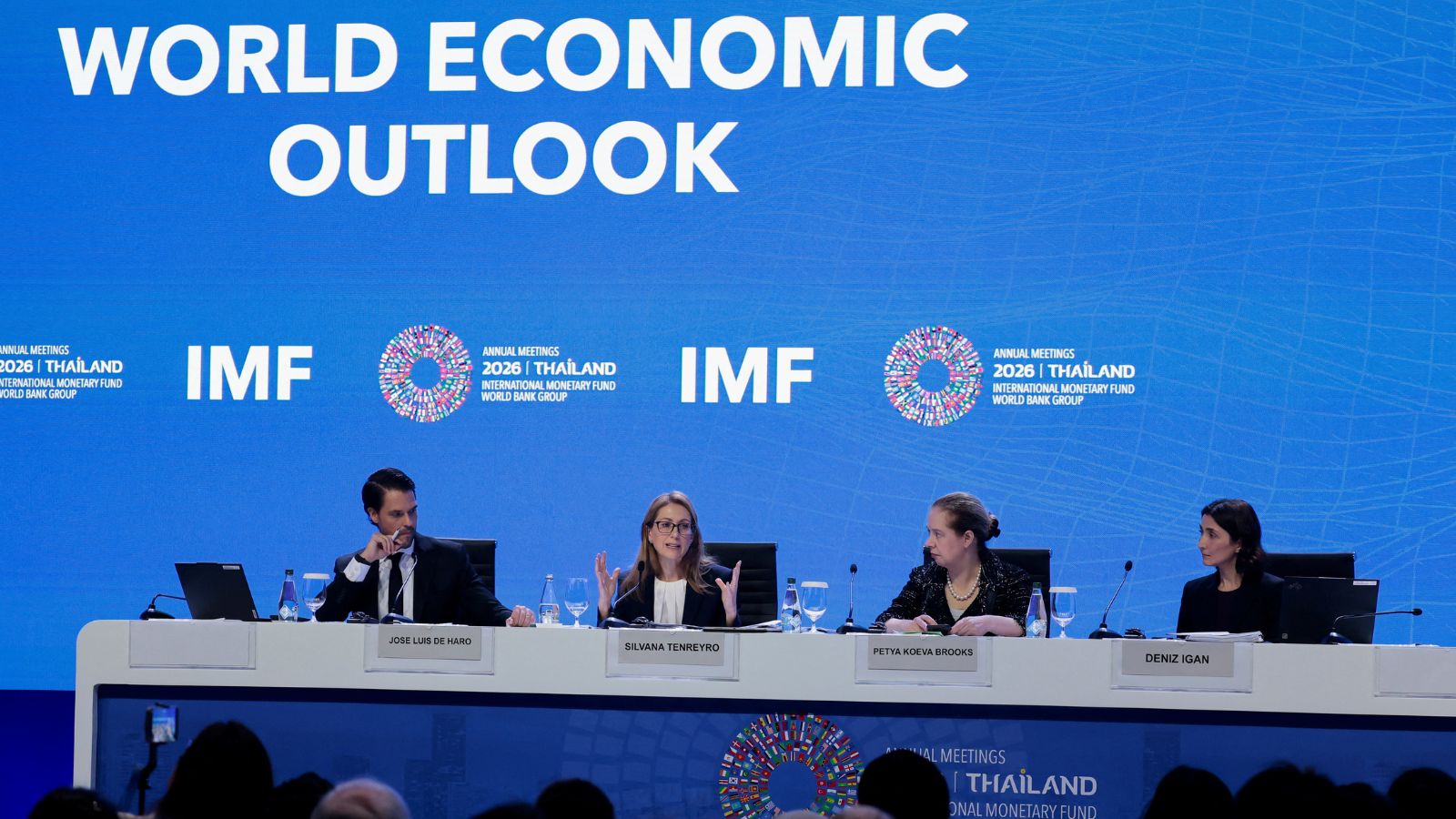
The world economy isn't crashing, but it's certainly sweating. When central bankers, finance ministers, and global economists packed their bags for Bangkok for the 2026 IMF and World Bank Annual Meetings, they walked straight into a bizarre economic paradox. On one side, artificial intelligence hardware infrastructure is pulling global trade forward like an unstoppable freight train. On the other side, escalating geopolitical conflicts in the Middle East are causing painful energy shocks that threaten to derail everything.
If you look purely at the headline numbers, you might think everything is fine. The International Monetary Fund pegged global economic growth at 3.1% for the year, matching previous projections. But that single statistic hides a fractured reality. Beneath the surface, nations are splitting into two distinct camps: those capitalizing on the tech boom and energy exporters, versus developing nations drowning in skyrocketing debt and high fuel import costs.
Let's break down what actually happened at the Bangkok meetings, why the resilience everyone keeps talking about is reaching its breaking point, and what it means for your wallet.
The AI Trade Engine Versus Energy Shocks
You cannot talk about the current economic landscape without looking at the massive wedge driven between technological innovation and traditional commodities.
Between 2023 and 2025, world trade expanded by a cumulative 8.3%. Strip away artificial intelligence-related goods, however, and that growth collapses to just 4.6%. That is a staggering gap. Semiconductor powerhouses in Asia, particularly South Korea and Taiwan, are keeping global manufacturing afloat through relentless hardware investments. Even host nation Thailand found an indirect export cushion by plugging into these high-tech supply chains.
At the exact same time, geopolitical tensions in the Middle East have sent energy and transportation costs spiraling. IMF Chief Economist Silvana Tenreyro pointed out that the global economy has survived this long by rerouting supply chains, drawing down inventories, and squeezing out operational efficiencies. Without those clever corporate adjustments, global growth would be sitting closer to 2.5%.
Inventories are running dry. Efficiency gains have hard limits. When energy prices climb because critical trade routes face disruption, inflation creeps right back into the system, leaving central bankers with very few good options.
The Mounting Debt Trap for Developing Economies
While advanced economies grapple with rising bond yields, lower-income nations are facing an existential financial squeeze.
During the Bangkok sessions, IMF Managing Director Kristalina Georgieva highlighted a grim metric: debt-service payments as a share of government revenue in low-income countries have surged from 8% to 14% in recent years. Governments are being pushed into an impossible corner. They have to choose between keeping basic services running for their poorest citizens or servicing predatory external debt obligations.
Worse yet, rising borrowing costs mean that development spending is drying up fast. The IMF is pushing governments to drop broad-based subsidies and focus on targeted cash assistance instead. Yet, for countries already battered by food inflation and fuel shortages, pulling off those fiscal reforms without triggering massive social unrest is an uphill battle. Protests in Bangkok during the summit weren't just background noise; they reflected a deeper anger against the unequal distribution of capitalist gains.
What This Means Moving Forward
The primary takeaway from Bangkok is that policymakers can no longer treat economic crises as isolated, one-off events. We are living through an era of overlapping shocks.
If you're running a business or managing personal investments, ignoring these macro signals is a recipe for disaster. Supply chain fragility is the new baseline. Energy volatility is here to stay.
Diversify your exposure, keep a close eye on sovereign debt yields, and stop assuming that tech sector optimism can shield the entire global economy from a fuel-driven inflation spike. The safety nets holding up global markets are wearing thin. Plan accordingly.