Far-right Israeli National Security Minister Itamar Ben-Gvir just threw a massive wrench into international diplomacy. He openly demanded that Prime Minister Benjamin Netanyahu reject any ceasefire deal in Lebanon. Instead of a truce, Ben-Gvir insists the entire country should become what he called Israel's playground.
The timing couldn't be tighter. Delegations are meeting in Washington for a critical fifth round of direct negotiations. The proposed framework, heavily pushed by the Trump administration, seeks to finalize a memorandum of understanding between the US and Iran to halt the fighting. Ben-Gvir wants none of it. His public defiance highlights a massive, widening rift right at the top of Israeli politics. It also sets up a direct ideological collision course with Washington.
The Playground Rhetoric and What It Means
Ben-Gvir didn't mince words during his Otzma Yehudit party's weekly faction meeting in the Knesset. He argued that separating Hezbollah from the Lebanese state is a complete illusion. To him, the entire territory is a fair target. He explicitly stated that all of Lebanon should become a playground for military operations, rejecting any external restrictions.
This isn't just tough talk for a domestic audience. It represents a fundamental disagreement on strategy. While international mediators try to isolate Hezbollah and stabilize Beirut, the far-right elements in Israel's cabinet want a total reset. Ben-Gvir even drew a grim parallel to northern Gaza, warning that Beirut could face the same level of destruction as Beit Hanoun if Israeli security isn't guaranteed.
The logic is brutal and direct. He argued that the state cannot tolerate a single tear from an Israeli mother, even if it means a thousand Lebanese mothers weep. This hardline stance puts intense pressure on Netanyahu, who is stuck balancing his fragile governing coalition against immense pressure from the White House.
The Battle of Wills Over Trump's Diplomacy
The White House is moving fast to secure a regional deal, but Israeli officials are deeply skeptical. Many in Tel Aviv fear that the current US-Iran negotiations will only end up strengthening Tehran. Some anonymous officials even leaked to local media that the Trump administration simply fails to understand the underlying ideology of Iran and Hezbollah. One official bluntly complained that Washington doesn't speak the right political language to handle the region.
Netanyahu has a delicate problem. He recently instructed his cabinet ministers to avoid launching personal attacks against Donald Trump. He knows Israel cannot afford to completely alienate its most important ally. Yet Ben-Gvir is telling Netanyahu to do exactly that.
Ben-Gvir publicly advised the prime minister to look Trump in the eye, embrace him, and say that Israel simply cannot fulfill the agreement. He compared the situation to having a hostile regime right on the border, arguing that no major global power would tolerate such a setup. For Ben-Gvir, the war must continue until absolute victory, regardless of what the international community demands.
Deepening Divisions in Israeli Politics
Ben-Gvir isn't the only one trying to torch the diplomatic track. Opposition leader Avigdor Lieberman went even further, labeling the potential US-Iran agreement the biggest political disaster since the creation of Israel. Lieberman warned that Israel must protect its own strategic interests rather than bending to global economic factors or fluctuating fuel prices on international stock exchanges.
The internal opposition is multi-layered.
- Defence Minister Israel Katz recently announced that hundreds of thousands of displaced residents from the southern Lebanon security zone will never be allowed to return home.
- Finance Minister Bezalel Smotrich has echoed similar extreme language, calling for maximum military pressure.
- Meanwhile, centrist factions and military planners worry about the long-term cost of an endless, multi-front war without a clear political exit strategy.
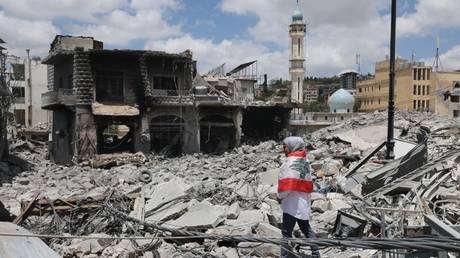
This internal crosscurrent makes the Washington talks incredibly messy. The official Lebanese government remains hopeful that a US-led diplomatic breakthrough can end the hostilities. However, Hezbollah insists it won't accept any terms dictated under the shadow of ongoing strikes. With over 4,100 people killed in Lebanon since early March according to local health officials, the humanitarian cost keeps mounting while the political knot tightens.
What Happens Next on the Ground
The rhetoric from the far right isn't happening in a vacuum. It directly shapes military realities. Israel continues to maintain and expand its military presence across parts of southern Lebanon. Troops are digging in, which makes a swift diplomatic withdrawal highly unlikely.
If Netanyahu yields to his far-right coalition partners to keep his government alive, the Washington negotiations could collapse entirely. That would trigger an immediate escalation. A wider conflict wouldn't just affect the border region. It would draw in broader regional actors and completely derail the delicate US-Iran diplomatic track.
For observers trying to make sense of the situation, the key is to watch the actual policy decisions, not just the loud statements in Knesset faction meetings. Netanyahu has survived for decades by navigating these exact political minefields. He often lets his radical ministers scream to appease their base while he quietly cuts deals behind closed doors. But with the stakes this high and the rhetoric turning this explosive, his room to maneuver is shrinking by the hour.
Keep an eye on the official statements coming out of the fifth round of talks in Washington. If Israel sends high-level security chiefs with real authority to negotiate, a deal might still be alive. If the talks stall or devolve into mutual blame, it means the hardline view inside the cabinet is winning, and the region is heading for a much longer, uglier showdown.