When young protesters flooded the streets of Antananarivo in late September 2025, they believed they were finally tearing down a broken system. Decades of power cuts, water shortages, and rampant corruption under President Andry Rajoelina had pushed the country to its absolute limit. When an elite military unit known as CAPSAT, led by Colonel Michael Randrianirina, stepped in to oust the president, the streets erupted in celebration.
It took only a few months for that hope to turn to ash.
Today, Madagascar is ruled by a tight-lipped military junta that has suspended the government, systematically targeted dissidents, and effectively frozen the democratic process. Most politicians in the country have fallen into line or quieted down out of fear. Except for one man.
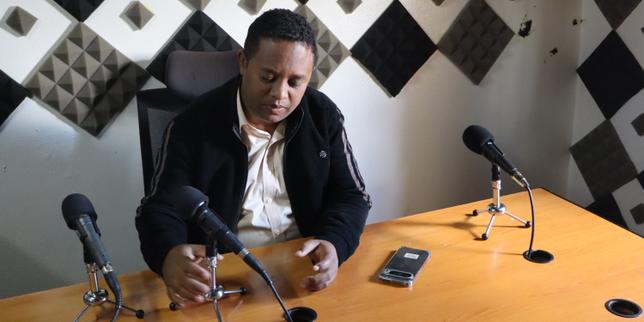
Antoine Rajerison, an agricultural engineer turned member of parliament for the rural district of Arivonimamo, is currently the most dangerous man to the junta. Known nationwide as the "deputy of the peasants", Rajerison is waging a lonely, high-stakes battle against Randrianirina's regime. It is a fight that has already cost him his parliamentary immunity and could soon land him in a military prison.
From the Mud of Arivonimamo to the Halls of Power
To understand why Rajerison is defying a military junta, you have to understand where he comes from. He is not part of the polished, wealthy elite that usually populates the offices of Antananarivo. He is an agronomist, the head of the Fivoy association, and a former leader of the national union of agricultural engineers.
His constituency, Arivonimamo, is a highly agricultural region about 40 kilometers west of the capital. It is a place where survival is tied directly to the soil. For years, Rajerison has argued that Madagascar's political class is obsessed with backroom deals while ignoring the people who actually feed the nation.
He calls it the great Malagasy paradox. The country has fertile soil, rich resources, and an eager workforce. Yet, it imports basic necessities like rice, cooking oil, and flour.
During his campaigns, he did not just hand out t-shirts. He talked about agricultural yields, local transformation, and protecting small farmers from predatory land grabs. He became a champion of the tolona—the grassroots struggle. When the Gen Z protests broke out in September 2025, Rajerison did not watch from the sidelines. He joined them on the pavement. He was even arrested by police during a demonstration in the Tsiadana neighborhood. That arrest sparked immediate outrage, with thousands of angry farmers from his home district marching spontaneously to demand his release.
He was a hero of the revolution. But when the military hijacked that revolution, Rajerison refused to pretend it was a victory.
How the Junta Betrayed the People
When Colonel Randrianirina assumed the title of "President of the Refondation" in October 2025, he promised a transition back to democratic rule. Instead, his administration has systematically dismantled local democracy.
The first major point of betrayal was the fokontany—the local neighborhood and village councils. In Madagascar, these councils are the bedrock of daily life and local governance. A core demand of the 2025 protest movement was that the heads of these councils must be freely elected by the communities they serve.
Instead, the junta went backward. They began handpicking and appointing these local chiefs directly from the executive branch. This was not a minor administrative tweak; it was a deliberate strategy to place military loyalists at the lowest levels of local life to monitor and suppress dissent.
Rajerison called it out immediately. He pointed out that the regime was using the judiciary as a weapon to silence the very Gen Z leaders who had helped put them in power. "This is not what people sacrificed their lives for," he stated bluntly in local media. He accused the junta of turning the promise of 2025 into a system of raw repression.
The Silent Airwaves and the Legal Noose
The military regime did not take his criticism lightly. They started with his voice.
Rajerison owns Radio Fivoarana, a station that has long been a source of independent news and agricultural advice for rural populations. Almost immediately after he began criticizing the junta, the station’s signal began facing persistent, highly coordinated jamming. The authorities denied any involvement, but the message was clear: keep quiet, or we will shut you up.
Rajerison did not keep quiet. Instead, he escalated the fight.
In May 2026, he took a step that shocked the political establishment. He filed a formal petition with the High Constitutional Court (HCC), calling for the official removal of Colonel Randrianirina. His argument was simple: the military authority had failed to govern, failed to protect constitutional order, and was actively violating the law.
It was a bold move, but legally doomed. The HCC, heavily pressured by the ruling generals, declared his petition inadmissible on May 28, 2026.
Once Rajerison exhausted his legal avenues, the junta moved in for the kill.
The Fabricated Plot and the Loss of Immunity
In June 2026, a smear campaign erupted on Malagasy social media. Anonymous accounts alleged that several high-profile figures were plotting a coup to overthrow the junta. Conveniently, Rajerison’s name was at the top of the list.
The state prosecutor claimed that Rajerison had received illicit funding from Yves Rajoelina to organize violent acts of destabilization. The evidence? Supposed photos of transactions that have never been made public.
Rajerison held a press conference at the National Assembly, calling the allegations what they are: a manufactured political witch hunt. He stated plainly that he had never even met Yves Rajoelina and that his personal and business accounts had already been thoroughly audited by state tax authorities with zero irregularities found.
"It is unacceptable that elected officials are subjected to prosecution and political pressure simply for holding a political position," he told reporters.
But in a country ruled by bayonets, the truth is secondary to power. On June 6, 2026, under heavy pressure from the military, the National Assembly voted to strip Rajerison of his parliamentary immunity. The protective shield that allowed him to speak freely was gone. He is now completely vulnerable to arrest, trial, and imprisonment by a system he openly defies.
Why This Fight Matters Beyond Madagascar
The tragedy of Madagascar is a story playing out across the continent. Citizens get frustrated with corrupt civilian leaders, they take to the streets, the military steps in under the guise of "saving the nation," and then the generals refuse to leave.
Rajerison's struggle is a stark reminder of how quickly the hope of a popular uprising can be co-opted. By standing up for the rural farmers, he is highlighting the real battleground of Malagasy politics. The urban elite can fight over cabinet positions in Antananarivo, but until the country addresses its agricultural decay and the economic exclusion of the peasantry, stability will remain a fantasy.
If the junta succeeds in silencing Rajerison, it sends a chilling message to every activist, journalist, and citizen in Madagascar: no one is safe, and the regime will tolerate no dissent.
If you want to support independent voices in Madagascar, keep your eyes on the ground. Pay attention to local civil society organizations and independent media networks like Studio Sifaka, which continue to broadcast despite the risks. The fight for Madagascar's democracy is no longer happening in the ministries; it is happening on the small farm plots and the jammed radio waves of the countryside. Watch this space closely, because the junta's next move against the deputy of the peasants will tell us exactly how dark the country’s immediate future is going to be.