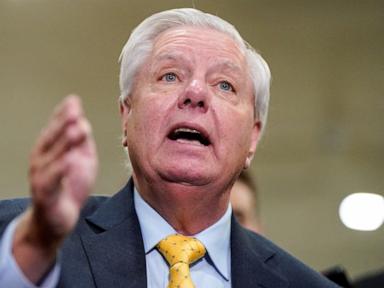
Washington doesn't agree on much these days. The political floor is usually covered in sharp glass and bitter arguments. Yet, the sudden passing of South Carolina Senator Lindsey Graham has forced a rare pause in the endless partisan warfare. The 71-year-old lawmaker died on Saturday evening at his Capitol Hill home, leaving a massive void in the center of American foreign policy and judicial politics. His office confirmed that he passed away from an aortic dissection stemming from arteriosclerotic cardiovascular disease.
The news sent immediate shockwaves through the halls of Congress. Just a day prior, Graham was in Kyiv meeting with Ukrainian President Volodymyr Zelenskyy, aggressively pushing for new sanctions against Russia. He flew back, spoke with President Donald Trump, and was preparing for a national television appearance on Sunday morning. Then, his heart gave out. The suddenness of it left both his fiercest allies and his most stubborn political opponents reeling. You might also find this similar story useful: Why The Phu Quoc Boat Tragedy Demands A Massive Safety Overhaul.
When a giant of the Senate falls, the immediate reaction is always telling. The outpouring of condolences from across the political spectrum tells us something profound about how power actually works in Washington. It shows that beneath the performative anger of cable television news, personal relationships still carry weight. Graham knew how to play the public game, but he also knew how to cut deals in private.
The Medical Reality of a Sudden Senate Tragedy
To understand the shock in Washington, you have to look at how quickly this happened. Graham had just finished his tenth wartime trip to Ukraine. He was operating at full throttle. The District of Columbia medical examiner issued a preliminary finding pointing to an aortic dissection. This condition involves a tear in the inner layer of the body's main artery. When that layer tears, blood surges through the rip, causing the inner and middle layers of the aorta to separate. It's an absolute medical emergency that often strikes without warning. As reported in recent coverage by NBC News, the effects are worth noting.
Emergency responders rushed to Graham's Capitol Hill residence following a cardiac arrest dispatch. Paramedics carried the veteran senator out on a stretcher, but there was nothing they could do. The condition is swift and devastating.
For a man who spent decades surviving the brutal, unpredictable shifts of American politics, his end came down to a quiet, internal structural failure. He had spoken to Donald Trump just hours beforehand. Trump noted later that the senator seemed a bit tired from his travels but otherwise completely fine. The sudden transition from active international diplomat to a quiet house on Capitol Hill is what left his colleagues stunned.
From Maverick Amigo to the Ultimate Trump Whisperer
You can't talk about Graham without addressing the massive elephant in the room. His political career was a masterclass in adaptation. He spent years walking a high-stakes tightrope between the old guard of the Republican party and the modern MAGA movement.
For the longest time, he was defined by his friendships. He was an integral part of the famous trio known as the Three Amigos. Alongside the late Republican Senator John McCain and Independent Senator Joe Lieberman, Graham championed an aggressive, hawkish American foreign policy. They believed in projecting American power globally. They didn't blink when it came to military intervention. During those years, Graham was an institutionalist who frequently reached across the aisle to get things done.
Then came the 2016 presidential election.
When Donald Trump entered the political scene, Graham didn't hold back. He openly called Trump a kook. He labeled him unfit for office. He warned his fellow Republicans that nominating Trump would destroy the party. Trump fired right back, famously reading Graham's private cell phone number on live television to invite a flood of protest calls. It looked like an ideological blood feud that could never be repaired.
But politics is a game of survival. After Trump won the White House, Graham changed his approach completely. He didn't just accept the new reality; he became one of Trump's closest confidants and golf partners. Critics slammed him for this flip-flop, calling it opportunistic. They claimed he had abandoned his core principles to stay close to the flame of power.
Graham looked at it differently. He argued that if you want to influence the direction of the country, you need to have the ear of the person in charge. He stayed in the room where it happens. Even when Trump's MAGA base booed Graham at rallies in South Carolina for being too willing to compromise, he stood his ground. He managed to maintain his status as a conservative powerhouse while keeping his line open to the other side.
The Cross Aisle Reactions That Proved His Method
The statements that flooded the media after his death show that his strategy worked. Donald Trump took to Truth Social to express his grief, calling Graham one of the greatest people and senators he had ever known. Trump praised his work ethic and labeled him a true American patriot.
Simultaneously, the messages from the Democratic side of the aisle were surprisingly warm. Virginia Democratic Senator Mark Warner openly acknowledged that while he and Graham disagreed on almost everything, he never doubted Graham's deep love for the nation.
This duality was the essence of Graham's Senate career. He could go on television and fire red meat at conservative voters, then walk into a committee room and hammer out a complex deal with a liberal colleague.
Look at his final week of life. He was working directly with Connecticut Democratic Senator Richard Blumenthal on a major piece of legislation designed to place massive financial penalties on countries buying Russian oil. Graham wanted to ensure Blumenthal got equal credit for the bill. He was actively calling journalists to make sure the bipartisan nature of the effort wasn't lost in the headlines.
Further abroad, the reaction was equally intense. Israeli Prime Minister Benjamin Netanyahu lamented the loss of one of Israel's most passionate defenders in Washington. Graham had consistently backed Israel's military actions and pushed for hardline stances against Iran. Meanwhile, in Kyiv, President Zelenskyy expressed deep sadness, noting that Graham had stood with the Ukrainian people during their darkest hours.
The High Stakes Power Vacuum in South Carolina
The political machine never stops moving, even during a time of mourning. Graham's death creates an immediate logistical problem for the government. He was the chair of the Senate Budget Committee and a senior member of the Judiciary Committee. His absence shifts the numbers in a tightly divided chamber.
Now, the focus turns to South Carolina Governor Henry McMaster. The Republican governor faces a massive decision. He has the sole authority to appoint a temporary replacement to fill Graham's seat until the current term ends on January 3, 2027.
McMaster is a loyal Trump ally. The person he picks will likely reflect that alignment. However, this appointment happens right in the middle of an intense election season. Graham was actually up for re-election this coming November. The sudden vacancy turns a standard re-election campaign into a chaotic scramble.
The Democratic nominee, pediatrician Annie Andrews, had already been building momentum in the state. While South Carolina remains deeply conservative, an open seat changes the math completely. Republicans must quickly select a candidate to run in Graham's place, all while navigating the emotional aftermath of losing a political fixture who held that seat for over two decades.
What Washington Can Learn From the Graham Playbook
We tend to view our politicians as two-dimensional characters. We lock them into boxes based on their worst tweets or their most aggressive cable news interviews. Graham was far more complicated than that. He was a military veteran who served as an Air Force lawyer and retired as a colonel. He loved the institution of the Senate. He understood the levers of power better than almost anyone else in the building.
If you want to understand why his death prompted such a unified response, you have to look at his willingness to talk. He didn't hide in an ideological bunker. He was accessible to the press, he was conversational with his enemies, and he was fiercely loyal to his friends.
His passing leaves a void that won't be easily filled. The Senate is losing one of its last true dealmakers—a man who could whisper to Donald Trump in the morning and co-author a bill with a progressive Democrat in the afternoon.
The immediate next steps for the country are clear. Keep an eye on Governor McMaster's office over the next few days for the announcement of the interim senator. Watch how the Senate Budget Committee reorganizes its leadership to handle upcoming fiscal battles. Finally, pay attention to the upcoming South Carolina race, as the fight for Graham's legacy will define the future of that state's representation for years to come. Washington lost a piece of its history this weekend, and the scramble to replace it has already begun.
You can watch this news broadcast covering the reaction to Senator Graham's passing to see the initial responses from political figures across Washington.