A piece of content goes viral, a life ends, and the internet immediately looks for someone to blame. It is a predictable cycle that plays out every single day across social platforms. But what happened in central China Henan province recently takes this exhausting online phenomenon to a dark and deeply unfair place.
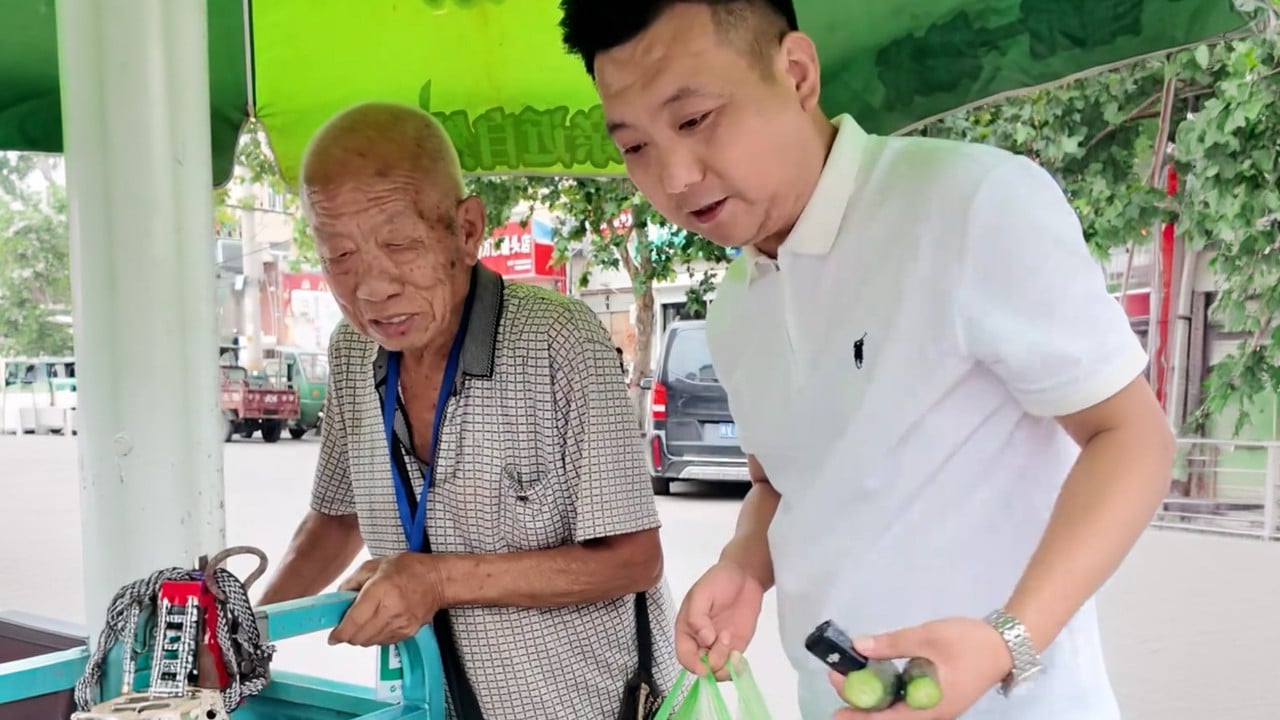
An influencer named Zhang, who has built a modest following of 84,000 people by documenting and assisting struggling rural farmers, crossed paths with an 81-year-old farmer surnamed Jing on June 25. What started as a beautiful, documented act of micro-charity ended hours later in a horrific car crash that claimed the elderly farmer's life. Instead of mourning a tragedy, parts of the internet weaponized the timeline. They claimed that if Zhang had never stepped in, Jing would still be alive.
This reaction is wrong. It misunderstands the nature of random accidents, shifts blame away from reckless drivers, and threatens to kill off genuine charity in an online space that desperately needs it.
The Day a Simple Act of Kindness Hit a Wall of Tragedy
To understand the absurdity of the backlash, look at what actually happened that afternoon. Farmer Jing had traveled into the city to sell his modest harvest. He was sitting with 75 kilograms of spinach, cucumbers, and eggplants. Zhang came across him and decided to do what he does best. He bought the entire stock.
Jing was so grateful he offered a heavily discounted price of just 0.80 yuan per kilogram. The entire haul cost Zhang a mere 60 yuan, which amounts to less than nine US dollars. To give the old man a little extra, Zhang even playfully put his foot on the scale to pump up the weight and justify handing over more money.
Then came the interaction that sparked the controversy. Zhang jokingly asked if the buyout earned him a free lunch. Jing agreed instantly. Zhang did not take advantage of that. He took the elderly man to a local restaurant and bought a massive spread. We are talking two large bowls of traditional Henan braised noodles and four side dishes.
During that lunch, Jing opened up about his life. It was a heavy conversation. He revealed that he had two daughters, but his eldest had succumbed to depression and taken her own life 15 years prior. He was still working the fields at 81 to scrape together money for his two grandsons. He admitted he had never tasted those specific braised noodles because they were simply too expensive for his budget.
At the end of the meal, Zhang packed up the remaining food so Jing could carry it back to his wife. They parted ways. Jing got on his vehicle to head home. He never made it. A car struck and killed him on the road.
The Micro Economics of Surviving as an Elderly Farmer
To truly grasp the weight of this story, you have to look past the tragic accident and look at why an 81-year-old man was hauling 75 kilograms of produce into a city in the first place. This is the reality of rural aging in China that rarely makes the glitzy front pages of social feeds.
Many elderly individuals in deep rural areas do not have standard corporate pensions. They rely on the land. They rely on physical labor. If they stop working, the income dries up. Jing was not out there for exercise. He was out there because his family needed every single yuan.
When Zhang bought that produce, he did not just buy vegetables. He bought Jing time. He saved him hours of sitting on a hot pavement, pleading with passersby, and worrying about whether his crop would rot before he could turn it into food for his family. The lunch was a rare moment of luxury in a life defined by hard, unforgiving labor.
Jing's grandson, who posts under the username @xibeilang, clarified this beautifully when he stumbled across Zhang's video later. The family had gone to the crash site and found items that the grandfather would never have bought for himself. They were deeply confused until the video popped up on their feeds.
The grandson publicly thanked Zhang. He noted that the video captured the first time in years he had seen his grandfather looking genuinely happy. It was his last meal, and it was a happy one.
The Toxic Shift From Good Samaritan to Internet Scapegoat
You would think a public statement from the grieving family would silence the keyboard warriors. It did not. Commenters quickly started calculating the butterfly effect. They argued that by taking Jing to lunch, Zhang disrupted the farmer's usual schedule.
The logic is paper-thin. They claim that if Jing had skipped lunch, he would have passed that specific stretch of road at a different hour, thereby avoiding the vehicle that struck him. This is a classic cognitive bias. Humans hate randomness. We look for patterns and human targets because accepting that a reckless driver or a random mechanical failure can erase a life is terrifying.
Think about what this kind of blame game does to society. If we hold every charitable person accountable for the unpredictable events that happen after their good deeds, nobody will ever help a stranger again.
Zhang was visibly shaken by the loss. He paused his regular content and sent all the raw footage from that day to Jing's family so they could keep his memory alive. He offered long-term assistance to the grandsons. Yet, he still had to endure comments accusing him of being an indirect cause of death.
If internet trolls successfully penalize influencers for treating people with dignity, the only content left will be superficial challenges and corporate sponsorships. Genuine human connection will become a liability.
Why the Butterfly Effect Is a Lazy Way to Assign Blame
Let's call this out for what it is. Blaming the lunch invitation is a lazy detour from the actual issue. The responsibility for a road fatality lies with the parties involved in the crash, traffic conditions, and driver behavior.
If a friend invites you out for coffee and you get into a fender bender on the drive over, you do not sue your friend for the cost of the repairs. You look at the road. You look at the driver who ran the light.
Jing's grandson had to step in a second time to defend the influencer against the digital mob. He pointed out that if society criticizes and fails to protect people who perform good deeds, the impulse to do good will vanish entirely. He is completely right.
The internet loves to demand authenticity and real impact from creators. But the second reality delivers a tragic twist, the crowd turns into a circular firing squad. Zhang gave an old man a beautiful, dignified final afternoon. He ensured that a man who spent his life feeding others finally got a grand meal of his own. That is what matters.
What to Do Next When Facing Online Outrage
We cannot fix the internet comments section, but we can change how we respond to these situations in our own communities.
- Support creators who do quiet work: Do not just interact with flashy stunts. Look for people highlighting real systemic issues and give them your digital backing.
- Reject the blame culture: When a tragedy hits the news, look at the direct causes instead of joining speculative online mobs.
- Keep doing small acts of kindness anyway: Do not let the fear of bad statistics or weird online theories stop you from buying a meal for someone who needs it.
Accidents happen. They are cruel, sudden, and unfair. But a tragic ending does not retroactively erase the beauty of a kind beginning.