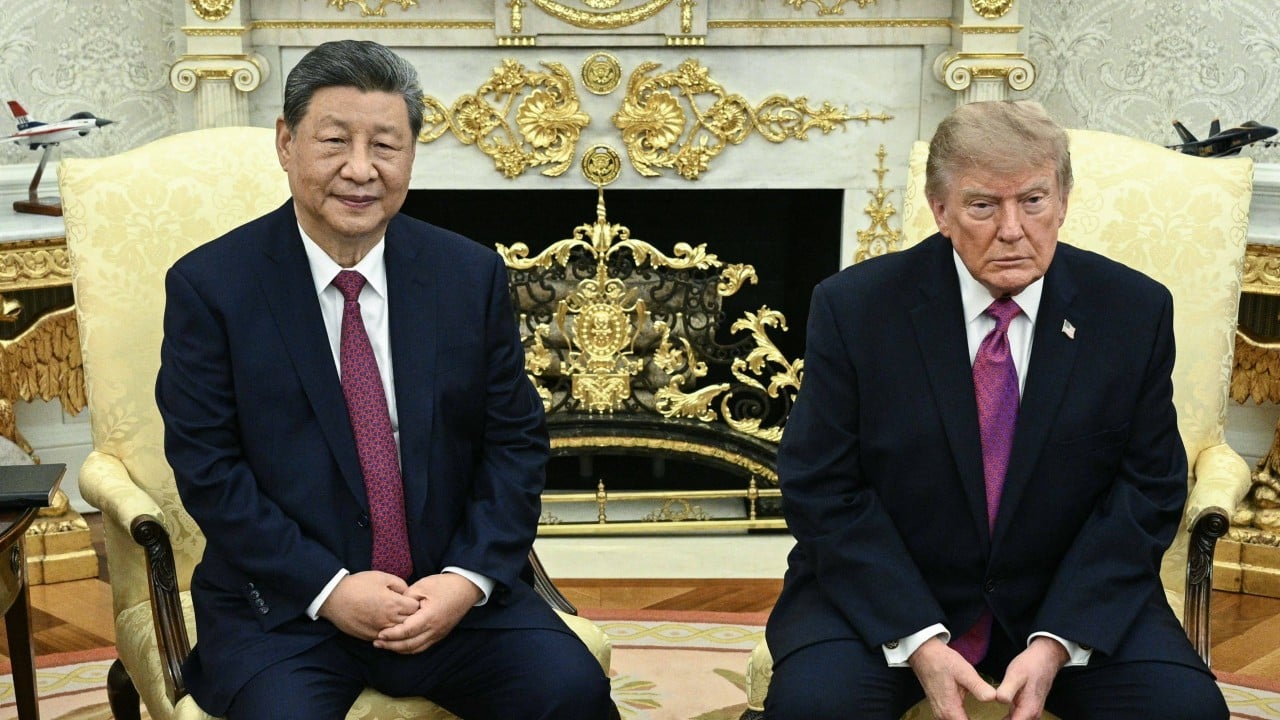
World leaders don't just speak with words. When Donald Trump and Xi Jinping meet on the global stage, every subtle adjustment, handshake, and posture shift becomes a masterclass in non-verbal posturing. Analysts love to dissect these high-stakes summits, but most miss the real psychological machinery driving the visuals. You have to look past the media spin to see what's actually happening.
When Xi Jinping arrived at Joint Base Andrews and was met directly by the US president and first lady, non-verbal specialists pointed out the immediate symbolic weight of the gesture. US presidents rarely camp out on the tarmac for standard arrivals. Trump’s choice to greet Xi right at the aircraft steps communicated baseline respect. Yet, look closely at Xi’s physical posture during the sequence. His shoulders remained squared, and his stride mirrored his usual formal pacing. He wasn't adjusting his presence for an American audience. He looked entirely comfortable, projecting the quiet gravity of a leader who views himself as an equal pillar of global power.
Then came the White House arrival on day two. As Trump stepped out to greet his counterpart, observers noted a subtle detail: his chin was tilted slightly downward. If you've spent any time studying non-verbal cues, you know a downward chin angle projects less authority than a chin-up stance. Was it mere fatigue, a functional glance at the pavement, or a subconscious softening? Either way, it clashed sharply with Trump's signature dominance plays from past administrations, where aggressive handshakes and physical over-steering were standard operating procedure.
The Myth of the Submissive Handshake
We’ve all seen the media clips of Trump trying to yank foreign leaders across handshake lines or clamping his hand over theirs. But that playbook falls flat against Beijing's leadership. Xi doesn't play that game. When leaders of equal or greater state weight lock horns, the alpha-dog tactics vanish, replaced by a tense, carefully calibrated symmetry.
Think about why these physical summits matter so much to the public. Behind closed doors, trade talks, AI cooperation frameworks, and security arrangements get hammered out by bureaucratic teams. But the public wants a visual proxy for who is winning. If you rely solely on body language to gauge geopolitical outcomes, you’ll fool yourself. Posture reflects momentary comfort, fatigue, or deliberate diplomatic signaling, not trade deficits or military strategy.
Why Realpolitik Trumps Optics
Let's be honest. Decoding a pat on the back or a downward chin tilt is fun television. Experts like Patti Wood make a living breaking down every micro-expression on cable news segments. But let's look at the bigger picture. When two superpowers negotiate under the weight of tariffs, tech restrictions, and global security tensions, a smile or a stiff shoulder doesn't change reality.
If you want to understand where US-China relations are heading, ignore the handshakes. Look at the concrete policy deliverables coming out of the summit. Watch the statements on artificial intelligence collaboration, maritime security, and economic agreements. Optics provide a veneer of stability, but hard interests drive the machine. Next time you see a headline hyperventilating over a leader's body language, remember that statesmen know the cameras are always rolling. They curate every gesture on purpose. Don't buy into the theater. Look at the leverage instead.
Decoding The Body Language | Vantage on Firstpost | 4K
This video provides an in-depth visual breakdown of the psychological dynamics and power plays between Donald Trump and Xi Jinping during their high-level diplomatic summits.
http://googleusercontent.com/youtube_content/1