Smallholder agriculture in South America's largest economy faces a quiet crisis. While massive agribusiness conglomerates roll out autonomous tractors and drone fleets across endless soybean fields, millions of family farms operate with outdated tools. That digital divide threatens rural livelihoods.
Now, a new bilateral pact aims to bridge that gap. Brazil's agricultural research corporation, Embrapa, signed a five-year agreement with four Chinese institutions—including Nanjing Agricultural University, the Jiangsu Academy of Agricultural Sciences, and Sinomach Digital Technology Corporation—to integrate artificial intelligence and smart machinery into small-scale production.
You might wonder if high-tech solutions can actually help smallholders. After all, expensive machinery usually benefits only wealthy landowners. But this initiative targets affordability and direct adaptation to tropical farming conditions.
The Roots of the Digital Divide in Brazilian Agriculture
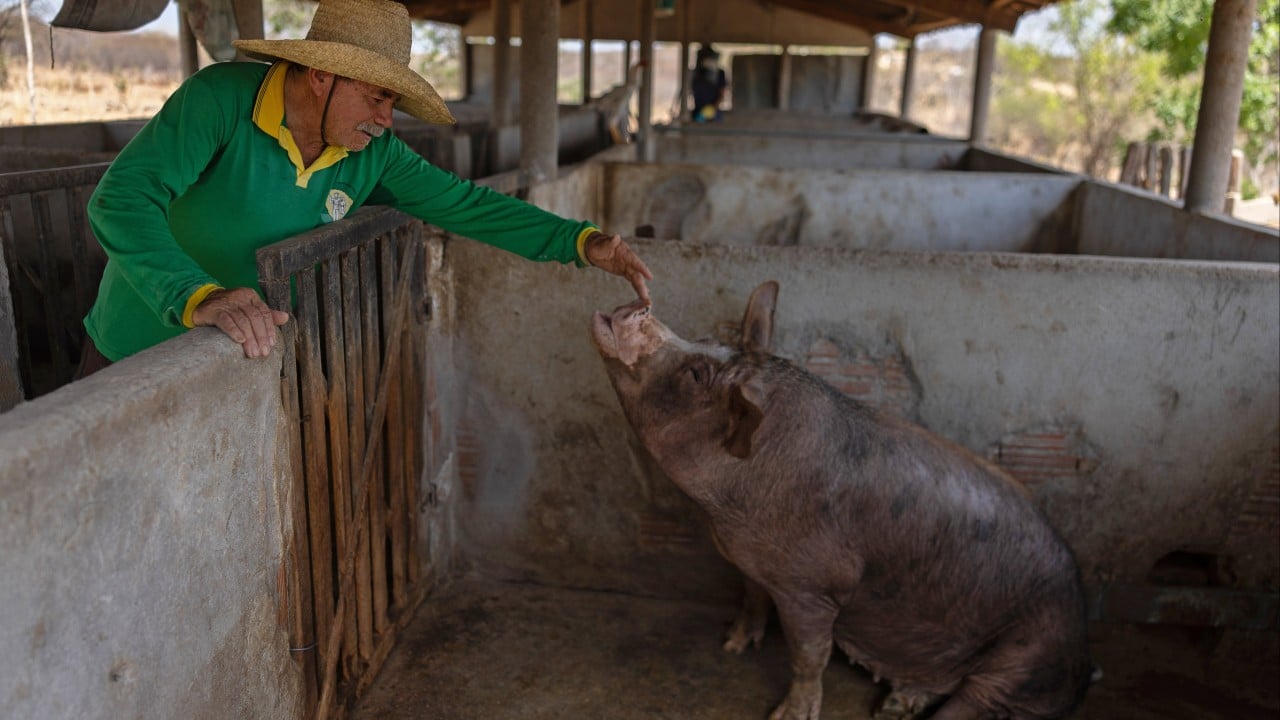
Brazil's agricultural sector runs on a dual track. On one side, corporate farming giants generate record-breaking export revenues through hyper-mechanized operations. On the other side, family farming provides the bulk of domestic food supply while struggling with low productivity, labor shortages, and minimal access to modern credit or tools.
Silvia Massruhá, president of Embrapa, points out the core issue plainly. If smallholders and mid-scale producers remain digitally excluded, the gap between them and corporate farms will only widen.
For years, technological modernization meant high costs. Small farmers could never justify buying massive commercial automation systems designed for thousands of hectares. They needed localized, scaled-down digital tools that fit plots measured in hectares rather than square kilometers.
Inside the Brazil-China Technology Agreement
Signed during a diplomatic and scientific mission, the new five-year memorandum establishes the Brazil-China Cooperation Center for AI Application. Instead of simply shipping foreign gadgets across the ocean, the program focuses on joint research, technician exchanges, and capacity building.
The plan centers on smart agricultural machinery pilot centers located directly within Brazilian family farming regions. These hubs will test and evaluate AI systems, Internet of Things sensors, and digital platforms under real production conditions.
The strategy combines Chinese expertise in intelligent mechanization with Brazilian mastery of tropical agronomy. Local cooperatives will participate actively in collecting and managing field data, ensuring that algorithms learn from actual local soil, weather, and crop variations.
What Smallholders Actually Need from Artificial Intelligence
Technology only works if people use it. Farmers don't care about buzzwords; they care about crop yields, reduced manual labor, and predictable overhead costs.
When applied correctly, artificial intelligence can help small-scale producers in concrete ways:
- Pest and disease detection through mobile phone camera scans long before infestations spread across a small plot.
- Micro-irrigation optimization that cuts water waste during dry spells.
- Direct supply chain tracking that helps small cooperatives negotiate fairer market prices without relying on predatory intermediaries.
Yet skepticism remains valid. Previous tech initiatives often failed because they ignored infrastructure realities like spotty rural internet connectivity and high maintenance expenses. For this new partnership to succeed, training and local repair networks must accompany every piece of smart machinery introduced to the pilot centers.
Looking Ahead at Rural Modernization
The partnership represents a significant shift in international agricultural cooperation. By sharing technological capacity rather than just trading commodities, Brazil and China are testing a model for rural revitalization that relies on targeted digital inclusion.
Whether this five-year experiment can halt the decline of family farming depends entirely on execution. If the pilot centers deliver affordable, durable, and genuinely useful tools to the people who grow local food, it could reshape small-scale agriculture across the region. If it stalls in bureaucracy, it will remain just another signed document gathering dust.
The groundwork is laid. Now the real work in the fields begins.