Ten years ago today, British voters walked into polling booths and changed the trajectory of modern European history. The June 23, 2016 referendum was supposed to settle a long-simmering domestic debate about sovereignty, immigration, and global standing. Instead, it lit a fuse on a political bomb that continues to detonate beneath whoever happens to be sitting in 10 Downing Street.
Look at the scoreboard. Yesterday, Labour Prime Minister Keir Starmer threw in the towel, announcing his resignation after two grueling years trying to manage a sluggish economy and a deeply fractured electorate. His departure means Britain is about to usher in its seventh prime minister since that historic vote a decade ago. Seven leaders in ten years. That is not the record of a stable democracy executing a grand strategic vision. It is the signature of a system caught in a terminal spin cycle.
People looking into Britain's ongoing political instability often ask a fundamental question. Why does this single decision keep destroying governments long after the actual divorce from the European Union became official? The answer is simple. Brexit was sold as an easy fix for complex national anxieties, but it created an impossible governing reality. It forced leaders to chase an idealized economic freedom that does not exist in a globalized world, all while dividing voters into hostile cultural camps that refuse to heal.
The Six Victims of the Referendum Curse
To understand why Starmer just fell, you have to look at the wreckage of his predecessors. Every single one of them was chewed up and spit out by the same underlying machine.
David Cameron called the vote to silence the populist wing of his own party, confidently assuming the country would choose stability. He lost the gamble and quit the next morning. Then came Theresa May, who spent three torturous years trying to draft a compromise deal that could satisfy both hardline Euroskeptics and economic realists. She was sabotaged by her own colleagues and broken by parliament.
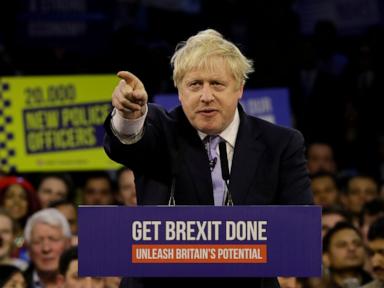
Boris Johnson rode into power on the back of a simple three-word slogan, "Get Brexit Done." He won a massive majority in 2019 because people just wanted the drama to end. But Johnson quickly discovered that signing a treaty is not the same as managing its real-world economic fallout. His administration collapsed under a mountain of scandals, but the economic friction he introduced never went away.
Liz Truss lasted a historic 44 days, crashing the financial markets with an aggressive, deregulatory agenda that served as an ideological caricature of the Brexit promise. Rishi Sunak tried to restore adult supervision but found himself trapped in a doom loop of high inflation, low growth, and a restless right wing led by Nigel Farage. Sunak was wiped out by Starmer in a historic electoral shift, yet the curse remains undefeated.
The Myth of Taking Back Control
The campaign to leave the bloc was built on an emotive appeal. Leaders like Johnson promised that walking away from the 28-member political union would let the nation take back control of its laws, its money, and its borders. It was a brilliant marketing pitch. It spoke directly to communities that felt left behind by globalization.
The trouble started when theory met reality. You cannot untangle four decades of deep economic integration without paying a massive price.
Trade barriers emerged overnight. British exporters found themselves buried under mountain ranges of fresh paperwork. Small businesses that relied on quick, tariff-free access to the European mainland watched their profit margins vanish.
The promised bonfire of red tape turned out to be a fiction. If British firms want to sell goods to their largest nearby market, they still have to follow rules set in Brussels. Only now, British politicians have zero say in writing those rules. It is a loss of control masquerading as independence.
Starmer Final U Turns and Collapse
When Labour won power, Starmer promised to bring stability back to Westminster. He explicitly ruled out rejoining the single market or the customs union, terrified of alienating working-class voters who had backed leaving the European Union in 2016. He tried to chart a middle path, hoping to tinker with the existing trade agreement to smooth out the rough edges.
It was a fatal miscalculation. You cannot fix a structural economic wound with minor administrative adjustments.
Over the past two years, the British economy remained stuck in first gear. Public services like the National Health Service crumbled under structural deficits. Starmer found himself forced into a series of embarrassing policy reversals on green investment and labor rights, trying desperately to keep businesses happy while avoiding a backlash from his own left wing.
The final blow came this month during the Makerfield special election. Andy Burnham, running on a platform of radical political change and closer cooperation with Europe, secured a resounding victory that shattered Starmer's authority within his own party. More than 100 Labour lawmakers demanded a change in leadership, forcing Starmer to step down.
A Nation Polarized Beyond Recognition
Beyond the macroeconomic data, the true damage of the past ten years is social. The 2016 vote created a binary identity dynamic that completely supplanted traditional party loyalty. People stopped identifying simply as Labour or Conservative; they became Leavers or Remainers.
This polarization has turned British public life into a blood sport. Political violence and regular public intimidation have spiked. The recent riots in Northern Ireland, sparked by ongoing disputes over trade borders and local identity, show how fragile the peace remains when constitutional certainties are pulled apart.
Trust in public institutions has flatlined. Voters look at Westminster and see a self-absorbed political class that has spent a full decade arguing about constitutional mechanics while local roads disintegrate and energy bills skyrocket.
What Comes Next for the Unruly State
The immediate path forward is messy. Andy Burnham is already positioning himself as the frontrunner to take over the Labour Party and the premiership, branding himself as a leader who can bridge the gap between Westminster and the neglected regions. But whoever wins the keys to Number 10 will face the exact same arithmetic that broke the last six prime ministers.
If you want to stabilize the British economy, you have to move closer to the European market. If you move closer to the European market, you trigger an immediate, furious backlash from a vocal segment of the electorate and a populist right wing that stands ready to exploit any perceived betrayal of the 2016 vote.
If you are a business leader or an investor looking at the UK today, stop waiting for a sudden return to pre-2016 predictability. The unruly mess is not a passing phase; it is the new operational environment.
To survive this environment, focus on decentralization. Build resilience into supply chains by diversifying away from single-point dependencies on UK-EU border crossings. Watch regional leaders like Burnham rather than relying entirely on announcements from London. Power is shifting outward because the center cannot hold.