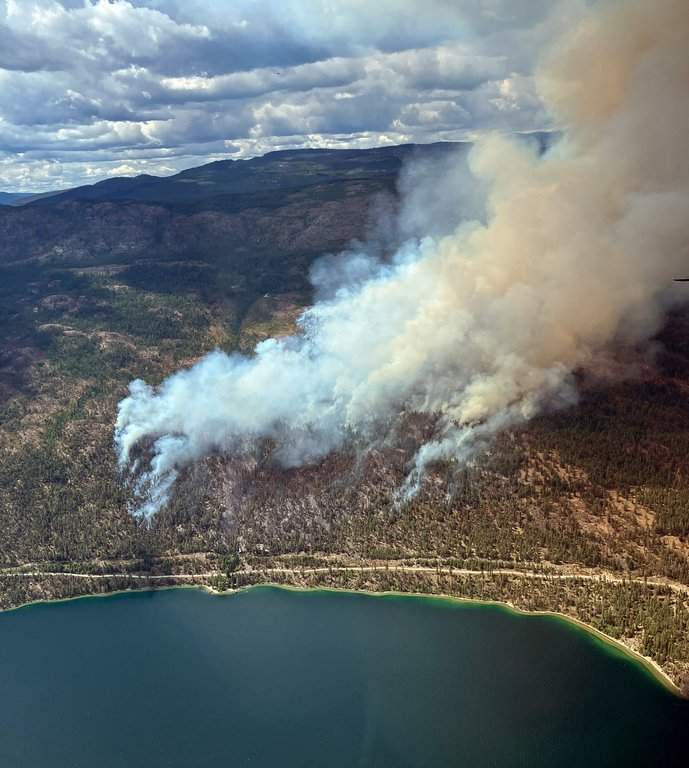
An explosive, fast-moving wildfire tore through the Okanagan Valley with terrifying speed, forcing the entire community of Summerland and thousands in Peachland to flee for their lives.
British Columbia Premier David Eby didn't hesitate. He declared a provincial state of emergency as more than 20,000 residents were forced from their homes in a matter of hours. The blaze, known as the Bald Range wildfire, grew from a localized fire into a 9,500-hectare monster almost overnight. Don't forget to check out our earlier post on this related article.
If you live anywhere near the B.C. Interior, this nightmare is too familiar. But the sheer velocity of this fire caught even seasoned emergency officials off guard.
An Explosive Threat on Okanagan Lake
First reported on a Friday afternoon about 15 kilometres west of Summerland, the Bald Range fire expanded at a rate that emergency personnel described as unprecedented. To read more about the background here, TIME offers an in-depth summary.
Winds whipped the flames through tinder-dry forests and orchards, turning an ordinary August weekend into a desperate evacuation scramble. Local information officer Erick Thompson called it one of the quickest-moving fires the region has ever seen.
- Entire community of Summerland ordered to evacuate (population 12,000).
- Around 8,000 additional residents displaced in and around Peachland.
- Over 50 people rescued by tactical aircraft after becoming trapped behind fire lines.
The BC Wildfire Service categorized the blaze as rank 5 behavior. That means an aggressive, highly organized flame front moving at extreme speeds with long-range spotting. When a fire starts throwing embers hundreds of meters ahead of its main body, traditional containment lines become practically useless.
Why the Province Pulled the Emergency Trigger
A provincial state of emergency doesn't magically put out fires or drop water bombers from the sky. So why declare it?
Emergency Management Minister Kelly Greene explained that the move grants the provincial government extraordinary powers to handle logistics. When tens of thousands of people are displaced simultaneously, normal administrative red tape can slow down critical responses.
The declaration allows the province to:
- Secure emergency accommodations quickly for displaced families.
- Enforce local travel restrictions or bans if sightseers get in the way.
- Prevent price gouging on essential items and temporary housing.
- Ration fuel or supplies if transportation corridors remain blocked.
With over 100 active wildfires burning across B.C. and nearly half classified as out of control, provincial resources are stretched to their absolute limits.
Dramatic Rescues Behind Fire Lines
The fire moved so fast that Highway 97 and local escape routes were cut off almost instantly. Scores of residents found themselves trapped as thick smoke rolled in and walls of flame blocked the roads.
That's when emergency personnel had to pivot from firefighting to direct rescue operations. Cliff Chapman, director of wildfire operations for the BC Wildfire Service, confirmed that firefighting helicopters were pulled off water-drop duties and repurposed to pluck stranded citizens out of danger zones.
Search-and-rescue teams, local RCMP, and regional volunteers worked through the night. They went door-to-door in heavy smoke to ensure no one was left behind. Healthcare facilities also felt the crunch, forcing the emergency relocation of hundreds of vulnerable seniors from local care homes like the Summerland Seniors Village and Dr. Andrew Pavilion.
What You Need to Do Right Now
If you're in British Columbia, staying informed is your best defense. Do not rely solely on social media algorithms or crowded mapping apps that might accidentally route you straight toward an active fire zone.
Check official channels like Emergency Info BC and DriveBC before planning any movement. If an evacuation order drops for your neighborhood, pack your essentials and get out immediately. First responders need clear roads to do their jobs, and staying behind puts trained rescue workers at risk when they have to come back for you.
Listen to the warnings. Leave early.