The UK government just bought a failing steel plant that was losing £700,000 every single day.
Let that sink in.
If you are wondering why the state has decided to take over British Steel, you are not alone. Most people see a struggling industry and wonder why we are using taxpayer cash to prop up something the private sector wanted to abandon.
But this is not just a story about propping up an old industry. It is a story about national security, the physical survival of British railways, and a massive geopolitical battle between London and Beijing.
On July 16, 2026, the government officially brought British Steel into public ownership. This move ended 15 months of frantic, behind-the-scenes legal panics, emergency recalls of Parliament, and a direct stand-off with the plant’s Chinese owners, Jingye Group.
Here is the honest truth about why British Steel has been nationalised, what it means for your pocket, and why letting it fail was never an option for the government.
Why Has British Steel Been Nationalised Now
To understand the sudden nationalisation, you have to look back to April 2025.
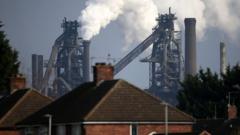
The Chinese industrial giant Jingye Group, which bought British Steel out of insolvency in 2020, basically threatened to walk away. They claimed they were losing almost three-quarters of a million pounds every day at the Scunthorpe plant in Lincolnshire. They planned to switch off the massive blast furnaces.
Now, in the steel business, turning off a blast furnace is not like turning off a light switch.
Once a blast furnace cools down, the molten metal inside solidifies. The entire structure is ruined. It can cost hundreds of millions of pounds and take years to rebuild them. If Jingye turned them off, British primary steelmaking was dead forever.
Parliament panicked.
Politicians rushed back to Westminster on a Saturday in April 2025 to pass emergency legislation called the Steel Industry (Special Measures) Act. That law gave the government temporary powers to step in, fund the running costs, and prevent a chaotic shutdown.
For 15 months, civil servants tried to negotiate a deal with Jingye. They wanted a plan that kept the plant running while saving taxpayer money. But those talks hit a brick wall. The government realised they were throwing good public money after bad with no long-term control.
So, they took the ultimate step.
They fast-tracked the Steel Industry (Nationalisation) Act 2026 through Parliament. Once the law got Royal Assent, ministers immediately signed the transfer papers. British Steel was officially expropriated on July 16, 2026.
The Raw Truth About Sovereign Capability
Why do we even need to make our own steel when we can buy it cheaper from abroad?
This is the central question. And the answer is scary.
The Scunthorpe plant is the only place left in the UK that makes "virgin" steel from scratch using iron ore and coal. The other big UK steel site, Port Talbot in Wales, is currently transitioning to electric arc furnaces which melt down recycled scrap metal.
If Scunthorpe closed, the UK would have zero capacity to produce primary steel. We would become the only G7 nation unable to make its own raw steel from scratch.
Consider what Scunthorpe actually produces.
It makes long steel products. These are the massive girders used in major construction and, crucially, the heavy rails used for our entire railway network.
If the UK had to import all of its railway steel, we would be entirely dependent on foreign supply chains. If a global crisis hit, or if shipping lanes blocked, we could not repair our own train tracks.
The Business Secretary, Peter Kyle, put it bluntly when he said that without Scunthorpe, the UK would be "at the mercy of international markets" for the basic materials that build our defense systems and infrastructure.
It is about control.
The Decarbonisation Dilemma and the Clean Steel Bill
We cannot talk about Scunthorpe without talking about coal.
The blast furnaces at Scunthorpe are massive polluters. They burn coking coal to extract iron from ore, releasing millions of tonnes of carbon dioxide into the atmosphere. The plant is one of the biggest single industrial carbon emitters in the country.
The government knows this. They do not actually want to run coal-fired blast furnaces forever.
The plan is to move towards green steel by installing electric arc furnaces. These run on electricity and melt down scrap metal instead of burning coal.
But building these new green systems is incredibly expensive. It will cost well over £1 billion to convert the Scunthorpe site.
Private companies do not want to fund that transition alone. Jingye wanted massive government subsidies to do it, but they would not guarantee jobs or long-term production.
By nationalising the plant, the taxpayer takes on the massive financial burden of clean upgrade work. But the state also gets to control how it happens.
What Happens to the Jingye Group Now
The nationalisation has caused a major diplomatic headache.
The Chinese government is not happy about this. Their Ministry of Commerce has publicly opposed the takeover, stating they are "strongly dissatisfied" with the decision.
And then there is the fight over money.
Even though Jingye was losing millions and was ready to walk away, they are now claiming that British Steel was a highly valuable asset. They want a huge compensation payout.
Under the new Nationalisation Act, an independent valuer will be appointed to work out if any compensation is actually owed to the Chinese group. The compensation scheme rules will be written up in autumn 2026.
Expect a massive, messy legal battle. Jingye will fight for every penny, and the British government will argue that the Chinese firm left the plant on life support, requiring taxpayer intervention to keep it from collapsing.
How This Impacts Workers and Local Businesses
If you live in Scunthorpe, this is about survival.
The plant directly employs around 2,700 people. But the wider supply chain is even bigger. Up to 20,000 local jobs in engineering, transport, maintenance, and regional services rely entirely on the steelworks keeping its doors open.
A sudden shutdown would have turned Scunthorpe into an industrial ghost town overnight.
Unions like Community and the GMB are relieved. They have spent years watching workers suffer through constant threats of redundancy. For them, state ownership means stability.
But this does not mean the jobs are safe forever.
Electric arc furnaces require far fewer workers to operate than traditional blast furnaces. Even with state backing, the transition to green steel will almost certainly mean job losses over the next decade. The difference now is that those losses will likely be managed through retraining and voluntary redundancy schemes funded by the state, rather than a sudden, brutal mass firing.
Practical Next Steps for Businesses in the Steel Supply Chain
If your business supplies British Steel, or if you rely on their steel for your own operations, you need to navigate this transition carefully. State takeovers bring stability, but they also bring massive bureaucratic changes.
Audit your contract status
Your existing agreements were made with British Steel Limited under Jingye ownership. The new state-appointed board of directors is reviewing all operations. Contact your procurement representative immediately to ensure your supply agreements and payment terms remain valid under the new public management.
Prepare for strict environmental audits
Because the government now owns the plant, they will face intense scrutiny over carbon emissions and environmental standards. If you are a supplier, expect the purchasing team to ask for detailed data on your own carbon footprint. Start cleaning up your supply chain processes now.
Diversify your client base
While the immediate threat of closure is gone, the long-term shift to electric arc steelmaking means the types of products Scunthorpe buys and sells will change. Do not rely entirely on British Steel. Look for alternative clients in the green construction and renewable energy sectors to hedge your risks.
The era of cheap, private-equity-backed UK heavy industry is ending. We are moving into a period where the state holds the keys to our industrial base, and businesses must adapt to the new public sector realities to survive.