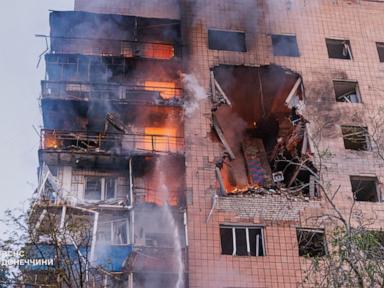
The illusion of a stable Middle East just shattered completely. When the United States and Iran quieted their guns last month with an interim deal, policy circles breathed a brief sigh of relief. That relief didn't even last four weeks. Today, the region finds itself on the razor edge of an all-out war that threatens to trap neighboring nations and choke global energy supply chains.
If you're wondering how quickly a diplomatic breakthrough can dissolve into absolute chaos, look no further than the escalating cycle of violence over the past week. The fragile truce has completely crumbled. Following the tragic killing of American troops stationed at a base in Jordan on Friday, the U.S. military responded on Sunday with massive, punishing airstrikes hitting deep inside Iranian territory. Also making news in related news: Why The Halted Ramallah World Cup Screening Matters More Than The Final.
Iran didn't back down. Within hours, Tehran launched a barrage of ballistic missiles and drones across its western borders. While many of these weapons targeted U.S.-allied Arab states, the trajectories are flying alarmingly close to Israeli borders, forcing regional militaries into high alert.
The stakes are no longer confined to proxy skirmishes. We are witnessing a direct, infrastructure-level war between a global superpower and a heavily armed regional heavyweight. Further details on this are detailed by BBC News.
The Anatomy of the Weekend Escalation
The current flashpoint started with an Iranian missile strike on a military outpost in Jordan, which left two American service members dead and several others hospitalized. For Washington, this crossed an explicit red line that demanded an immediate, visible response.
U.S. Central Command deployed fighter jets and launched Tomahawk cruise missiles from warships stationed in nearby waters. The official objective wasn't just to send a message; it was to physically degrade the Islamic Revolutionary Guard Corps (IRGC) and its ability to project power. The strikes specifically targeted:
- Coastal surveillance outposts and air defense nodes.
- Deeply buried missile and drone storage depots carved into mountain ranges.
- Maritime infrastructure used to control regional shipping lanes.
One of the most contentious claims emerged from Tehran shortly after the bombs dropped. Iranian state media asserted that American missiles struck the construction site of the Darkhovin nuclear power plant in the southwest part of the country. The International Atomic Energy Agency (IAEA) quickly clarified that the site is in its absolute infancy, containing zero nuclear material during the last inspections. Satellite data from Planet Labs confirmed the area consists mostly of cleared earth rather than functional facilities, but the psychological boundary of striking a nuclear-labeled site has already been crossed.
Why Arab Allies Are Caught in the Crossfire
What makes this iteration of the conflict uniquely dangerous is Iran's shift in targeting strategy. Instead of focusing its immediate wrath directly on Israel—which initially entered the active war dynamic with the U.S. back on February 28—Tehran is systematically punishing Arab states that host American forces or cooperate with Western defense frameworks.
Jordan, Kuwait, and Bahrain all had to fire up their air defense grids on Sunday to knock down incoming threats. The psychological toll on these local populations is massive, and the physical threat to everyday infrastructure is growing by the hour.
Take Kuwait, for instance. For the second time in just 48 hours, an attack struck a vital power and water desalination plant. Kuwait relies on desalination for roughly 90% of its domestic drinking water. While its Ministry of Electricity managed to keep the power grid stable this time, targeting basic human lifelines changes the ethics of the conflict entirely. The Gulf Cooperation Council has already labeled these systematic strikes on civilian utilities as outright war crimes. Under international humanitarian law, civilian infrastructure loses its protected status only if a military is actively using it. Right now, these acts look like pure coercion.
The Looming Shadow Over Israel
While Arab neighbors take the brunt of the kinetic strikes, Israel is watching its borders with extreme anxiety. The Israeli military issued urgent warnings after Iranian missiles aimed at the Jordanian port city of Aqaba came dangerously close to crossing the frontier.
Just across the line lies the Israeli resort city of Eilat. Air defense operators in Eilat had to launch two interceptors to neutralize falling debris from the Jordanian intercepts, reminding local citizens that the war is right on their doorstep. Israeli military leadership, including Lt. Gen. Eyal Zamir, made it clear that their forces are fully prepared to resume direct combat operations if the security bubble pops. If Iranian ordnance accidentally impacts Israeli soil, a multi-front regional explosion will be impossible to avoid.
The Global Economic Fallout
You don't need to live in the Middle East to feel the consequences of this breakdown. The immediate economic choke point is the Strait of Hormuz.
Because of the heavy coastal strikes and retaliatory threats, commercial shipping traffic through the strait has ground to a functional halt. Roughly a fifth of the world's petroleum passes through this narrow body of water daily. When insurance rates skyrocket and shipping lanes close, energy markets panic. We aren't just looking at localized military friction; we're staring down the barrel of a global supply shock that could trigger widespread inflation if the U.S. and Iran can't find an off-ramp.
Where Do We Go From Here?
The window for diplomatic mediation is closing fast, but avoiding a catastrophic regional war requires immediate tactical adjustments from the global community.
First, international maritime coalitions must establish secured, heavily defended shipping corridors outside the immediate line of fire to prevent total economic strangulation. Second, Arab states caught in the crossfire must leverage their diplomatic channels to pressure Iran against hitting vital infrastructure like desalination plants, framing these acts clearly as violations of international norms. Finally, Western allies must rapidly deploy supplemental air defense batteries to vulnerable partners like Jordan and Kuwait to prevent catastrophic defensive failures. The coming days will decide whether the region finds a way to de-escalate or falls entirely into the abyss of open warfare.