The war in Ukraine has hit a grim new rhythm. If you’ve been following the news, you know the cycle: a night of terror, a spike in casualty counts, and a desperate scramble for air defense. But beneath the numbers and the headlines, there's a grinding reality that rarely makes the front page. Families in Kiev are living in a state of perpetual anticipation, waiting for the next siren to tear through the night.
The latest wave of Russian strikes isn't just a military maneuver. It's a calculated attempt to break the infrastructure and the spirit of a city that refuses to go quiet. When the reports come in about casualties, whether it’s six, fourteen, or more, they often fail to capture the sheer scale of the disruption. It’s not just about the loss of life—which is devastating enough—but about the total breakdown of normalcy.
Understanding the New Wave of Nighttime Attacks
These aren't random occurrences. We're seeing a pattern of deep-night strikes, often between 1:00 AM and 4:00 AM. Why then? It’s when people are at their most vulnerable, huddled in homes that offer zero protection against modern ballistic technology. The goal is clear: maximize the psychological impact and overwhelm the remaining anti-aircraft systems.
When you look at the recent data, you’ll see the intensity shifting. The Russian military is no longer just targeting tactical positions; they're aiming for residential hubs, transit centers, and energy nodes. For someone on the ground, this means that even a "quiet" district in Kiev can suddenly become a front line. The indiscriminate nature of these drone and missile salvos has turned every suburban street into a potential impact zone.
The Human Toll Behind the Statistics
You'll see numbers like "14 dead" or "6 dead" in headlines, but these figures are almost always preliminary. They don't account for the hundreds who lose their homes, the thousands who spend their nights in subways, or the long-term trauma of children growing up in a war zone.
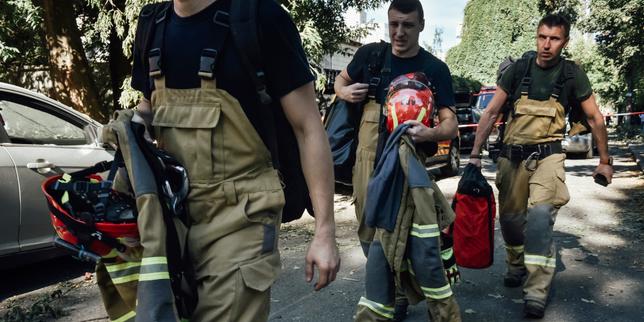
I’ve spoken to enough people in this conflict to know that the "aftermath" is where the real struggle happens. After an explosion, the city doesn’t just mourn; it clears rubble. People pull together to patch up broken glass, cover roofs with plastic sheeting, and find ways to get the lights back on. This resilience is what keeps the country standing, but it's not a sustainable way to live. The exhaustion is visible everywhere.
Why Air Defense is the Only Real Shield
The conversation in international summits—like the ones in Ankara—always drifts back to one thing: air defense. Zelenskyy and his team aren't asking for more men; they’re asking for more "eyes" and more "interceptors." It’s become a cold math problem. Can the current batteries catch enough incoming projectiles?
The reality is that Russia is using a mix of cheap, mass-produced drones and expensive, high-speed ballistic missiles. It’s a "swarm" strategy. They force the Ukrainian defense to exhaust their supply of high-end interceptors on cheap decoys. Once the system is tapped out, the real threat hits. This is the tactical trap that Ukraine has been trying to escape for months.
What Happens When the Sirens Stop
For those of you trying to make sense of the chaos, look at the logistics. The conflict is no longer just about territorial gains on the map. It's a war of attrition. The side that can maintain its power grid, its supply chains, and its internal logistics wins.
When you hear about these strikes, don't just look for a body count. Look for the target. Was it a substation? A distribution center? A housing block? These are the indicators of a strategic shift toward crippling the country’s ability to survive the winter.
Preparing for the Long Haul
If you’re watching this from afar, the best way to understand the situation is to ignore the sensationalist takes. Focus on the hard facts. The fighting is becoming more frequent and more geographically dispersed. Every strike in Kiev is met with a drone response on Russian border regions, leading to a tit-for-tat escalation that seems to have no off-ramp.
The takeaway isn't that we’re on the verge of a single "final" battle. It’s that we’re in a long, brutal slog. The most important thing you can do to keep informed is to track the reports from local civil defense authorities rather than just the high-level political announcements. They’re the ones managing the recovery, the evacuations, and the daily reality of a city under fire.
If you're looking for where this goes next, keep an eye on the supply of defense systems. The outcome of the coming months depends entirely on whether those batteries get delivered and if the city can keep its basic systems running through another season of darkness. Stay critical of the sources you read, and understand that in a war this complex, the truth is often found in the small details, not the big, bold print.