Donald Trump just dropped a bombshell at the NATO summit in Ankara, telling Ukrainian President Volodymyr Zelenskyy that the US will grant Kyiv a license to manufacture its own Patriot missile interceptors. "That's pretty cool," Trump remarked, adding that this way, Ukraine can't complain about the US not giving them enough weapons.
It sounds like a massive strategic victory for Kyiv. The reality? It is a logistical and bureaucratic mountain that will take years to climb. For an alternative perspective, read: this related article.
If you are tracking the air war in Ukraine, you know the stakes couldn't be higher. Russia has shifted its strategy, leaning heavily into ballistic missile strikes because they know Kyiv's stockpiles of high-end interceptors are running dangerously low. Zelenskyy has been begging for licenses to build these weapons domestically, arguing that Ukrainian factories can scale up production to protect both his country and regional partners.
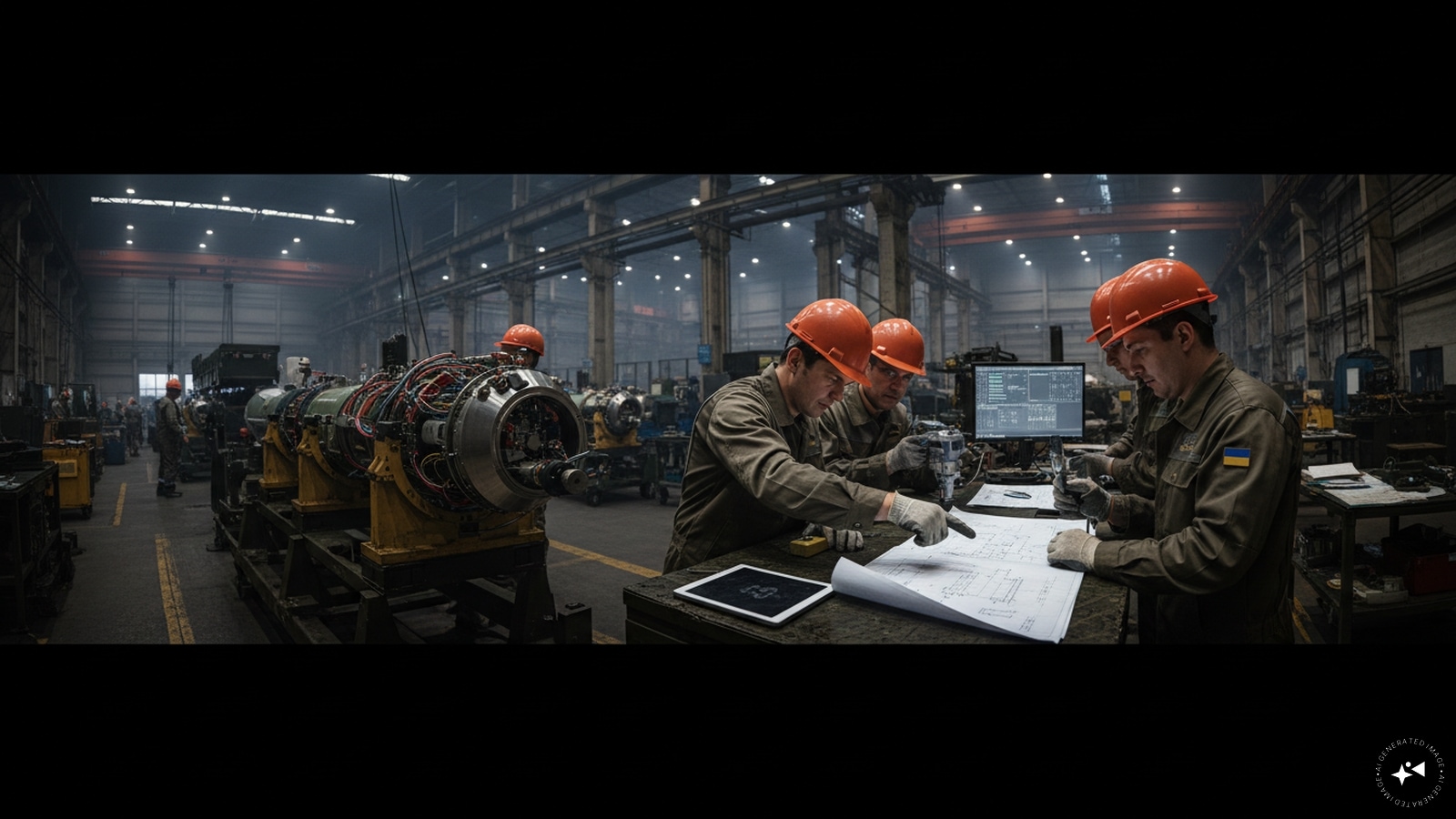
But don't buy into the political hype that this is a quick fix. Buying a license is just a piece of paper. Building a complex, Mach 4 interceptor in a war zone is a completely different beast. Similar analysis on this trend has been provided by TIME.
The Illusion of the Fast Timeline
Trump claims that Ukrainian engineers can figure out the complexity quickly and might even get things rolling in a few months. He even admitted he hadn't yet clued in Lockheed Martin or RTX Corporation (the actual defense giants making the hardware), though he assumed "they'll be thrilled."
They probably aren't thrilled. They are likely looking at the supply chains and shaking their heads.
Experts and defense insiders are already waving red flags. While Ukrainian military tech firms have done a phenomenal job pumping out thousands of domestic strike drones and adapting Soviet-era launchers, you can't just MacGyver a Patriot missile. Becca Wasser, the defense lead at Bloomberg Economics, pointed out that a single Patriot missile takes years to build from scratch. The idea that Ukraine will be churning these out to stop Russian bombers by winter is pure fantasy.
Even Ukrainian defense officials are tempering expectations. Serhiy "Flash" Beskrestnov, an adviser to Ukraine's defense ministry, openly stated that organizing the production capacity, getting the documentation, training specialists, and waiting on subcontractors will take at least a year just to get a baseline set up. Other aviation experts estimate it will be 2029 before the first fully Ukrainian-assembled Patriot missile rolls off the line.
Supply Chain Bottlenecks and the $5 Million Problem
The core issue isn't just blue-sky engineering; it's the highly specialized, severely strained global supply chain. The premier version of the interceptor, the PAC-3, costs roughly $5 million per unit. It is an exquisite piece of military technology designed to hit a ballistic missile traveling at hypersonic speeds, nose-to-nose. Currently, only two countries on earth actually manufacture these: the United States and Japan.
Breaking down the missile reveals why a localized Ukrainian assembly line will choke on component shortages:
- The Seeker: The PAC-3 uses an ultra-sophisticated active radar seeker to guide itself in the final seconds of flight. Lockheed Martin doesn't even make this part—Boeing does, out of a facility in Huntsville, Alabama. Boeing is already flat out trying to scale production from 650 seekers a year to 2,000 to meet global demand from the US, Europe, and the Middle East. If Boeing can't build the seekers fast enough, Ukraine's factories will just be building empty metal tubes.
- Solid-Fuel Rocket Motors: You can't just mix rocket fuel in a warehouse. The solid-propellant engines required to give the Patriot its insane speed and maneuverability require extreme manufacturing precision. A tiny flaw in the chemical mix or casing means the missile explodes on the launchpad.
- Attitude Control Motors: The PAC-3 steers using a ring of tiny explosive motors near its nose to pull tight maneuvers in the thin upper atmosphere. Producing these consistently is an industrial art form that takes years to master.
A Giant Bullseye on the Factory Floor
Let's look at the tactical nightmare of setting up this infrastructure. Russia possesses excellent intelligence networks inside Ukraine and heavy satellite coverage. The moment ground breaks on a facility meant to produce the ultimate Western air defense weapon, it becomes Russia's number one target.
"If I were doing this, I would ask the Ukrainians to build the plant in Poland," warns William Alberque, a senior fellow at the Pacific Forum. "Otherwise, it will be a prime target, and they will never be able to build it."
While Poland is already working on agreements to service European PAC-3 missiles, moving the actual manufacturing outside of Ukraine defeats Trump’s stated goal of making Kyiv self-sufficient on its own soil. If they build it inside Ukraine, they will have to burn through their existing, limited supply of Patriot missiles just to protect the factory that is supposed to build future Patriot missiles. It is a cynical, exhausting paradox.
The Immediate Danger Facing Ukraine
While politicians talk about 2029 timelines, Ukraine is losing skies right now. In recent Russian aerial barrages, Ukrainian forces intercepted the vast majority of subsonic cruise missiles and Iranian-designed drones, but failed to shoot down a single ballistic missile.
Because interceptors are so scarce, Ukrainian commanders have had to turn off the automatic engagement modes on their remaining Patriot batteries. Operators now manually decide whether a target is dangerous enough to warrant launching a multimillion-dollar missile. If a ballistic missile is heading toward an empty field, they let it hit. They have no choice.
The Institute for the Study of War (ISW) warns that Russia knows a domestic Ukrainian Patriot line is years away. This creates a dangerous window of opportunity. Moscow is highly likely to intensify its ballistic terror campaigns over the next 12 to 18 months, aiming to cripple Ukraine's energy grid and defense infrastructure before any domestic mass production can level the playing field.
Real World Next Steps for Kyiv
The license is a win for Ukraine's post-war security architecture, but it does nothing to solve the crisis today. To survive long enough to actually use this U.S. license, Ukraine and its partners must pivot immediately to stop-gap measures.
- Prioritize Component Subcontracts: Instead of trying to build the entire missile, Ukrainian defense firms should focus on manufacturing the less sensitive, easier-to-build components—like the aluminum airframes or control fins. This gets them integrated into the global Lockheed Martin supply chain early and earns goodwill.
- Push for Co-Production in Border States: Kyiv should negotiate to locate the heaviest manufacturing facilities just across the border in Poland or Romania. This keeps the factories safe under NATO's Article 5 umbrella while allowing Ukrainian engineers to lead the assembly.
- Demand Immediate Bridging Stockpiles: Zelenskyy must leverage Trump's admission that "we have Patriots, but we don't have that many" to demand short-term transfers. If the US expects Ukraine to build its own weapons later, Washington must provide the physical interceptors needed to keep the country alive today.