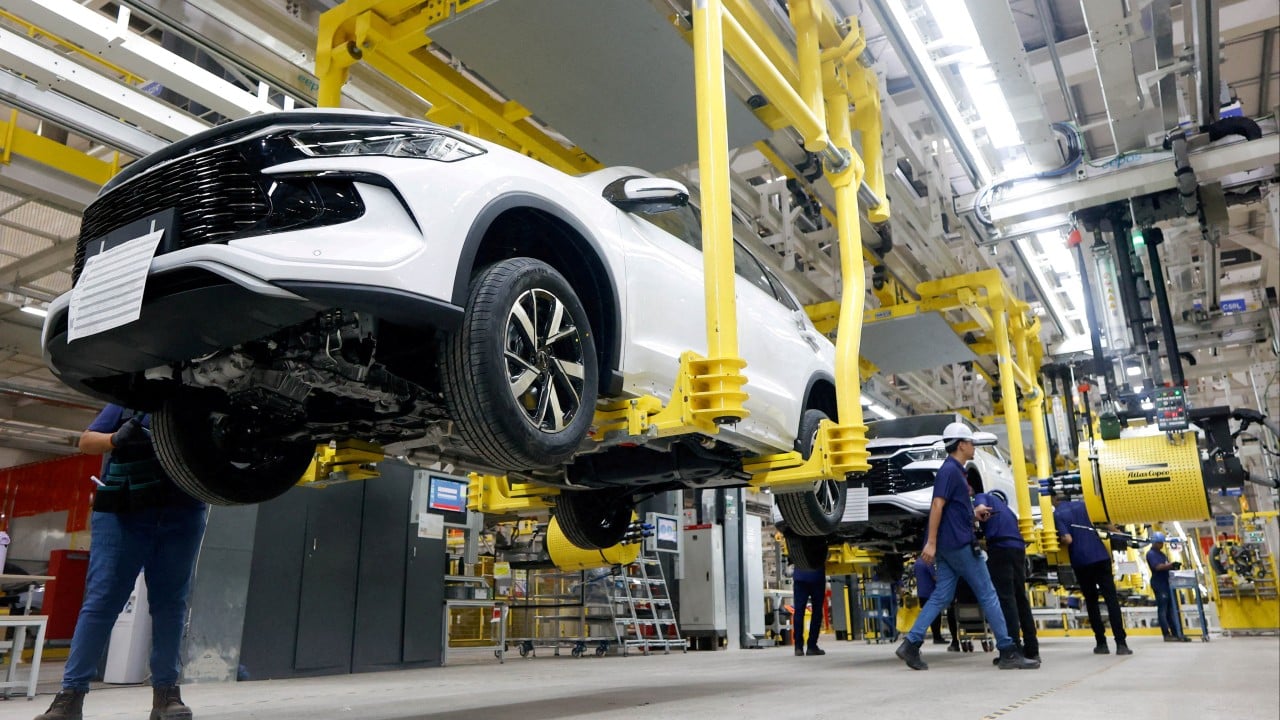
While Brussels spends months debating trade protectionism and layering hefty duties on Chinese electric cars, BYD is quietly changing the map of global car manufacturing from a former Ford factory floor in Bahia.
The numbers coming out of South America tell a story that legacy Western carmakers desperately need to pay attention to. BYD just rolled its 100,000th new energy vehicle off the assembly line at its Camaçari facility in Brazil. The plant now employs over 5,500 local workers, and executives are already taking 50,000-unit export orders from both Argentina and Mexico.
European regulators think they can tax Chinese EV dominance out of existence. Brazil shows why that strategy falls flat when a foreign competitor decides to put down real roots.
The Camaçari Shift Changes Everything
For years, critics claimed Chinese carmakers were just dumping cheap imports onto overseas markets to clear out domestic overcapacity. That narrative held water when car-carrying ships jammed up Latin American ports back in 2024 and 2025. But BYD changed tactics.
Instead of fighting Brazil’s rising import tariffs—which hit 35 percent—BYD bought Ford's abandoned industrial complex in Bahia and poured capital into local manufacturing. The Seagull hatchback (sold locally as the Dolphin Mini) is rolling off a Brazilian production line instead of sitting on a cargo ship from Shenzhen.
BYD Camaçari Production Snapshot
- Workforce: 5,500+ local employees
- Milestone: 100,000 NEVs produced
- Local Sourcing Goal: 50%+ components by 2027
- Major Export Markets: Argentina (50k orders), Mexico (50k orders)
The company aims to source more than half of its vehicle components locally by 2027. That moves BYD out of the target zone for border tariffs and builds a supply chain that legacy brands like Volkswagen and Stellantis can't easily push around.
It wasn't a completely smooth transition. Construction encountered serious hurdles late in the build process, including local regulatory scuffles over labor contractor standards. But BYD pushed through the friction. Today, Camaçari serves as a regional springboard into neighboring markets across South America.
Why Europe's Tariff Wall Won't Fix the Real Problem
Over in Europe, the mood couldn't be more different. EU officials slapped anti-subsidy duties as high as 45.3 percent on Chinese-built battery electric vehicles, and they're expanding those penalties to cover plug-in hybrids.
The goal was simple: protect European automakers from getting squeezed out on their home turf. But tariffs are a temporary bandage on a structural wound.
European drivers aren't turning to Chinese models purely because they're subsidized. They buy them because European legacy brands spent years building expensive, heavy luxury EVs while ignoring affordable daily drivers.
Look at what you get on a showroom floor in Madrid or Munich right now. If a buyer wants a solid, feature-packed compact EV for under €30,000, European options remain shockingly slim. Chinese brands stepped into that gap. Slapping a tariff on imported cars makes the vehicles more expensive for regular buyers, but it doesn't magically make a local automaker's factory more efficient.
Worse, Europe's trade walls ignore the obvious countermove. Chinese carmakers aren't going to pack up and go home; they're going to build factories inside Europe just like they did in Brazil. Chery already set up shop in Barcelona through a joint venture, and BYD is building its own European plant in Hungary. Once those lines start humming, border tariffs become entirely irrelevant.
The Real Numbers Behind the Latin American Surge
Latin America used to be considered a secondary destination for automotive innovation. Western automakers routinely sold older platforms and stripped-down models in places like Brazil and Colombia at premium margins.
Chinese brands flipped that script by shipping current-generation tech at aggressive prices.
Industry data shows Chinese brands accounted for roughly 10 percent of all passenger vehicles sold in Brazil in 2025. Total EV sales across Brazil are projected to hit 600,000 units, claiming over 22 percent of the overall market. Chinese brands expect to capture roughly half of those sales, with a growing percentage coming from local assembly plants rather than Asian ports.
Brazil EV Market Expansion
2024 Total Sales: ~177,000 units
2025 Total Sales: ~275,000 units (+55%)
2026 Estimated Sales: ~600,000 units (22.9% market share)
The math makes sense for local drivers. Long-distance commuting is common in South America, and fuel prices eat up a massive chunk of monthly income. Drivers switching from gas to electricity can save up to 2,500 reais ($465) every month on fuel costs alone. When the operational savings are that obvious, buyers don't care where the brand originated—they care about their bottom line.
What Legacy Automakers Keep Getting Wrong
If you talk to traditional auto executives, you'll hear two common complaints about Chinese competitors: service networks and resale value.
Both points are fair. Chinese brands lose value quickly on the secondary market compared to a Toyota or a Škoda. Spare parts can take weeks to arrive, and dealership networks outside major metros are still thin. If your car breaks down in a smaller city, getting it fixed can turn into a headache.
Legacy carmakers rely on these weaknesses to keep customers in their ecosystem. But banking on your rival's temporary growing pains is a dangerous strategy.
BYD isn't just selling cars in Latin America; it's buying up dealership groups, training technicians, and stockpiling replacement components across regional hubs. The service gaps that exist today will shrink fast over the next 24 months.
Meanwhile, traditional manufacturers like Toyota, Renault, and Stellantis are rushing to launch their own localized hybrid models in South America to defend their turf. They're fighting back, but they're playing defense on ground they used to own entirely.
What Comes Next for the Global Car Industry
Trade barriers only buy time; they don't change consumer preference or engineering reality. If legacy carmakers want to survive the next decade of electrification, they need to adapt to three hard truths:
- Localize production fast. You cannot rely on long-distance shipping networks when protectionist trade policies change overnight.
- Build for the mass market. High-margin luxury EVs won't save a brand when compact, affordable models dominate global volume.
- Control the battery supply chain. Companies that design their own battery chemistry and control raw materials will always out-price those buying off-the-shelf packs from third-party vendors.
BYD's milestone in Brazil isn't an isolated success story—it's a playbook for how modern industrial giants expand globally under heavy political fire. Policymakers in Western capitals can continue adjusting tariff percentages, but the real battle is being fought on factory floors in Camaçari, Barcelona, and beyond.