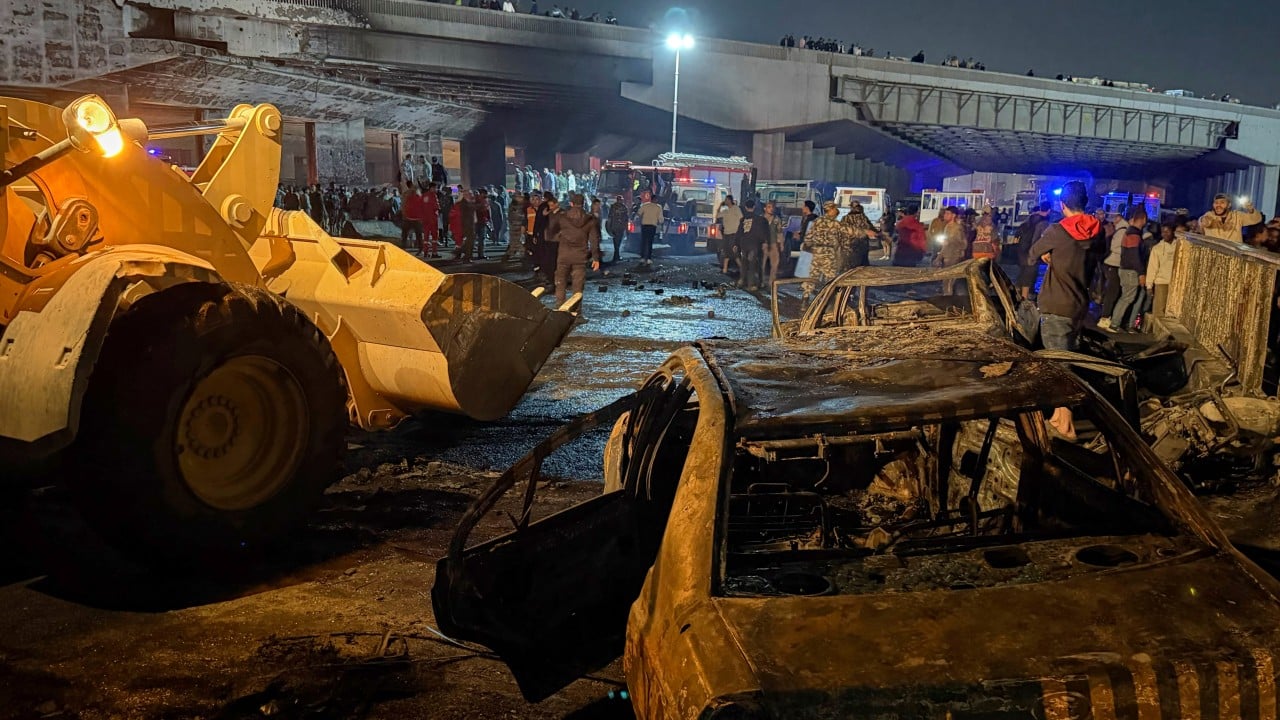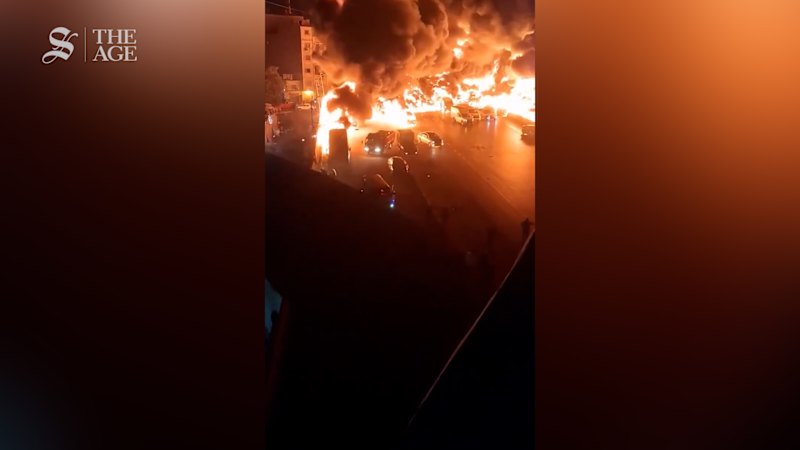
A privately operated fuel tanker overturned on Cairo's Ring Road in the Al-Warraq district on Wednesday, November 25, 2026, setting off a massive fire that killed at least 30 people—with some health reports putting the death toll at 31—and injured more than a dozen to two dozen others. Preliminary inspections by Egypt's Public Prosecution found 27 vehicles burned, including cars and motorcycles, while 39 ambulances responded to the scene. Honestly, when a single highway crash claims around thirty lives in minutes, treating it as just another tragic traffic headline misses the deeper structural problem sitting right in front of us.
A tanker crash next to dense urban traffic doesn't fail by accident alone. It exposes how high-volume freight corridors, tight urban margins, and uneven enforcement collide on roads built to move millions of people every day.
Why the Cairo Petrol Tanker Fire Turned Into a Mass Casualty Event
In Waraq, in Giza just north of Imbaba and west of central Cairo, the blaze broke out along a heavily traveled stretch of the Ring Road near a tunnel. According to reporting by Al-Monitor, Egypt's Petroleum Ministry said the privately operated tanker veered off the road and crashed before exploding. State media and reporting cited by outlets including RTHK noted that spilled petrol doused nearby vehicles, which helps explain why flames spread so rapidly across cars and motorcycles trapped in heavy traffic.
Think about what happens physically when thousands of liters of gasoline or petroleum products rupture in a confined highway corridor. Liquid fuel spreads fast across asphalt and collects in low spots or near tunnel approaches. Once vapor ignites, radiant heat and thick smoke overwhelm drivers and riders who have nowhere to pull over or back up in stop-and-go congestion.
Casualty counts in fast-moving disasters often shift early on. Egyptian authorities described early death tolls as preliminary, with outlets reporting at least 30 deaths and others noting 31, while injury tallies ranged from 15 to 25 people taken to hospitals. Egypt's Public Prosecutor opened an investigation and began DNA testing to identify badly burned victims, as Free Malaysia Today reported. Health Minister Khaled Abdel Ghaffar visited the area and nearby hospitals, and Prime Minister Mostafa Madbouly ordered a formal probe into the crash before setting future safety rules for transporting petroleum products.
What Most People Get Wrong About Highway Expansion and Crash Risk
A common assumption is that building wider roads and new highways automatically makes travel safer. Egypt has spent heavily expanding its road network and bridges to ease bottlenecks across Greater Cairo and link governorates. Those upgrades genuinely help move traffic in many spots, yet they don't solve the root risks by themselves.
Data from Egypt's Central Agency for Public Mobilization and Statistics, reported by Xinhua, showed road accidents killed 5,829 people nationwide in 2025, up 10.8 percent from the prior year. Road safety researchers and public health bodies, including the World Health Organization Regional Office for the Eastern Mediterranean, have long pointed to familiar drivers behind severe crashes in Egypt: high speeds, risky overtaking or lane changes, low seatbelt use, vehicle maintenance issues, and uneven enforcement.
Here's the catch with high-speed urban ring roads. When smooth pavement invites higher speeds right next to dense neighborhoods, microbuses, motorcycles, and heavy freight trucks, a single mistake by one driver can chain into a disaster. Faster traffic increases crash energy dramatically. A rollover involving a heavy commercial truck isn't just a fender-bender; it's a kinetic event with massive weight and momentum.
The Hidden Risks of Moving Fuel Through Dense Cities
Hazardous materials transport has zero margin for sloppy operations. Unlike a standard cargo truck carrying palletized goods, a fuel tanker carries high-energy flammable liquid with a high center of gravity. Sharp steering inputs, sudden braking in congestion, or uneven road surfaces can shift liquid load dynamics—what engineers call sloshing—and push the vehicle past its rollover threshold.
In my experience looking at industrial and transport safety failures, the biggest breakdown rarely comes from one missing rule on paper. It comes from the gap between written regulations and daily reality on crowded routes. Private operators face tight schedules and cost pressure. If fleet maintenance slips, tires wear thin, or drivers push long shifts through heavy urban traffic, the odds climb quietly until something gives way.
Meanwhile, surrounding neighborhoods in places like Al-Warraq sit right beside major traffic arteries. Even when nearby apartment blocks escape direct flames—as early reports indicated happened here—the shockwave, smoke plume, and proximity to dense housing show how vulnerable urban corridors are when a fuel load ignites. Reopening the highway quickly matters for commuters and supply lines, yet speed of reopening shouldn't overshadow what investigators uncover about why the truck lost control.
Questions Still Hanging Over the Investigation
Several basic questions remain open while prosecutors and ministries review the wreckage and evidence:
- What caused the initial loss of control? Investigators need to determine whether mechanical failure, tire blowout, speeding, driver fatigue, or another vehicle's maneuver sent the tanker veering off course.
- Was the tanker following route and timing rules? Authorities have previously moved to restrict heavy trucks on parts of the Ring Road during peak hours and shift long-haul freight onto alternative routes, making compliance and routing a central question.
- How will petroleum transport rules change? Prime Minister Madbouly's directive points toward potential new transport safeguards, which could mean stricter vehicle inspections, route controls, or carrier accountability once the investigation concludes.
It's worth being candid about limits in early reporting. Right after a major fire, official numbers fluctuate as hospitals treat severe burns and forensic teams confirm identities. Relying on single-source social media clips is a mistake; verified findings take time, especially when heat and fire damage vehicles and road surfaces.
Practical Next Steps for Commuters, Fleet Managers, and Policymakers
If you drive near heavy freight corridors in Cairo or any busy metro area, defensive habits matter right now:
- Keep clear of heavy tankers and commercial trucks. Don't linger beside large trucks in multi-lane traffic or cut sharply in front of them, since heavy vehicles need far more stopping distance and can sway or overturn unpredictably.
- Watch for sudden slowdowns near tunnels and merges. Tunnel approaches and congested stretches around Al-Warraq and similar urban interchanges create abrupt braking waves—leave extra following distance and keep windows up with recirculated air if you ever spot heavy smoke ahead.
- Plan alternate routes when major arteries face incidents or bottlenecks. Check live traffic updates before setting out, and give yourself buffer time so you aren't rushing through high-risk merge zones.
For fleet operators and transport managers, practical action means treating safety as a daily operating standard rather than a checklist after a tragedy:
- Enforce strict pre-trip mechanical and tire checks on every hazardous-materials tanker, with zero tolerance for deferred brake, steering, or suspension repairs.
- Audit trip scheduling and driver fatigue so drivers aren't pressured to speed to make up time in urban congestion.
- Verify route compliance and emergency readiness, ensuring drivers know exact emergency shutoff and evacuation steps and never take shortcuts through restricted or high-density stretches.
For policymakers and safety regulators, turning the probe into lasting prevention requires tying infrastructure investment to tough enforcement—pairing modern highway networks with consistent speed and lane monitoring, transparent crash data, and real accountability for commercial operators. Roads move economies forward, but they only do so safely when every link in the chain takes risk seriously.