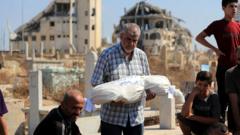
A strike on a residential home in Gaza City's Sabra neighborhood took the lives of Firas Al-Masri, his wife Salsabeel, and their four young children as they slept. Fire engulfed the structure before family members outside could pull them out. Hours later, another strike hit a vehicle in central Gaza, adding to a daily count that keeps climbing.
If you've been following headline news, you might still hear terms like "truce" or "ceasefire" thrown around. But for people on the ground, those labels don't match reality.
The Disconnect Between Ceasefire Headlines and Reality
On paper, a U.S.-backed ceasefire agreement has been in effect for months. In practice, military operations and targeted strikes continue almost daily.
More than 1,160 Palestinians have died in Gaza since the formal truce took effect last October, based on counts from local health officials. Four Israeli soldiers have been killed by militants during that same timeframe.
The math is stark. A diplomatic framework exists, yet families are still dying in overnight bombings.
The primary issue stems from how both sides define the terms of engagement:
- The Israeli military maintains that striking high-value targets, active militants, or individuals tied to past operations doesn't breach the core truce agreement.
- Local residents and health workers argue that executing high-explosive targeted strikes in dense residential zones invariably leads to heavy civilian casualties.
- Militant factions continue localized resistance and skirmishes, giving the Israeli military immediate grounds to claim threat mitigation.
This dynamic creates a perpetual loop. Diplomatic envoys from Qatar, Egypt, Turkey, and the U.S. push long-term peace frameworks calling for Hamas disarmament and full Israeli military withdrawals. Yet those high-level talks sit completely disconnected from the neighborhood realities in Sabra or Jabalia.
High-Precision Targeting in Hyper-Dense Spaces
When the Israeli Defense Forces (IDF) confirm a strike, the official statement almost always notes that the target was a specific operative. In the recent Sabra neighborhood incident, the military stated it targeted a Hamas fighter and was assessing the aftermath.
Targeting single operatives inside multi-family residential units or crowded streets rarely leaves neighboring apartments untouched.
When a precision missile strikes a room in a multi-story concrete structure:
- Fire spreads quickly through light furnishings and exposed insulation.
- Wall collapses block exit paths for neighboring families.
- Overburdened emergency teams struggle with destroyed infrastructure, making rapid rescue nearly impossible.
We saw this exact pattern a few days prior when a strike hit a northern Gaza police post in Jabalia, killing seven people. The IDF claimed a key commander was present. Local witnesses and family members pointed out that municipal police officers, who manage basic traffic and market security, were caught in the blast alongside nearby pedestrians.
Whether a target is a combat commander or a local patrol officer, the physical footprint of modern ordnance in overcrowded refugee camps guarantees collateral damage.
The Broader Numbers behind the Conflict
To understand how Gaza got here, it helps to review the broader figures driving this long war:
- October 7, 2023: Hamas-led attacks killed approximately 1,200 people in southern Israel, with around 250 taken hostage.
- Total Gaza Casualties: Gaza health authorities report over 73,000 deaths since the full-scale conflict began.
- Post-Ceasefire Deaths: Over 1,160 Palestinians and 4 Israeli soldiers killed since the October ceasefire framework started.
- Displacement: Roughly 2 million residents now inhabit narrow coastal strips, living in temporary tents or damaged structures.
The sheer density of displaced families means almost every airstrike lands near makeshift shelters or packed family homes.
What Needs to Change for Real Stabilization
Relying on a paper ceasefire while allowing ongoing "targeted" air raids isn't working for anyone seeking stability. If international mediators want to break this cycle, a few concrete steps need priority:
- Re-evaluate Rules of Engagement in Residential Zones: Strict limits on air-launched ordnance in high-density civilian sectors must be established to prevent family casualties like the one in Sabra.
- Clear Classification of Civil Infrastructure: Mediators must establish clear protocols regarding municipal workers, civil police, and non-combatant infrastructure to prevent contested strikes on municipal posts.
- Independent Verification: Having neutral third-party observers track strike locations and verify compliance on the ground would offer accountability that neither party currently provides.
Keep following local reporting from independent humanitarian groups and field journalists who track daily casualty logs rather than relying solely on official political press releases.