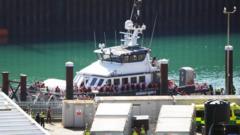
Another dinghy gets dragged into Dover. Another body is carried off. We keep pretending this is a policy problem when it is actually a basic math and human desperation problem. On Saturday afternoon, Border Force officers pulled over an overcrowded small boat entering UK waters. Inside, a woman lay unresponsive. By 3:11 pm, paramedics and Kent Police were at the Western Docks. She was pronounced dead right there on the concrete.
She is not the first this year, and she won't be the last. Just weeks ago, two young Sudanese women drowned when their boat ran aground near France. The dinghies are changing. They are getting much bigger, packed tighter, and become significantly more dangerous.
Politicians love to talk about "smashing the gangs." They sign cross-border deals and promise riot police on French beaches. Yet the numbers tell a completely different story. Just this week, 710 people made it across on Monday alone. That is an average of 65 people crammed onto each fragile rubber tube. On Thursday, another 392 arrived. Over 10,000 people have crossed the English Channel in small boats so far this year.
Why the Current Strategy Fails Every Single Week
The standard approach relies heavily on deterrence. The theory goes that if you make the journey difficult enough, people will stop trying. It sounds logical in a sterile committee room. It fails miserably on the water.
When you flee war or systemic persecution, a strip of cold water will not stop you. The smugglers know this. They simply adjust their business model to match the enforcement. As beach patrols increase, the gangs don't quit. They launch from more dangerous sectors of the coastline. They load more human beings into cheaper, lower-quality inflatable boats to maximize their margins before the vessels get seized.
We see a massive shift in boat dynamics. A few years ago, a crossing involved a handful of people in a standard commercial dinghy. Today, these are massive, custom-ordered inflatables holding up to 80 people. They lack proper flooring. They frequently possess underpowered engines completely unsuited for the brutal currents of the world's busiest shipping lane.
The Numbers Behind the Crisis
Understanding the scale requires looking directly at the data compiled by organizations like the International Organisation for Migration.
- Monday Arrivals: 710 individuals across 11 separate vessels.
- Thursday Arrivals: 392 individuals across 6 separate vessels.
- Year-to-Date Crossings: Just over 10,000 recorded individuals.
- Average Dinghy Occupancy: 65 people per boat, up significantly from previous years.
This is not a slow trickle. It is a highly organized, relentless transit system operating right under the nose of international law enforcement.
Moving Beyond the Political Talking Points
Fixing this requires moving past the empty rhetoric. Sending riot-trained police to French beaches might look good in a press release, but it only shifts the launch points a few miles down the coast.
True management of this crisis demands a multi-pronged approach that targets the root of why these boats launch. First, safe and legal processing routes must exist outside of Europe. If a refugee can apply for asylum from a regional hub, they have zero incentive to hand thousands of pounds to a criminal network. Second, the financial structures of the smuggling rings need aggressive, international targeting. These gangs do not keep their millions in plastic bags on French beaches; they use mainstream global banking systems.
The tragedy at Dover is a stark reminder that enforcement alone cannot solve a humanitarian displacement issue. Until the underlying mechanics of asylum supply and demand change, the rubber boats will keep coming, and more people will die in the English Channel.