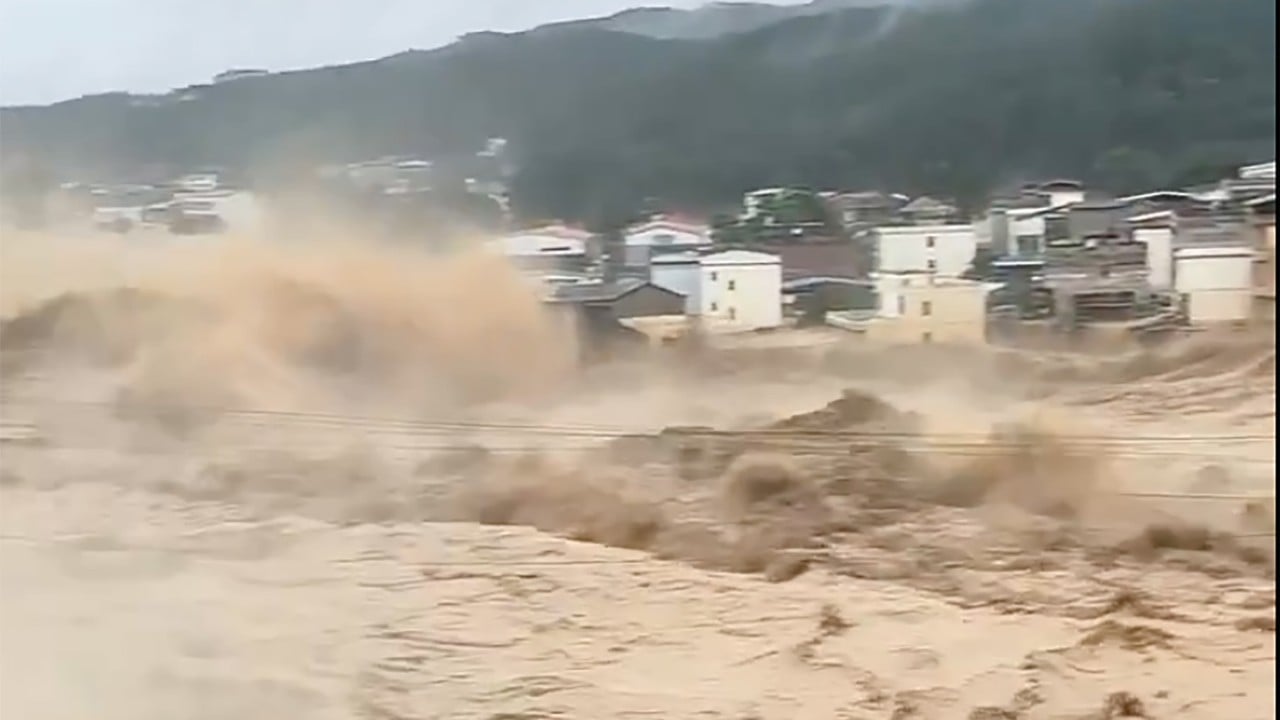
When a reservoir gate gives way, you don't get hours to debate the philosophy of climate change. You get minutes to run. That is exactly what happened when the recent China dam collapse forced hundreds of residents out of their homes in Guangxi. Torrential rains brought by Typhoon Maysak slammed into the southern region, overwhelming local infrastructure and putting an immediate stop to a crucial cross-border railway line. This isn't just a story about bad luck or a uniquely harsh storm. It's a flashing red warning light for the global supply chain and regional safety.
If you look at the corporate press coverage, they treat these events like isolated incidents. They give you the death toll, the rain measurements, and a generic quote from a local official. Then they move on. But they miss the broader picture. The reality is that the collision between intensifying tropical storms and aging infrastructure is changing how we look at logistics, manufacturing, and human safety in southern China.
The Breaking Point in Guangxi
Typhoon Maysak didn't look like a record-breaker when it first formed. It initially crossed over Hainan island as a severe tropical storm, packing winds around 101 kilometers per hour before crossing the gulf to hit Vietnam and then swirling northward into Guangxi. It was slow. That was the real problem. Slow storms dump unthinkable amounts of water on specific areas instead of spreading the load.
In Fangchenggang and Dongxing, two major hubs right on the Vietnam border, the sky basically opened up. Rivers overflowed in a matter of hours. Streets quickly turned into rushing brown rivers. Local residents noted it was the most intense flooding they had seen in over twenty years. Cars were submerged up to their roofs. Rescuers had to drag inflatable boats through downtown streets to pull terrified families out of second-story windows.
Then the small reservoir gave way. When heavy rain breaches an earthen or small-scale masonry dam, the water creates a compounding chain reaction downstream. Hundreds of villagers had to flee into the night with whatever they could carry. Thankfully, early warnings prevented a massive loss of life this time, but the economic damage was already done.
The storm didn't just smash small villages. It brought a complete halt to the cross-border railway line connecting China and Vietnam. This track is a vital artery for moving raw materials, components, and finished electronics between the two manufacturing powerhouses. When mudslides and track washouts occur, factories on both sides of the border instantly feel the pinch. You can't just divert thousands of tons of cargo to muddy mountain roads that are also underwater.
The Reality Behind the China Dam Collapse Risk
To understand why this keeps happening, you have to look at how China built its water infrastructure. The country has more than 98,000 reservoirs. Most of them are small. A huge chunk of these dams went up between the 1950s and the 1970s. Back then, engineering standards were lower, materials were subpar, and builders didn't design them to withstand the intense, concentrated downpours we are seeing today.
China has spent billions upgrading its massive, famous dams like the Three Gorges. Those megastructures are monitored by armies of engineers and advanced sensors. They aren't the problem. The danger lies in the thousands of forgotten, rural, tier-three reservoirs scattered across provinces like Guangxi, Guangdong, and Hunan.
- Deferred Maintenance: Local governments are often broke, especially after real estate slumps. They skip routine checkups on remote dams.
- Silt Accumulation: Decades of dirt and river debris build up at the bottom of these reservoirs, drastically cutting down the amount of water they can hold.
- Saturated Soil: By the time a typhoon hits, weeks of previous monsoon rains have already turned the surrounding hills into liquid mud.
When a small dam breaches, it acts like a domino. The sudden surge of water rushes down the valley and slams into the next small reservoir, overtopping that one too. It creates a flash flood wave that moves far faster than standard river flooding.
Supply Chain Realities in the Borderlands
For years, companies have used a China-plus-one strategy. They set up factories in northern Vietnam while keeping their core supply links in southern China. They rely heavily on seamless transport links to move items back and forth daily. This border zone is one of the busiest economic corridors in the world.
When a storm like Maysak hits Guangxi and halts the cross-border railway, it exposes a massive flaw in that plan. A single track washout can stall production lines hundreds of miles away in Hanoi or Shenzhen. Air freight is too expensive for heavy components, and ocean shipping takes too long when you run a just-in-time logistics model.
We saw train services on major lines like the Guangzhou-Zhanjiang and Shenzhen-Zhanjiang routes cut or drastically shortened during the storm. If you manage a global supply chain, you can no longer treat weather alerts in southern China as minor operational annoyances. They are systemic risks.
Survival Steps for Regional Operators
Waiting for the central government to fix every small dam in the country isn't a viable strategy. If you operate business assets or rely on supply chains in this region, you need to adapt immediately.
First, diversify your transport modes. Relying solely on the cross-border rail line is a single point of failure. Establish secondary contracts with sea freight operators running out of ports like Fangchenggang or Qinzhou, even if they cost more or take an extra day during normal times.
Second, map your suppliers against local water topography. Do not just look at their city location. Find out if their specific industrial park sits downstream from a class-three reservoir or an unmonitored earthen dam. If it does, demand to see their flood mitigation and emergency backup power plans.
Third, adjust your inventory buffers during the peak typhoon season from June to September. The old rules of keeping only two days of buffer stock don't work when a storm can knock out a rail link for a week. Bump those buffers up to at least ten days during the high-risk months. It hurts your cash flow slightly, but it saves you from a catastrophic production shutdown.
The Guangxi disaster proved that climate threats are moving faster than infrastructure updates. The dam collapse and the halted railway are not freak occurrences. They represent the new normal for doing business in East Asia. If you aren't actively building redundancy into your regional operations today, you are essentially gambling with your survival.