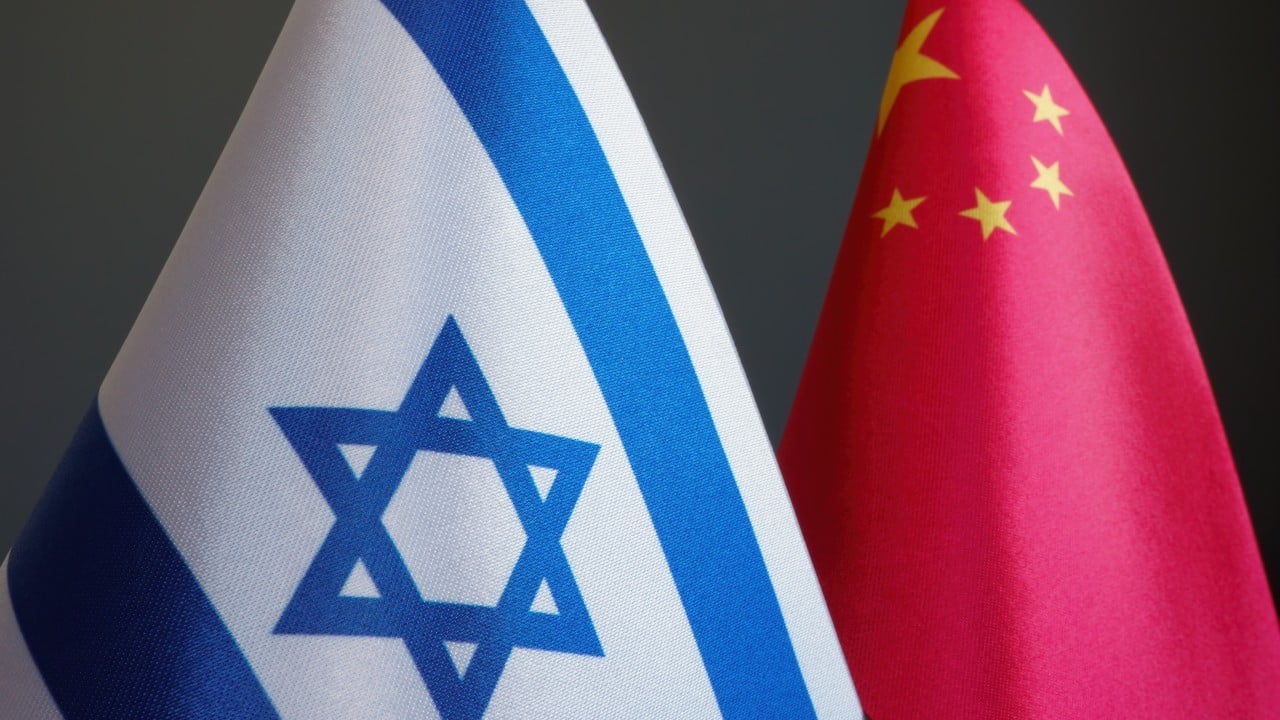
Diplomacy rarely breaks overnight. Instead, it chips away quietly until a physical office closes its doors and forces everyone to pay attention.
Israel just shut down its consulate in Chengdu, marking a sharp downward turn in diplomatic ties between Beijing and Jerusalem. If you are wondering what this means for trade, Middle Eastern geopolitics, and global alliances, you aren't the only one. Tensions have been brewing for years, but the closure of a major diplomatic post in southwest China signals that political friction is finally outweighing local economic convenience.
Let us look past the official statements and examine where China-Israel relations actually stand right now.
The Reality Behind the Chengdu Shutdown
The consulate in Chengdu quietly wrapped up its operations, ending a five-year run under Consul General Gadi Harpaz. While diplomatic send-offs are usually filled with polite remarks about bridges of friendship, the geopolitical reality is far colder.
Relations began to fracture noticeably following the October 2023 attacks by Hamas and the subsequent war in Gaza. Beijing refused to explicitly condemn Hamas, chose to back Palestinian statehood firmly at the United Nations, and steadily strengthened its diplomatic alignment with Iran. For an Israeli government heavily reliant on international backing, Beijing's public posture felt increasingly hostile. Public opinion inside Israel shifted fast. A Tel Aviv think tank poll showed that over half of Israeli respondents viewed China as an unfriendly nation.
Closing a regional consulate isn't done on a whim. It is a calculated downgrade, saving resources while signaling diplomatic displeasure without cutting ties entirely.
Where Economic Pragmatism Meets Hard Power
You might ask why Israel didn't just break off relations completely if things are this bad. The answer comes down to money and technology.
Trade between the two countries has historically been massive, particularly in agricultural tech, infrastructure projects, and high-tech components. Chinese firms invested heavily in Israeli ports and transport hubs, while Israeli innovators found a massive market for commercial tech exports. Neither Beijing nor Jerusalem wants to torch those commercial channels entirely.
Yet, economic pragmatism has clear limits when national security enters the chat. China's growing diplomatic warmth toward Iran—culminating in Beijing condemning Israeli and American military strikes on Iranian targets—puts the two countries at direct cross-purposes. Since the United States remains Israel's primary security guarantor, Beijing's broader strategy of blunting American influence in the Middle East puts Jerusalem directly in the path of a geopolitical storm.
What Analysts Are Missing About the Future
Many regional experts dismiss the Chengdu closure as a routine administrative downsizing. They argue that bilateral ties have survived past shocks and will weather this one too.
That perspective ignores how structural alignments have shifted. China isn't just maintaining neutral diplomatic relations; it is actively shaping a Middle East policy centered around Arab partnerships and anti-Western security frameworks. Beijing wants global south leadership, and vocal support for Palestine plays directly into that ambition.
Israel, meanwhile, is re-evaluating its foreign dependencies. Security calculus trumps commercial convenience every single time. As long as Beijing deepens its defense and diplomatic umbrella over Tehran, Israeli diplomats in Beijing, Shanghai, Guangzhou, and Hong Kong will operate under a heavy cloud of suspicion.
What Happens Next
Bilateral ties won't vanish overnight, but the golden era of uncritical tech partnerships and warm handshakes is over. China-Israel relations have entered a defensive holding pattern.
If you track international trade or foreign policy, keep an eye on how high-tech infrastructure deals and academic exchanges fare over the coming months. Expect quiet diplomatic freezes rather than loud public fallout. The closure in Chengdu is a symptom of a deeper fracture, and neither capital is rushing to fix it.