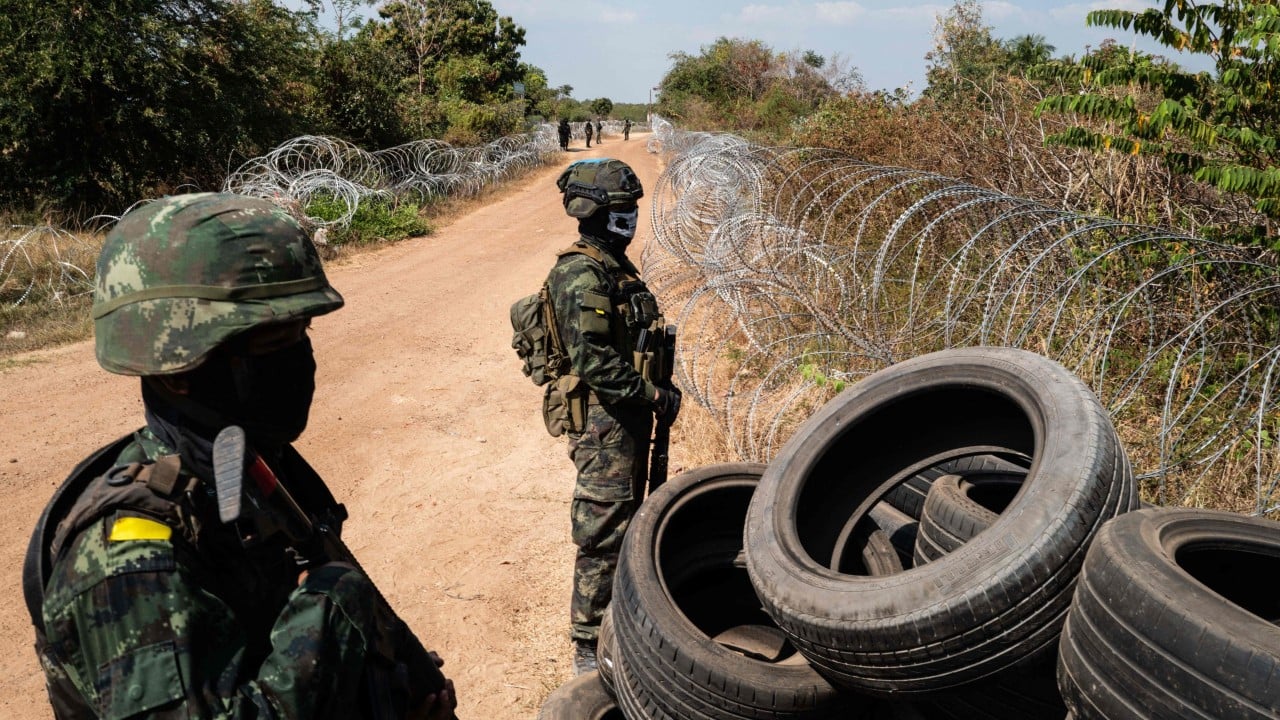
Beijing doesn't want a shooting war on its southern doorstep. That's the messy reality behind Chinese President Xi Jinping's high-stakes meetings in Shanghai. By pulling Thai Prime Minister Anutin Charnvirakul and Cambodian Prime Minister Hun Manet into separate rooms during the World AI Conference, Xi made it clear that the ongoing border friction needs to stop. But behind the polite diplomatic handshakes lies a spiderweb of military shipments, historical grudges, and fierce competition for regional dominance.
If you think this is just a minor border scuffle over dirt and old stones, you're missing the bigger picture. The deadly clashes that erupted last year fractured Southeast Asian stability, and the hard-won December ceasefire is looking incredibly fragile.
The Boiling Point on the Border
The friction between Thailand and Cambodia isn't new, but it turned brutal recently. Ground skirmishes and air incursions shattered years of relative calm, leaving dozens of soldiers dead and displacing tens of thousands of civilians. At the heart of the crisis is the jagged frontier near the ancient Preah Vihear temple, a UNESCO World Heritage site that has caused blood to spill for generations.
Though the International Court of Justice handed the temple to Cambodia way back in 1962, the surrounding land remained a poorly mapped gray zone. The situation exploded again when heavy fighting broke out, followed by a brief, failed ceasefire and renewed December air sorties.
Right now, Cambodia accuses the Thai military of deep territorial encroachment and destroying civilian homes. Meanwhile, Bangkok insists it's merely protecting its sovereign borders against cross-border aggression. It's a classic geopolitical gridlock where neither side can afford to look weak to the folks back home.
Beijing Double Game with Tanks and Truces
What makes this flare-up particularly toxic is the heavy shadow of Chinese military hardware. Bangkok went into a frenzy recently after spotting fresh shipments of Chinese battle tanks arriving in Cambodia. For a Thai government trying to defend its frontier, seeing its neighbor arming itself with Chinese armor felt like a stab in the back from Beijing.
Xi used the Shanghai meetings to fix this diplomatic mess. He personally assured Prime Minister Anutin that China isn't picking sides. The story from Beijing? Cambodia ordered those tanks long before the shooting started. To smooth things over, Xi even paused new tank shipments to Cambodia and promised that Chinese weapons wouldn't be used to harm Thais.
Still, actions speak louder than words. China has poured millions of yuan in emergency humanitarian aid into Cambodia and heavily backed its infrastructure. While Beijing plays the neutral peacemaker, its massive investments under the Diamond Hexagon framework make it obvious that Cambodia is its closest proxy in the region.
Why ASEAN Inaction Forces China Hand
Ideally, the Association of Southeast Asian Nations (ASEAN) should be handling this. But the regional bloc is notoriously toothless when its members start shooting at each other. ASEAN's strict policy of non-interference means it mostly stands by while the border burns.
Because ASEAN couldn't stop the bleeding, China stepped into the vacuum. Beijing hosted trilateral peace talks, pushed the Anning Consensus, and arranged the Fuxian Lake meetings to force a temporary truce. China is even offering to fund and help ASEAN observer missions to monitor the border, basically doing the heavy lifting for the bloc.
This isn't pure altruism. China needs a stable mainland Southeast Asia to secure its trade corridors. The planned China-Laos-Thailand railway network is a massive economic priority for Beijing. A shooting war between two key hubs on that line ruins the entire plan.
What Happens Next
Don't expect a permanent peace treaty anytime soon. Hun Manet just told Chinese leaders that Thailand's territorial gains are a fait accompli that Cambodia will never accept. Cambodia is already pivoting toward international legal channels, hunting for a compulsory conciliation mechanism under the UN Convention on the Law of the Sea (UNCLOS) to handle maritime disputes.
For now, the guns are quiet, but the underlying fuse is still burning. If you're watching this region, keep your eyes on these critical indicators over the coming months:
- The Mekong-Lancang Summit Relocation: Watch if China officially moves the upcoming regional summit to its own soil because Cambodia refuses to sit at a table in Thailand.
- The Rail Progress: Look for whether construction on the trilateral railway stalls or accelerates, which will signal how much leverage Beijing is successfully applying.
- UNCLOS Filings: Track Cambodia's legal maneuvers in international courts, which will show if they've completely given up on bilateral talks with Bangkok.