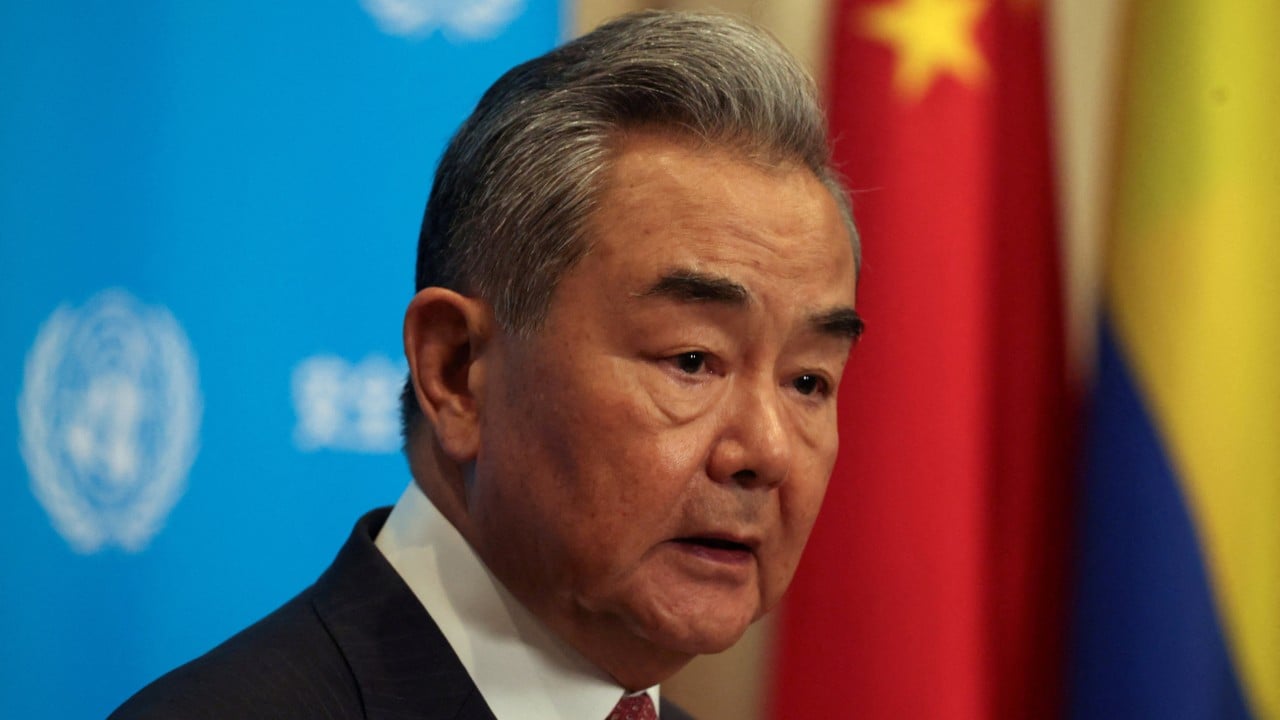
Beijing isn't hiding its nerves anymore. When Chinese Foreign Minister Wang Yi picked up the phone to call US Secretary of State Marco Rubio on Tuesday, it wasn't a standard congratulatory chat. It was an explicit warning shot. Wang told Rubio flat out that Washington needs to handle Taiwan-related matters with "utmost caution."
If you've followed geopolitical theater for any length of time, you know that Chinese diplomatic readouts are usually buried under layers of dense, boring bureaucratic prose. Not this time. Beijing chose to highlight this exact phrase across state media networks from CCTV to Xinhua. They want everyone to know that they're drawing a line in the sand.
The real question is why now. Why has the Taiwan question suddenly reached this level of public urgency between Wang and Rubio?
The answer lies in who Marco Rubio is, what he represents to the Chinese Communist Party, and the looming high-stakes summit between Donald Trump and Xi Jinping in Beijing. This isn't just standard diplomatic posturing. It's a high-stakes attempt by China to set the rules of engagement before Rubio can fundamentally shift American foreign policy in Asia.
Decoding the Code Words of Chinese Diplomacy
When Wang Yi says that the Taiwan issue has "far-reaching implications," he isn't making a casual observation about regional trade. In the lexicon of the Chinese Ministry of Foreign Affairs, "far-reaching implications" means a potential flashpoint for total military conflict.
Let's look at what else Wang said during that phone call. He told Rubio that improving ties between the two global powers was "not just a slogan." He insisted on real action. He talked about building a constructive bilateral relationship of "strategic stability."
To understand what Beijing actually wants, you have to invert their vocabulary.
When Beijing demands "strategic stability," they mean they want the US to stop sending advanced weapons to Taipei. They want US officials to stop visiting the island. When they say "moving toward each other," they mean Washington should back down and accept China's claims over the self-governed island.
The state-run Xinhua news agency expanded on this by stating that both sides should "narrow the list of problems and manage various risks and hidden dangers."
That sounds great on paper. It reads like a mature approach to risk management between nuclear-armed states. But the hidden danger Beijing cares about most is sitting right in the State Department.
The Hawk in the State Department
China has a personal history with Marco Rubio. It's not a friendly one.
Before becoming Secretary of State, Rubio built his entire foreign policy brand on being one of the most aggressive China hawks in Washington. He wasn't just talking. He was writing laws. Rubio spearheaded legislation targeting Chinese state-backed tech companies, condemned Beijing's actions in Hong Kong, and repeatedly pushed for stronger diplomatic and military ties with Taiwan.
Things got so heated that Beijing actually put sanctions on Rubio himself.
Think about how awkward that makes things now. The top diplomat of the United States was literally banned from entering China by the very government he now has to negotiate with. Beijing has had to quietly swallow its pride to deal with him, but that doesn't mean they've forgotten who he is. They know he views the Chinese Communist Party as an existential threat to American security.
Wang Yi's call was a direct attempt to test Rubio's resolve. By telling him to handle Taiwan with extra prudence, Wang is trying to see if the realities of running the State Department have softened Rubio's hawkish edge.
Historically, Washington has maintained a policy of strategic ambiguity regarding Taiwan. Under the Taiwan Relations Act of 1979, the US is legally obligated to provide Taiwan with the means to defend itself, but it deliberately avoids stating clearly whether American troops would fight to defend the island if China invaded.
Rubio has historically pushed the boundaries of that ambiguity. He's repeatedly called for clearer commitments and faster weapon shipments. For Beijing, a man with those beliefs holding the keys to American foreign policy is their worst nightmare.
The Shadow of the Upcoming Trump Xi Summit
The timing of this phone call is everything. Chinese President Xi Jinping is preparing to host Donald Trump in Beijing for a massive diplomatic summit.
Summits like this are planned down to the millisecond. Every handshake, every dinner menu, and every joint statement is negotiated months in advance. Wang Yi's urgent message to Rubio was an effort to clear the deck—or perhaps to poison the well—ahead of that meeting.
China wants to separate Trump from his advisors.
It's a classic diplomatic strategy. Beijing views Trump as a transactional leader. They believe Trump treats geopolitics like a business deal where everything, including tariff rates and supply chains, has a price. They think they can negotiate with Trump because he focuses on economic metrics and trade deficits.
But they know they can't negotiate with Rubio the same way. Rubio's opposition to Beijing isn't transactional. It's ideological.
By calling Rubio directly and demanding action rather than slogans, Wang Yi is trying to force the State Department to commit to a quieter, more predictable approach on Taiwan before Trump arrives in Beijing. China wants to make sure that Rubio doesn't use the upcoming summit to engineer a massive policy shift that favors Taipei.
What Most People Get Wrong About the Taiwan Risk
The mainstream media loves to talk about a sudden, D-Day-style invasion of Taiwan. They paint a picture of hundreds of thousands of Chinese troops storming the beaches of New Taipei City while American aircraft carriers rush to the rescue.
That's highly unlikely to happen anytime soon. An amphibious invasion across the 100-mile Taiwan Strait is one of the most difficult military operations on earth.
The real danger isn't an outright invasion. It's a slow, gray-zone strangulation.
China doesn't need to drop bombs to cripple Taiwan. They can use naval blockades disguised as customs inspections. They can deploy massive cyberattacks to take down Taipei's power grid. They can cut the undersea fiber-optic cables that connect the island to the global internet.
This gray-zone warfare is exactly what Wang Yi wants Rubio to ignore. When China flies dozens of fighter jets across the median line of the Taiwan Strait, they view it as domestic policing. When the US sends a destroyer through those same waters to maintain freedom of navigation, China calls it a provocation.
If Rubio responds aggressively to these gray-zone tactics by increasing US naval presence or fast-tracking anti-ship missile sales to Taipei, Beijing will claim the US is violating the One-China policy. That's the trap Wang Yi is setting. He wants to frame any American defense of Taiwan as an act of aggression that breaks the strategic stability of the region.
Slogans Versus Concrete Policy Realities
Wang Yi told Rubio that diplomatic progress requires moving toward each other. But if you look at the ground reality, both nations are moving further apart at a terrifying speed.
Look at the tech sector. The US has locked down export controls on high-end semiconductors, preventing mainland companies from buying the gear needed to build advanced artificial intelligence. Taiwan's TSMC manufactures the vast majority of these super-advanced microchips.
Taiwan isn't just a political talking point. It's the literal foundation of the modern technological world.
If Beijing gains control of Taiwan, they don't just get a new province. They get a chokehold on global technology. Rubio understands this economic reality just as well as he understands the military one. He knows that letting China dictate the terms of the Taiwan Strait would fundamentally remodel the global balance of power.
That's why Wang's plea to "narrow the list of problems" will almost certainly fall on deaf ears in Washington. The problems aren't misunderstandings that can be cleared up during a phone call. They're fundamental conflicts of national interest.
Actionable Steps for Navigating the New US China Dynamic
We aren't in the era of standard diplomacy anymore. The relationship between Washington and Beijing has become deeply volatile, and this latest clash between Wang Yi and Marco Rubio proves it. If you're managing global supply chains, investing in international markets, or simply trying to make sense of the news, you need a clear framework to track what happens next.
First, stop listening to the formal readouts from Beijing and Washington. They're designed to mislead. Instead, watch the concrete movements of hardware. Monitor the frequency of US freedom of navigation transits through the Taiwan Strait and keep a close eye on the delivery timeline of American weapons to Taipei. If the shipments of Harpoon missiles or F-16 components accelerate despite Wang's warnings, you'll know Rubio has rejected Beijing's demands.
Second, prepare for retaliatory economic measures. China rarely limits its anger to angry words. If the State Department takes a hard line on Taiwan over the coming weeks, expect Beijing to respond with regulatory crackdowns on American companies operating in the mainland, or sudden restrictions on the export of critical minerals like gallium and germanium.
Finally, watch the rhetoric surrounding the upcoming Trump-Xi summit. Look for signs of friction between the White House and the State Department. If Trump starts hinting at a grand bargain involving tariffs and Taiwan, while Rubio maintains a strict, unyielding defense of Taipei, that internal division will give Beijing the exact opening it wants. The coming months will determine the trajectory of the Pacific for the next decade, and it's starting with a tense phone call between two men who genuinely dislike each other.
Taiwan Crisis Looms? Wang Yi Warns Rubio In High-Level Exchange Over US-China Ties
This video provides important context regarding the exchange between Wang Yi and Marco Rubio ahead of the high-level summit between Donald Trump and Xi Jinping.
:quality(85)/Mp/Yp/2p5ae8FJtFWypSo8rM/6f889f29-54f6-453d-a332-41914679edeb.jpg)