If you think the trade cold war is just a battle between Washington and Beijing, you're missing the real explosion. Beijing just escalated its economic warfare, and this time, Japan is squarely in the crosshairs.
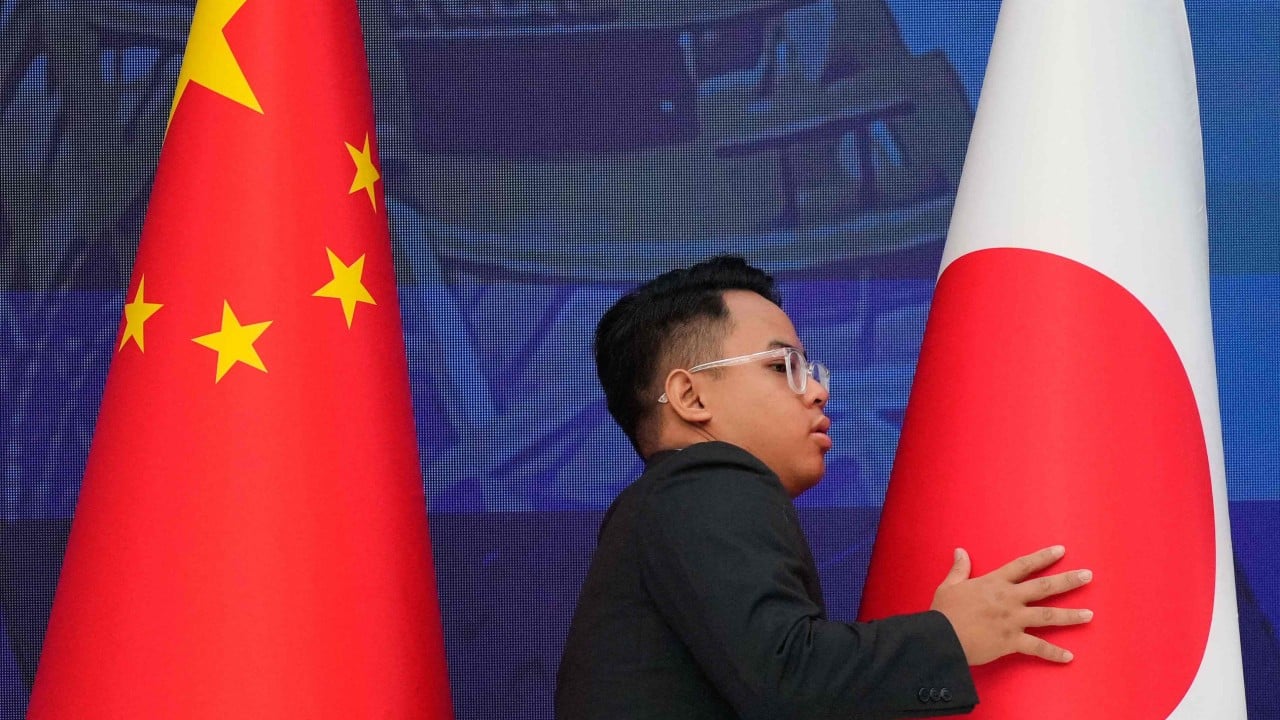
On June 29, 2026, China's Ministry of Commerce slapped massive trade restrictions on 40 Japanese institutions and corporate heavyweights. Officially, Beijing claims it's acting to curb Japan's "reckless moves toward neo-militarism". Unofficially, it's a brutal demonstration of how easily China can choke off critical materials to global supply chains when it gets angry. If you liked this post, you should read: this related article.
The target list reads like a corporate directory of corporate Japan. The move completely halts or heavily restricts the flow of dual-use goods—materials that have both civilian and military applications. For global manufacturing, this isn't a minor diplomatic spat. It's a massive supply chain disruption waiting to happen.
Shuttering the Flow of Dual Use Goods
The latest sanctions hit 40 entities in two distinct waves. For another perspective on this development, see the recent coverage from The Motley Fool.
First, China added 20 Japanese organizations directly to its blacklisted export-control list. This group includes the state-backed National Institute for Defense Studies alongside major defense-adjacent industrial arms like subsidiaries of Mitsubishi Electric and Mitsubishi Heavy Industries. If you're an exporter anywhere in the world trying to ship a Chinese-origin component or raw material to these specific groups, you have to stop immediately.
Second, Beijing established a high-pressure watch list for another 20 giants. This secondary list catches massive industrial names like Mitsui E&S, Hitachi, Komatsu, and drone tech developer Terra Drone. China says it placed them on the watch list because it can't verify their "end-use" purposes.
What does being on the watch list actually mean for a business? It means bureaucratic hell. Chinese exporters dealing with these companies must now hunt down specialized individual licenses. They have to submit tedious risk assessment reports. They even need to hand over signed written pledges proving the materials won't end up in military gear.
Basically, it's trade death by a thousand paperwork cuts.
The Real Spark Behind the Sanctions
Beijing's public statements point directly at Japan's shifting defense posture. Tensions have boiled over since Japanese Prime Minister Sanae Takaichi made waves by suggesting that a Chinese offensive against Taiwan would trigger a direct military response from the Japan Self-Defense Forces alongside the US.
Takaichi hasn't backed down. She continues to emphasize that Japan faces its most hostile regional security environment since the mid-twentieth century. Under her administration, Tokyo has pushed hard to upgrade long-range missiles, build up offensive military capacity, and loosen decades-old restrictions on exporting lethal weapons.
From Beijing's viewpoint, this looks like a direct challenge to the post-war regional status quo. China's commerce ministry explicitly accused Tokyo of deploying offensive weaponry and launching missiles beyond its borders.
But don't mistake this for a simple ideological disagreement. This is highly calculated economic leverage.
Rare Earth Chokepoints and the Corporate Fallout
The weapon China is using here isn't hidden. It's rare earths.
China controls the vast majority of the world's extraction and processing pipelines for rare earth elements. These minerals are the hidden lifeblood of advanced electronics, clean energy tech, and defense equipment. If you want to manufacture high-performance electric vehicle motors, wind turbines, or missile guidance arrays, you need rare earth magnets. And if you want those, you usually need China.
We're already seeing the concrete damage from these mounting trade hurdles. Earlier this year in February, Beijing executed a nearly identical move, targeting a separate batch of 20 Japanese entities.
Since then, Japanese buyers have reported massive delays in obtaining necessary export licenses from Chinese authorities, even for purely civilian applications. Shipments of essential rare-earth magnets bound for Japanese ports have dropped noticeably.
The friction is real, and it's already hurting factories on the ground. Just look at what happened in Dalian, a major port city in northeastern China. Authorities recently detained two workers from Japan's Fuji Electric Co. for allegedly trying to ship processed rare earths out of the country without jumping through Beijing's new, tightly controlled legal hoops.
Why Global Procurement Teams Can't Ignore This
If your business relies on industrial components or advanced hardware, you shouldn't view this as an isolated dispute between East Asian neighbors. It's a template for the future of global trade.
Beijing has dramatically ramped up its willingness to use regulatory mechanisms to hit back at geopolitical rivals. According to data tracked by the EU Chamber of Commerce in China, Beijing has roughly tripled its application of restrictive export controls over the past five years alone.
They aren't just reacting to Western trade barriers anymore. They're mapping out vital global supply chain chokepoints and squeezing them intentionally whenever political friction peaks.
Tokyo has strongly protested the new limits, with Chief Cabinet Secretary Minoru Kihara calling the export controls "totally unacceptable" and demanding an immediate withdrawal. But realistically, Beijing isn't going to blink.
Moving Past the Fragility of Single Source Sourcing
Waiting out this trade dispute isn't a viable business strategy. If you handle procurement, supply chain architecture, or hardware manufacturing, the writing on the wall is clear.
First, you need to map your tier-two and tier-three suppliers. You might buy a sub-assembly from a supplier in Tokyo or Munich, but where do they get their raw magnets or raw oxides? If those input materials originate in China and find their way to a blacklisted entity or an uncooperative supplier, your entire production line could freeze overnight.
Second, accelerate your alternative sourcing pipelines. Countries like Australia, India, and Vietnam are building up processing capabilities for critical minerals, but building these networks takes years.
The era of easy, frictionless global sourcing is over. If your operations depend entirely on a single nation's goodwill to keep raw materials flowing, you aren't running a lean business—you're just running a vulnerable one.