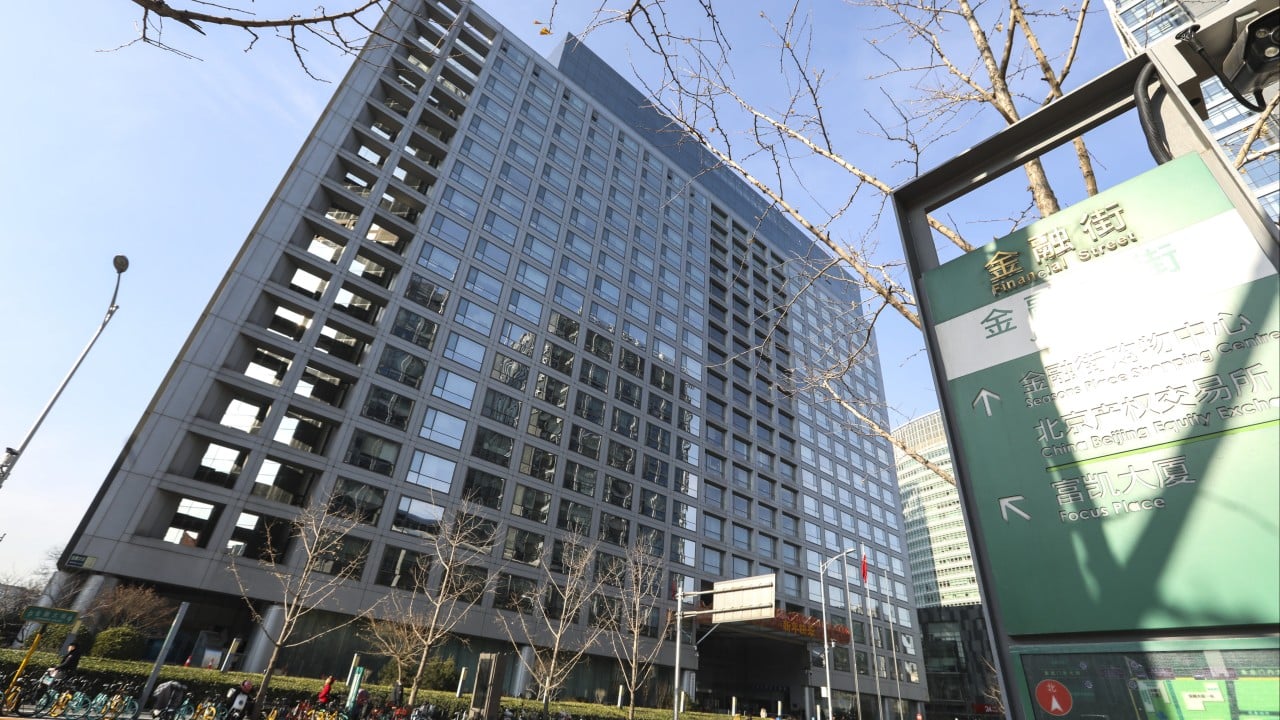
China's stock markets have a notorious reputation for acting like a casino. Retail investors drive the bulk of daily trading volumes, reacting wildly to policy rumors, social media chatter, and quarterly earning noise. When prices swing drastically, panic sets in, liquidations spike, and regulatory authorities scramble to restore order.
The China Securities Regulatory Commission (CSRC) is taking a far more structural swing at the problem. Under Chairman Wu Qing, the regulator has laid out concrete plans to channel steady, long-term capital into domestic stock exchanges. We are talking about pension funds, national social security reserves, insurance funds, and institutional wealth managers. You might also find this connected article interesting: Why Boeing And Airbus Are Fighting Over The Biman Bangladesh Fleet Upgrade.
If you invest in global equities or follow emerging market flows, this matters. Getting patient capital into A-shares isn't just about propping up prices during a bad week; it's about fundamentally altering how Chinese equities are priced and traded.
The Core Problem With Retail-Dominated Markets
For decades, China's onshore stock market was built on retail momentum. Over 200 million individual accounts make up more than 60 percent of daily turnover. As reported in detailed articles by Bloomberg, the effects are notable.
That creates a massive volatility loop. Retail traders operate on short time horizons—sometimes holding stocks for just days or weeks. When bad news hits, retail traders sell all at once. Fundamental valuation drops out the window.
Compare that to developed markets like the United States, where institutional money accounts for the vast majority of daily activity. Mutual funds, pension schemes, and corporate treasuries act as shock absorbers. When stock prices sink below intrinsic value, long-term money steps in to buy the dip. China hasn't had that cushion at scale.
Without deep pools of patient capital, equity markets cannot effectively finance long-term technology initiatives or industrial upgrades. Companies end up managing for immediate stock spikes rather than multi-year research and development projects.
Where the Long-Term Money Is Hiding
China doesn't lack capital. Household savings in Chinese banks sit near historic highs, totaling trillions of dollars in liquid cash. The issue is where that capital sits and how institutionally constrained it has been.
Take insurance funds as a prime example. Chinese insurance firms hold massive asset bases, but tight regulatory caps and strict short-term mark-to-market accounting rules have traditionally limited how much equity exposure they can take on. Insurance asset managers were getting judged on quarterly performance. That forced them to act like short-term momentum traders rather than long-term asset allocators.
It's the same story with state pension reserves and enterprise annuities. Their investment mandates were designed to minimize short-term risk at all costs, pushing funds into low-yielding government bonds and bank deposits.
The CSRC's new push aims to remove these exact institutional bottlenecks.
How Regulators Plan to Open the Spigot
Wu Qing and the CSRC aren't just making polite speeches. They've outlined specific policy adjustments designed to change institutional behavior.
Longer Evaluation Windows for Fund Managers
You can't expect a fund manager to invest with a five-year view if their bonus depends on three-month performance. The CSRC is pressing institutional asset managers—including state-owned insurance funds and public pension managers—to shift performance evaluations to three-to-five-year rolling cycles.
That single shift gives asset managers permission to ride out market corrections without getting fired or penalized for short-term drawdowns.
Lifting Investment Cap Limits
Regulators are gradually expanding equity allocation limits for state-backed funds. By adjusting capital risk-weightings for long-term equity holdings, insurance providers can hold more blue-chip stocks without hurting their solvency ratios.
Cracking Down on Predatory Short-Term Speculation
Long-term funds won't stay in a market if corporate insiders use company listings as personal cash registers. The CSRC has tightened rules around major shareholder divestments, corporate breakups, and dubious equity transfers. Financial reporting oversight is getting stricter, with heavier penalties for earnings manipulation.
Expanding Access for Overseas Institutional Capital
Domestic patient capital is only half the equation. Foreign institutions bring disciplined valuation frameworks. Revisions to the Qualified Foreign Investor (QFI) framework aim to make onshore trading, hedging, and capital repatriation simpler.
Why Previous Stabilization Attempts Struggled
We've seen Beijing intervene in financial markets before. Historically, when markets dropped, government-backed entities—often dubbed the "National Team"—bought index funds to shore up sentiment.
Those moves worked as short-term floor providers, but they didn't create organic demand.
Why? Because market participants knew the intervention was artificial. Once state buying stopped, fundamental sellers returned.
The strategy under Wu Qing represents a pivot from emergency bailout operations toward structural market mechanics. Instead of buying stocks directly to defend an arbitrary index level, the regulator wants to create a market environment where institutional capital buys equities because the risk-reward profile actually makes sense long term.
What This Means for Tech and High-Growth Sectors
Long-term institutional capital doesn't allocate evenly across the entire market. It tends to seek two distinct profile types: high-yield defensive blue-chips and strategic growth leaders.
China's current industrial goals center on semiconductor independence, artificial intelligence, green energy, and advanced manufacturing. These sectors require immense capital expenditure and years of cash burn before yielding steady profits.
Retail investors usually hate long development timelines. They want immediate returns.
If long-term institutional capital takes root on boards like the SSE STAR Market and ChiNext, tech companies can secure stable equity financing without worrying that a short-term market drop will derail their funding rounds. That provides a direct link between stock market reform and national industrial priorities.
Skepticism and Execution Risks
Can this policy pivot deliver on its promises? Skeptics point to several hurdles.
First, corporate earnings matter more than regulatory intent. If economic growth slows and domestic consumption remains sluggish, institutional investors won't allocate to equities regardless of extended evaluation cycles. You can't regulate profitability into existence.
Second, corporate governance in listed Chinese firms still requires systemic improvement. Dividend payout ratios remain lower than global benchmarks, though recent regulatory nudges are pushing companies to return cash through buybacks and dividends.
Third, geopolitical friction creates persistent drag on foreign institutional participation. Western pension funds and endowments have pulled back or paused allocations to Chinese equities due to policy uncertainty and sanction risks. Domestic capital must carry a much heavier load than it did a decade ago.
Concrete Action Steps for Tracking This Trend
If you want to evaluate whether China's push for patient capital is actually succeeding, don't watch daily index movements. Watch these structural indicators instead:
- Institutional Holdings Data: Check quarterly reports from listed firms to see if insurance companies, pension funds, and foreign QFI accounts are increasing their percentage of total market cap.
- Dividend Yield Distribution: Look at the number of A-share companies announcing multi-year dividend payout policies or systematic stock repurchases.
- Market Turnover Ratios: Monitor daily trading volumes. A decrease in velocity combined with steady price appreciation signals that long-term money is replacing speculative retail trading.
- Policy Implementation Speed: Watch for concrete announcements from the Ministry of Finance and the National Social Security Fund regarding revised fund manager KPI benchmarks.
Pay attention to these structural changes. They reveal whether China's stock market is evolving into a mature capital market or staying caught in speculative trading cycles.