Traditional copper wires are hitting a brick wall. When data centers shuffle massive AI workloads, electrical signals heat up, slow down, and choke bandwidth. That exact bottleneck is why major players are pivoting away from pure electronics toward optical routing, and Chinese foundries are moving fast to grab their share of the hardware stack.
Hua Hong Semiconductor is steering significant foundry capacity toward silicon photonics, aiming right at the physical limits that threaten to stall modern artificial intelligence infrastructure. Instead of letting old-school silicon limitations dictate the ceiling of data transmission speed, manufacturers are embedding optics directly onto semiconductor substrates.
The Real Problem With Copper and AI Scaling
If you look inside modern AI clusters, GPUs aren't actually the main thing holding back raw computing power anymore. The real headache is moving data between thousands of chips without melting the interconnects or wasting half the grid's power on thermal dissipation. Electrons moving through copper resistance generate heat and experience severe signal degradation over long distances.
Light doesn't care about electrical resistance. By routing photons through optical waveguides etched directly into silicon wafers, data moves at near-light speeds with almost zero thermal resistance.
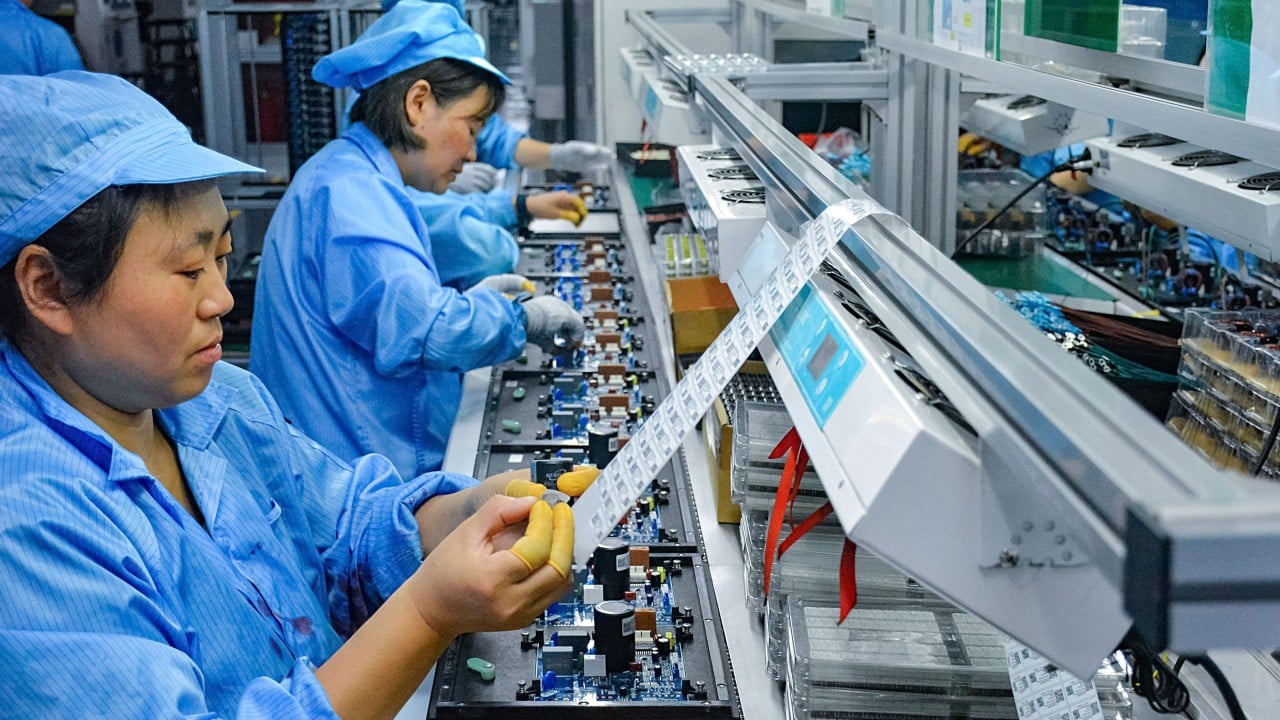
Hua Hong isn't trying to build bleeding-edge 2nm processors for smartphones. Their bread and butter has always been specialty nodes—power management ICs, microcontrollers, embedded non-volatile memory, and analog components. But as AI data centers scale up, demand for high-speed optical transceivers and co-packaged optics has exploded. By integrating silicon photonics into their mature and 12-inch specialty manufacturing lines, they are carving out a critical corner of the hardware supply chain that NVIDIA and local AI accelerator designers desperately need.
Why Mature Nodes Are Winning the AI Era
Most casual observers assume that only extreme ultraviolet lithography and 3nm lines matter. That is a massive misconception. AI infrastructure is a total system play.
You need advanced logic to crunch matrices, yes, but you also need thousands of power management chips, high-speed power discretes, and optical transceivers to wire everything together into a cohesive server rack. Hua Hong's recent financial performance proves this point clearly. The company posted massive profit jumps, driven heavily by capacity constraints and surging demand across power ICs and specialty logic.
When over 50% of orders in certain sectors go unfulfilled due to capacity crunches, foundries have real pricing power. Hua Hong has been rolling out price increases across its 12-inch lines while simultaneously expanding its footprint in Wuxi and integrating assets like Huali Microelectronics. Shifting attention toward silicon photonics fits squarely into this expansion strategy. They aren't gambling on speculative research projects; they are commercializing optical device layers that fit into existing manufacturing ecosystems.
What This Means for the Global Hardware Race
The race for domestic semiconductor self-sufficiency in China is often framed as a desperate attempt to replicate Western or Taiwanese logic nodes. That misses the forest for the trees. Semiconductor independence is about controlling the components that keep data centers running when supply chains fracture.
By building out specialized manufacturing for silicon photonics, domestic foundries ensure that local hyperscalers and AI firms have a reliable domestic source for high-bandwidth optical interconnects. If your optical transceivers have to be imported from restricted vendors, your entire AI cluster remains vulnerable, no matter how many local GPUs you manage to fabricate.
Expect more capital expenditure directed toward specialty optical fabrication over the next few years. The companies that figure out how to mass-produce optical components on standard 12-inch lines with high yields will dictate the economics of the next generation of data centers. Hua Hong's pivot isn't just a reaction to a short-term trend. It's a calculated bet that the future of computing belongs to light, not copper.