Western tech hubs spent years arguing about whether artificial intelligence can safely handle human lives. Meanwhile, two massive milestones just cleared in the exact same week, proving that the center of gravity for intelligent healthcare has officially shifted. We aren't looking at minor lab experiments or tech demos anymore. Real software is beating the newest Western models on clinical logic, and real hardware is earning the right to cut open European patients from thousands of miles away.
If you think medical automation is a far-off luxury, you are missing the actual story. The future of surgery and clinical diagnostics is arriving fast, and it is being built with a distinct strategy that leaves traditional tech giants playing catch-up. Expanding on this idea, you can also read: How Ai Infrastructure Is Quietly Splitting The World In Two.
The Surgery From Across the Continent
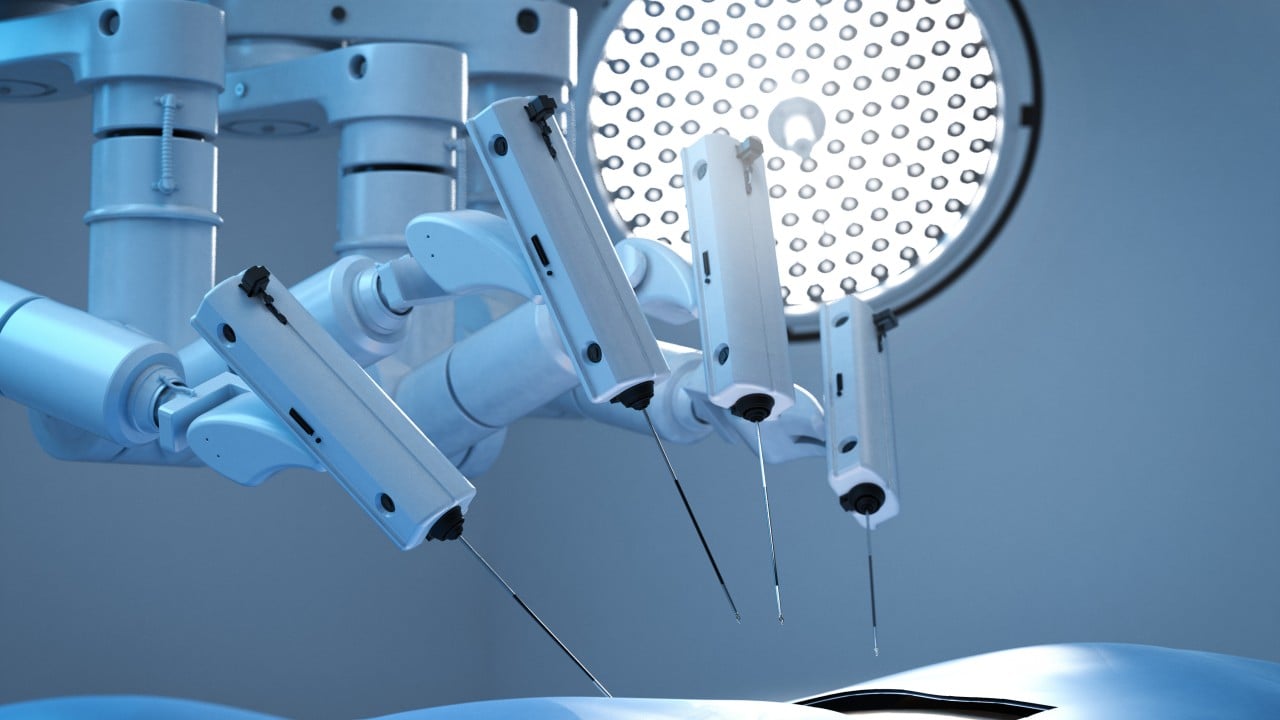
Shanghai MicroPort MedBot just shook up the regulatory world. Their Toumai Remote system officially clinched the European Union CE mark under the strict Medical Device Regulation rules. This is not just another regulatory stamp. It is the first time a fully teleoperated laparoscopic surgical robot has secured market access in the EU.
What does this mean in plain English? A surgeon sitting in Paris or Rome can now legally operate on a patient in a completely different city using a machine that relies heavily on advanced data transmission and real-time visualization systems. Analysts at TechCrunch have shared their thoughts on this trend.
To understand why this matters, look at what happened in March. A London-based surgeon sat down at a Toumai console and removed a prostate from a cancer patient. The patient was in Gibraltar. That is a distance of roughly 2,400 kilometers. The operation was a success because the system managed to bridge that massive physical gap without noticeable delay.
The system divides the workload across three distinct hardware blocks:
- A master surgeon console where the doctor controls the instruments.
- A patient cart positioned right at the operating table.
- A high-definition vision cart that transmits live anatomical data.
By running this triad over high-speed 5G networks, the platform allows specialists to handle complex procedures in urology, thoracic surgery, gynecology, and general surgery from across the globe. This directly solves a massive global crisis: the severe shortage of elite surgical talent in remote regions. Instead of flying a patient across continents, you just stream the surgeon's hands.
Crushing the OpenAI HealthBench Standard
While physical robots are crossing European borders, the underlying software brains are growing even faster. Baichuan Intelligence, working alongside a research team from Tsinghua University, dropped its new clinical-grade model called Baichuan-M4.
This model did not just pass OpenAI’s grueling HealthBench evaluation. It dominated it.
HealthBench is not a simple multiple-choice test that any basic internet scraper can ace. It consists of 5,000 highly realistic, multi-turn clinical conversations judged against 48,562 strict rubric criteria established by 262 real human doctors. It tests raw clinical reasoning under pressure. On the HealthBench Hard subset, which specifically models high-risk emergency situations, Baichuan-M4 beat the second-place model, GPT-5.5, by a staggering 15.9 points.
The most shocking metric from the technical data is the hallucination rate. General language models love to make things up when they don't know the answer. In a casual chat, a lie is annoying. In a hospital, a lie kills. Baichuan-M4 dragged its bare-model factuality hallucination rate down to a mere 3.3%. No other open-source or proprietary general model comes close to that level of restraint.
The Shift From Passive Chatbots to Active Diagnostics
Most people get medical AI wrong because they think it is just a fancy search engine. You type your symptoms, and it spits out a Wikipedia page. That format fails in real clinics because patients are terrible at describing their own illnesses. They leave out vital details, overemphasize minor aches, and ignore quiet warnings.
The true evolution of Baichuan-M4 lies in its active diagnosis engine. It does not wait around for you to feed it the perfect prompt. It acts like a human doctor during an objective structured clinical examination. It listens to the initial complaint, spots the hidden gaps in the story, and asks targeted, proactive follow-up questions to isolate the root cause.
Patient: "My stomach hurts, and I feel dizzy."
Traditional AI: "Here are 5 reasons your stomach might hurt..."
Active AI (M4): "Is the pain concentrated in the lower right side? Have you experienced a fever in the last six hours?"
To pull this off safely, the developers built something called Evidence Anchoring. Every single clinical conclusion or diagnostic suggestion the system generates is instantly mapped to exact paragraphs inside peer-reviewed journals and official clinical guidelines. It maintains a 90.0% precision rate on this citation tracking. It does not guess. It proves its work.
Remembering the Patient Across Months of Care
Another massive failure of early medical software was its short memory. Every time you started a new session, the machine forgot who you were. If you are managing a chronic illness or recovering from a major operation, that lack of continuity makes the tool completely useless.
The M4 system introduced a full course memory stack that acts as a continuous digital health ledger. It retains and connects structural data from daily chats, shifts in laboratory test results, historic medication responses, and past imaging reports.
When a patient interacts with the system weeks after an initial checkup, the AI instantly recognizes subtle changes in the progression of a condition. It treats the conversation as a continuation of a lifelong medical relationship, not a standalone transaction. This transforms the technology from a basic question-and-answer tool into an automated general practitioner capable of long-term patient oversight.
The Ground Reality Behind the Data
Let's be completely honest about these achievements. A massive win on a benchmark leaderboard like HealthBench is an incredible engineering feat, but a benchmark is not a randomized controlled clinical trial. It does not guarantee that a hospital administrator will immediately fire their staff and buy a software license.
Entrenched Western surgical platforms still hold an iron grip on hospital purchasing departments throughout Europe and North America. Breaking into those markets requires years of building trust with conservative medical boards, navigating intense local liability laws, and retraining older physicians who are entirely comfortable with their existing tools.
The real test for Chinese medtech over the next few years will not happen in a lab. It will happen in the procurement offices of European hospital networks. They must prove that their remote hardware can compete on long-term maintenance costs and operational safety over thousands of hours of active use.
Your Action Plan for the Automation Era
The intersection of teleoperated robotics and hyper-accurate medical models is rewriting the rules of healthcare delivery. If you manage a healthcare facility, practice medicine, or build health technologies, standing still means getting left behind.
Audit Your Infrastructure for Remote Readiness
The success of 2,400-kilometer surgeries proves that high-speed, low-latency networking is now a core requirement for modern operating rooms. Evaluate your facility's internal network capabilities and look into dedicated fiber or 5G integration. You cannot deploy the next generation of automated tools on shaky, outdated Wi-Fi.
Transition Data Silos Into Structured Feeds
Models like Baichuan-M4 rely heavily on continuous patient histories to maximize their diagnostic accuracy. If your clinical records are locked away in fragmented, unreadable legacy databases or scanned paper documents, you cannot utilize these tools effectively. Prioritize data clean-up and adopt modern interoperable standards.
Invest in Hybrid Training Workflows
The doctors who excel in the next decade will be those who know how to co-pilot with intelligent systems. Begin introducing basic algorithmic reasoning and remote surgical console training into your continuing education programs. Teach your staff how to cross-reference AI recommendations with the anchored evidence citations rather than blindly trusting or blindly rejecting the machine's output. Turn your clinical staff into editors who verify and guide the machine, maximizing safety while drastically cutting down on administrative burnout.