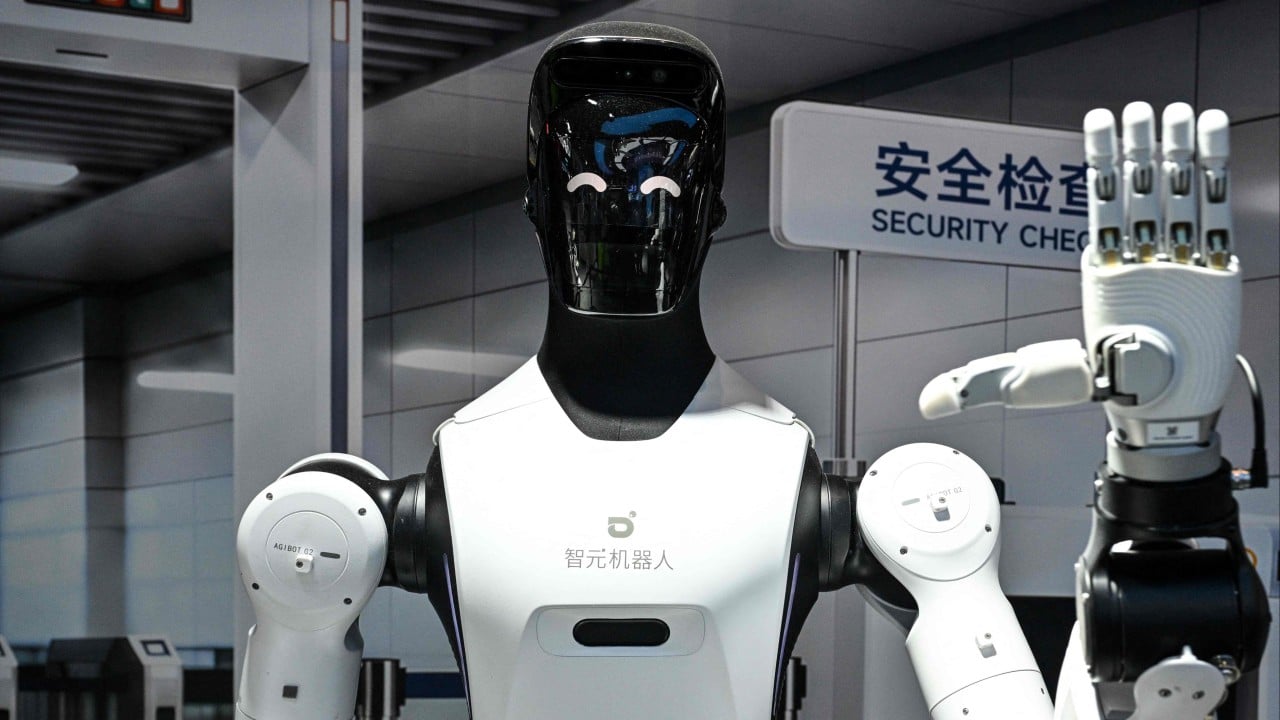
China can build physical hardware faster and cheaper than anyone else on Earth. Walk through tech hubs in Shenzhen or Shanghai, and you'll find hundreds of companies turning out bipedal walkers, quadruped dogs, and robotic arms at bottom-dollar prices. Unitree sells humanoids for a fraction of what Western competitors charge. AgiBot is churning out industrial units at breakneck speed.
Yet Chinese robotics executives keep admitting the same frustrating truth behind closed doors. The hardware is ready, but the digital brain isn't. In other news, take a look at: Why China's Kimi K3 Model Is Rattling Silicon Valley.
Building a flexible frame with fast motors is simple enough once supply chains align. Teaching that frame how to fold a towel, handle a delicate glass, or clean a cluttered kitchen without breaking things requires something entirely different. It demands advanced embodied AI foundation models and massive amounts of high-quality physical interaction data. Right now, Chinese developers are running up against a steep wall on both fronts.
The Hardware Trap
Most people assume building the physical body is the hardest part of humanoid robotics. It's not. Engadget has provided coverage on this fascinating topic in extensive detail.
Chinese manufacturing has already solved the mechanical equation. Actuators, gearboxes, lightweight alloys, and battery systems are abundant and cheap. That's why Chinese firms dominate the lower end of the market with aggressive pricing.
Cheap steel and smooth motors only take you so far. If your robot lacks the smarts to understand complex human environments, it's just an expensive toy.
When you watch a demo video of a humanoid making coffee or sorting blocks, it usually operates in a controlled lab. Put that same machine in a real living room with shifting light, messy tables, and unpredictable pets, and it freezes. Physical hardware without a capable multimodal model is useless for general tasks.
Where the Data Drought Really Hits
Large language models like ChatGPT learned by scraping billions of pages of text off the open web. You can't do that with physical movement.
To teach an embodied AI how to interact with the world, you need real physical training data. That means recording tactile pressure, motor torque, joint angles, and visual depth frames every millisecond during a real-world task.
How do companies collect this today?
- Teleoperation: Humans wear VR rigs or exoskeleton suits to manually control the robot through thousands of repetitions.
- Synthetic simulation: Developers build virtual 3D worlds where virtual robots practice millions of trials.
- Real-world deployment: Running physical fleets in real factories to log actual failures and successes.
Teleoperation is slow and costly. Synthetic data often fails to capture real friction, squishy materials, or uneven surfaces—a problem roboticists call the simulation-to-reality gap. Real deployment requires thousands of reliable units already out in the field.
It's a catch-22 situation. You need data to make the robot useful, but you need useful robots in the field to collect data.
Why American AI Models Still Hold the Lead
Chinese AI labs have made huge strides in open-weight language models, but the top embodied AI brains—the systems linking vision, language, and physical action into a single neural network—are heavily concentrated in US labs.
Companies like Google DeepMind with RT-2, Physical Intelligence, and Tesla with its Optimus fleet are investing billions specifically into spatial reasoning and physical sensorimotor models. They treat physical motion as a native data type rather than an afterthought.
Many Chinese startups still rely on adapted language models patched together with basic motion controllers. That setup works fine for predictable factory line assembly. It completely breaks down when a robot faces an unstructured environment.
Without an original breakthrough in embodied neural architectures, local makers remain stuck using second-hand software frameworks on world-class hardware.
How the Industry Is Trying to Fix It
Nobody in China is giving up. The strategy is shifting rapidly to bridge the software gap before hardware margins collapse.
Several major initiatives are already moving forward across the sector:
- Unified Data Consortia: Tech firms and government-backed institutes in Beijing and Shanghai are building shared physical datasets. Instead of every startup collecting its own data, they pool teleoperation recordings into open repositories.
- Fleet Deployment in Controlled Sites: Power grid operators, municipal maintenance teams, and automotive assembly lines are putting thousands of single-purpose inspection bots in the field. These early deployments generate continuous real-world sensor logs.
- Hybrid World Models: Researchers are combining spatial video generators with physics engines to make synthetic training vastly more realistic, shortening the time needed for physical trial and error.
What Needs to Happen Next
If you're tracking the robotics space or building products in this sector, don't get distracted by flashy video demos of robots doing backflips. Backflips are scripted physics. Folding laundry in an unfamiliar room is actual intelligence.
To spot the real winners in this market over the coming years, keep your eye on three simple metrics:
- Hours of high-fidelity teleoperation data collected per month.
- Zero-shot task execution rates in unmapped spaces.
- On-device inference speeds for real-time spatial adjustments.
The company that solves the embodied data bottleneck will control the future of automation. The hardware is already a commodity. The brain is where the battle gets won.