Wildlife doesn't usually wait for permission to evolve. Right in China's capital, a brand new population of swan geese has quietly emerged over the past century, driven entirely by shifting weather patterns and human agricultural expansion. If you think urbanization only destroys animal habitats, this case study proves nature is far more opportunistic than we give it credit for.
Recent scientific research reveals that these urban-adjacent waterbirds aren't just regular migratory visitors taking a rest. They've developed unique genetic traits and behavioral shifts that set them apart from their rural and wild ancestors. When temperatures warm up and humans alter landscapes for farming, wild species are forced to adapt or perish. These geese chose a third option: they rewrote their biological playbook.
Why Urban Agriculture Changed the Game
You wouldn't expect a bustling mega-city like Beijing to serve as an incubator for a genetically distinct bird sub-group. Yet, agricultural development combined with regional climate shifts created a brand new ecological niche. As traditional wetlands transformed into managed farmland, the local food availability and thermal environments changed drastically.
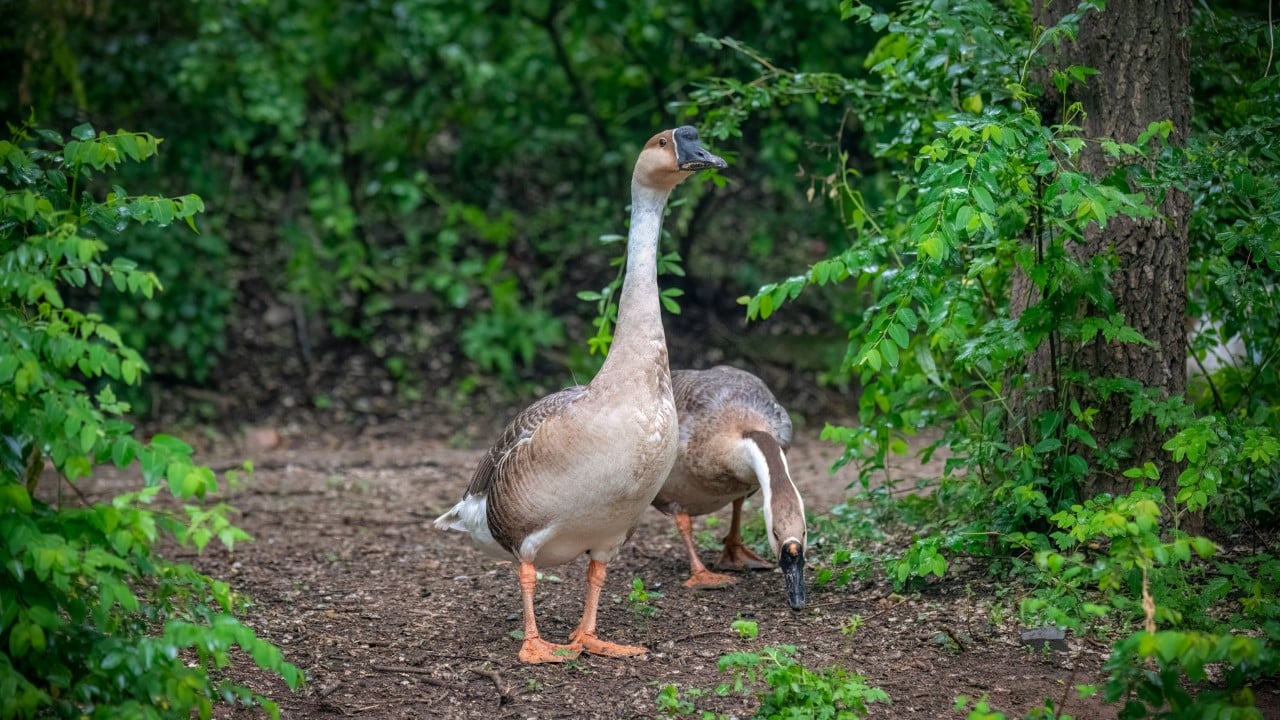
Wild swan geese (Anser cygnoides) normally rely on strict seasonal cues to dictate their long-distance migrations between Siberia and southern China. But warmer winters in northern latitudes altered those traditional equations. Instead of burning energy on grueling thousands-mile flights, segments of the population found reliable, year-round sustenance in agricultural fields and managed waterways around Beijing.
Over decades, this localized survival strategy stopped being a temporary fix and turned into permanent residency. Isolation from native rural populations caused genetic divergence to kick in. Natural selection favored birds that could tolerate warmer local climates, handle altered diets, and navigate human-dominated territory without panicking.
What Modern Genetics Tells Us About Adaptation
Scientists mapping the genomes of these avian populations are finding distinct footprints of rapid micro-evolution. It doesn't take millions of years for genetic shifts to happen when environmental pressures spike. Rapid climate volatility acts as an accelerator.
When you look closely at the data, the changes aren't random. Selection pressures target metabolic efficiency and thermal regulation. Birds living closer to agricultural hubs in northern China show distinct genetic markers compared to their wild counterparts in remote wetlands. They process food differently because their diet shifted from wild reeds and sedges to agricultural waste grains and crops.
This brings up a larger point most conservation debates miss. We tend to view wildlife protection purely through the lens of preservation—keeping things exactly as they were in 1950. But the Beijing swan geese show that species can actively engineer their own survival through micro-evolutionary leaps when faced with human-altered landscapes.
The Practical Takeaway for Conservation
Before you celebrate this as a happy ending for all wildlife, remember that localized adaptation has strict limits. A genetically distinct Beijing goose population doesn't mean animals can infinitely handle habitat destruction. It means evolution is opportunistic, grabbing onto whatever scraps of suitable climate and food humans accidentally leave behind.
If you study wildlife management or local biodiversity, the lesson here is simple. Stop treating urban and agricultural zones as biological dead zones. Animals are watching how we change the land, and the fittest ones are already figuring out how to exploit our backyards.
Keep an eye on how regional climate trajectories impact migratory routes over the next decade. The lines between wild animals and domesticated or semi-urbanized populations are blurring faster than traditional biology textbooks can keep up.