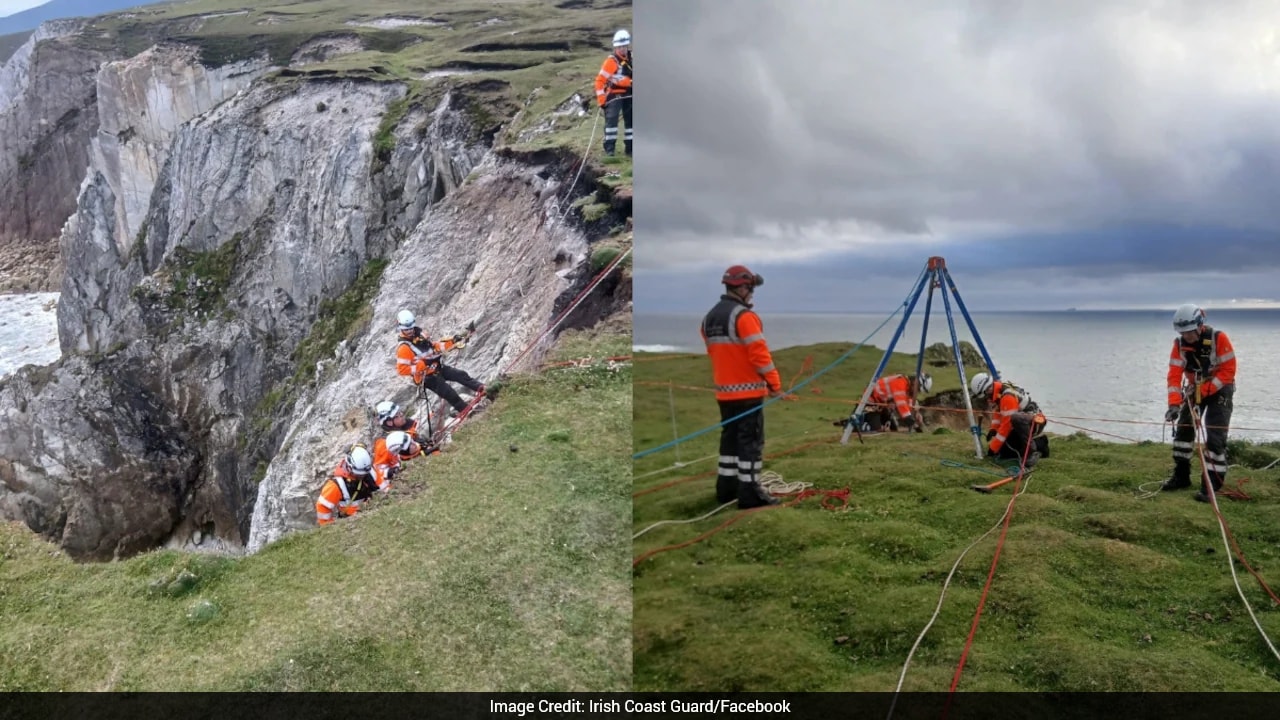
A celebration walk should never end with a seven-hour ordeal on a remote cliffside. Yet that is exactly what happened when a newly engaged couple got trapped by a rising tide on Keel Beach in Achill, Ireland.
Most people assume coastal danger announces itself with dramatic waves and stormy skies. It rarely works that way. Instead, a pleasant stroll turns into an emergency because water moves faster than human perception, and shoreline geography tricks even careful visitors.
The Anatomy of a Coastal Trap
On Monday, October 26, the couple headed out along Keel Beach to mark their engagement. They walked too far out onto the rocky shoreline as the tide crept in. By the time they realized their error, the escape route was gone.
Local conditions made a standard rescue impossible. Rough water ruled out an inflatable boat or a foot approach across the rocks. Heavy winds grounded rescue helicopters. That left the Irish Coast Guard with one difficult option: a vertical extraction.
Volunteers had to descend nearly 500 feet down a sheer cliff face. They pulled the couple to safety one by one while early signs of hypothermia set in. Even after the cliff rescue, the ordeal wasn't finished. Because vehicles could not reach the remote location, the exhausted pair had to trek 1.2 miles down a steep hill just to reach an awaiting ambulance.
Why Tides Catch People Off Guard
Coastal physics create traps that look harmless until it is too late. Water does not rise evenly across a beach; it fills channels, cuts off headlands, and surrounds rock shelves from behind.
If you walk around a promontory at low tide, you might find a wide, flat sandy expanse. An hour later, water floods the narrow neck behind you. You are dry, but you are stranded on an island of rock with deep water blocking your return.
Weather adds another layer of risk. High winds and low temperatures speed up body heat loss. When you are wet and stationary, hypothermia can take hold in minutes, not hours.
How to Stay Safe on Remote Shorelines
You don't need to avoid coastal walks, but you do need to respect the environment. Simple habits prevent emergency situations.
Check local tide tables before you step onto any beach with cliffs or rocky headlands. Know exactly when high tide peaks. If a beach has narrow access points or rocky outcroppings that disappear into the surf, turn back well before the tide turns.
Watch the water line behind you as you walk. If you notice waves washing closer to the base of the cliffs, your window is closing fast. Never assume you can outrun an incoming tide across slippery, uneven rocks.
When an emergency happens, call authorities immediately. Do not try to wade through heavy surf or climb unstable rock faces without gear. Stay put if moving exposes you to greater risk, and conserve your body heat until help arrives.
Nature doesn't negotiate with schedules. Respect the water, watch the clock, and keep your next coastal walk off the casualty list.