Washington just dropped a massive 100-page bombshell on Havana. The U.S. State Department is explicitly accusing Cuba of executing a decades-long subversion campaign that managed to penetrate the highest echelons of the American government.
If you feel like you just woke up in 1962, you aren't alone.
The official U.S. report claims Havana's intelligence apparatus did not just steal secrets—it actively weaponized American activism and helped cultivate modern far-left extremist movements on U.S. soil. The rhetoric coming out of Washington is incredibly intense. President Donald Trump has made it clear that after the collapse of Nicolas Maduro’s regime in Venezuela earlier this year, Cuba is next on the chopping block. In fact, the White House has openly signaled its intention to force an end to communist rule on the island before the year ends.
But beneath the fiery headlines and the recycled Cold War talking points, what is actually going on?
This isn't just a sudden realization that Cuba has spies. It's a highly calculated, aggressive geopolitical maneuver designed to justify an unprecedented embargo and set the stage for total regime change.
The Anatomy of Havana’s Long Game
Let’s be honest about one thing: Cuba’s intelligence service, the Directorate of Intelligence (DI), has always punched far above its weight. The State Department's report even argues that Havana's spy network has been more adept and patient than the Soviet KGB ever was.
Unlike intelligence agencies that rely on massive financial payouts to recruit turncoats, Cuba plays a generational game. They target promising young American students and activists long before these individuals ever get security clearances. They cultivate them slowly, steering them into academic, diplomatic, and defense circles over decades.
The report heavily relies on high-profile historic captures to prove its point:
- Ana Montes: The former senior analyst for the Defense Intelligence Agency who spent nearly two decades feeding top-secret military intelligence to Havana before her arrest in 2001.
- Victor Manuel Rocha: The former U.S. Ambassador who covertly acted as a Cuban agent for over 40 years, completely compromising American foreign policy channels.
Washington is using these very real, incredibly damaging intelligence failures to paint a picture of a current, ongoing threat. The U.S. government claims that Havana remains the "ideological capital of the modern radical left," asserting links between Cuban influence and recent domestic social upheavals, student protests, and prominent progressive organizations.
By framing political dissent inside the U.S. as a product of Cuban subversion, Washington is shifting the conversation from standard foreign policy to a matter of immediate domestic national security.
Tightening the Noose Around an Island in Crisis
The timing of this report isn't an accident. It's the ideological cover for a brutal economic strangulation strategy that has pushed Cuba to the absolute brink of collapse.
Following the political shift in Venezuela, the U.S. implemented a strict oil blockade against Cuba. Washington went so far as to threaten severe tariffs on countries like Mexico if they continued shipping crude to the island. Mexico bent to the pressure and halted shipments earlier this year.
The results on the ground in Cuba are catastrophic. The country is facing an unprecedented humanitarian crisis:
- The electrical grid has suffered multiple total nationwide collapses, leaving millions without power for days on end.
- Aging power plants are operating well below capacity, forced to burn highly corrosive domestic crude oil because they can't import cleaner fuel.
- Basic food production has dropped by more than half, and pharmacies are running on less than a third of normal medicine supplies.
By releasing a massive dossier detailing historical Cuban espionage right now, the Trump administration is effectively neutralizing domestic political pushback against these harsh sanctions. When members of Congress try to argue that the U.S. embargo is causing a humanitarian disaster, the administration can point to the 100-page report and claim they are defending the homeland against a hostile regime that wants to subvert American democracy.
What Happens Next
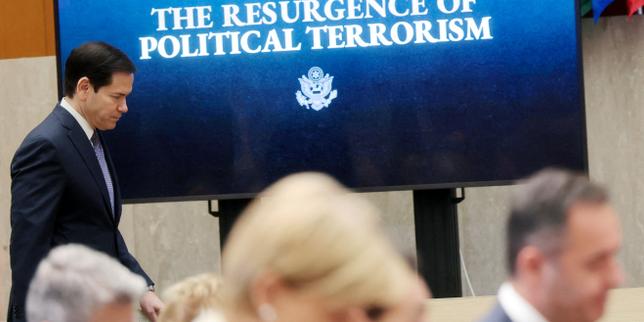
We are entering an incredibly volatile phase in U.S.-Cuba relations. Washington has already placed heavy sanctions on the Cuban president, the Castro family, and key state-run tourism and paramilitary entities. Secretary of State Marco Rubio has explicitly stated that the U.S. is determined to enforce a complete political transition on the island.
Expect the U.S. to use this subversion narrative to escalate diplomatic isolation, completely cut off remaining foreign financial channels, and potentially prepare for a "humanitarian intervention" backed by military assets if the Cuban government begins to fracture.
For anyone watching the region, the next steps are clear. Keep a close eye on how Latin American allies respond to U.S. secondary sanctions, track the frequency of Cuba’s grid failures, and look out for further high-profile arrests within the U.S. civil service as federal agencies hunt for the remaining ghosts of Havana’s deep-cover spy network. The Cold War never really ended; it just waited for the right moment to get loud again.