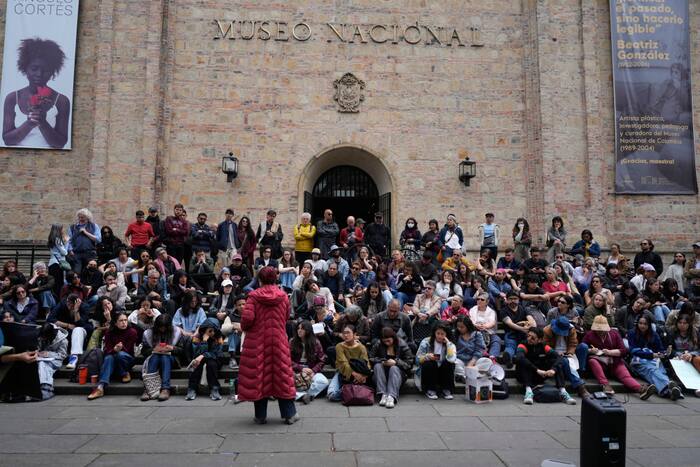
History is getting rewritten in Bogotá. Colombian President Abelardo de la Espriella has decided that certain pieces in the National Museum need to vanish. He calls it a cultural counterrevolution. Critics call it naked censorship.
Either way, police are guarding museum doors while university students hold outdoor classes on the pavement, furious that exhibits detailing decades of political violence, LGBTQ+ rights, and feminist activism have been quietly pulled from view.
De la Espriella isn't operating in a vacuum. As a vocal ally of Donald Trump, he's borrowing heavily from an international playbook. Washington has spent months blasting the Smithsonian Institution, labeling its leaders radical activists and pushing to reframe American historical narratives. Now, that same ideological friction has hopped the equator and landed squarely in South America.
What's Actually Missing from the National Museum
The exhibits pulled under de la Espriella's orders weren't obscure modern paintings collecting dust. They focused on social movements and the heavy, complicated history of Colombia's internal conflict.
By removing displays addressing marginalized voices—including Indigenous and Black communities—the administration is pushing a much narrower national identity. Culture Minister Paola Holguín defended the moves, noting that the government is redesigning curatorial practices across multiple institutions.
Even the Foreign Ministry got into the act, renaming a courtyard that previously honored an Indigenous leader. Officials framed it as part of an ongoing crusade against what they deem "woke" ideology.
Protesters outside the museum aren't buying the justification. They argue that scrubbing history doesn't make it go away. It just creates a vacuum filled by state-approved mythmaking.
The Politics of Exporting Cultural Battles
Political analysts point out a glaring irony in these developments. Colombia faces pressing economic realities, security concerns, and complex regional challenges. Yet the administration is choosing to pick fights with museum curators and historical markers.
As anthropologist Arturo Sanabria pointed out during recent demonstrations, these are imported culture wars. They rely on foreign narratives about terrorism and political correctness that fit neatly into conservative talking points abroad, but ignore the messy ground-level realities of Latin American society.
When governments try to legislate memory, history tends to fight back. Students holding outdoor lectures outside a locked museum aren't just staging a temporary stunt. They're signaling that public memory belongs to the public, not whichever administration happens to hold the presidential palace.
The protests in Bogotá are growing louder, and the government shows no signs of backing down from its campaign. If this cultural counterrevolution continues, the battle over what counts as legitimate Colombian history will define the political landscape for years to come.