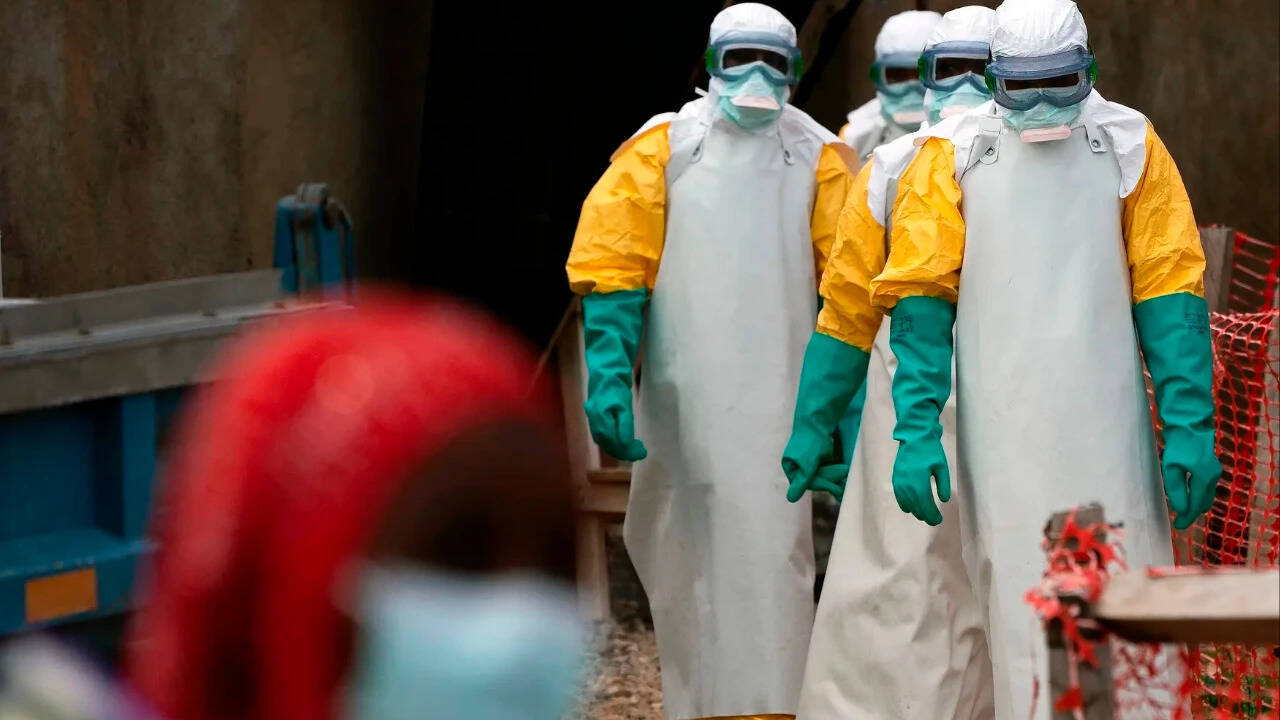
The numbers coming out of the eastern Democratic Republic of the Congo are bad. Really bad.
Health officials just confirmed that the latest Ebola outbreak has shattered a grim milestone. Confirmed cases have officially topped 1,003. Even worse, at least 254 people are dead.
If you think you've read this story before, you haven't. This isn't the standard Ebola nightmare the world learned to fear in 2014. It is something much more complicated, and honestly, far more dangerous.
The crisis is centered heavily in the Ituri province, hitting areas already battered by humanitarian conflict and massive displacement. Since the Congo's Ministry of Health officially declared the outbreak on May 15, the virus has moved with shocking speed. It is officially the most severe outbreak of its kind during its first month in history. And health workers are fighting it with their hands tied behind their backs.
The Invisible Threat of the Bundibugyo Strain
Most people assume an Ebola outbreak means deployment of the highly successful vaccines and experimental therapeutic treatments developed over the last decade. Ervebo, the vaccine that saved countless lives in recent years, is highly effective against the Zaire strain of the virus.
It does absolutely nothing here.
This specific outbreak is driven by the rare Bundibugyo strain. It is a completely different monster. There are currently no approved vaccines and no proven antiviral treatments for this strain. None.
When patients get sick in Ituri, healthcare workers can only offer supportive care. They manage fluids, treat secondary infections, and try to keep blood pressure stable. The historical death rate for Bundibugyo sits between 32% and 55% based on previous, smaller outbreaks in Uganda and the Congo. Right now, the data shows a brutal reality, but the worst part is what we can't see.
Why the Official Numbers Are a Lie
The official count says 1,003 cases. Don't rely too heavily on that number. Health authorities themselves openly admit that the true scale of the infection is likely much higher. The outbreak hasn't peaked yet.
Finding the sick is proving to be an impossible task for two major reasons.
- Missing Patient Zero: Health officials still haven't found the original source of the outbreak. Without knowing how or where the virus crossed over into the community, tracking its movement is pure guesswork.
- Abysmal Contact Tracing: To stop Ebola, you must find every single person an infected patient has touched, monitor them for 21 days, and isolate them if they show symptoms. Right now, the Ministry of Health has reached only a 55% contact-tracing coverage rate. That means nearly half of the transmission chains are running wild in the dark.
More than 35,000 potential contacts still need to be tracked down and monitored. It is a logistical nightmare. The virus has already spilled over the border into Uganda, and cases have popped up in large displacement camps like Kigonze, where thousands live in cramped, precarious conditions. If the virus takes root deeply in these camps, containment will completely fall apart.
Blind Spots in the Global Response
The ground reality in eastern Congo makes traditional public health interventions almost useless. Active conflict zones and heavy insecurity mean health facilities are routinely attacked or abandoned. Humanitarian teams can't travel down broken, unsafe roads.
While local teams risk their lives, international reactions have focused heavily on self-preservation. Some nations are already tightening travel rules, and the US has announced plans to reroute and quarantine travelers in Kenya rather than bringing them home.
Focusing purely on border security ignores how viruses actually work. You don't stop a fire by just building a fence around your own yard; you have to help put out the spark at the source. Leaving local healthcare workers to fight a vaccine-resistant Ebola strain in a war zone is a recipe for global disaster.
The Next Steps for Global Health
We need a massive shift in strategy immediately if we want to prevent this from turning into a multi-country catastrophe. The playbook used for the Zaire strain won't work here. Action must happen on three fronts.
- Fast-Track Bundibugyo Clinical Trials: Scientists have candidate vaccines and therapies sitting in labs. The World Health Organization must aggressively clear regulatory hurdles to deploy these experimental tools for compassionate use in Ituri right now.
- Fund Local Security Escorts for Contact Tracers: Contact tracing is stuck at 55% because it is too dangerous for workers to enter certain communities. International funding needs to pivot from border quarantine infrastructure to funding secure, community-led health teams on the ground.
- Prioritize Displacement Camp Isolation Units: We must assume the virus is already spreading silently in crowded camps. Setting up heavy triage and dedicated isolation units inside camps like Kigonze before a massive spike happens is the only way to shield vulnerable populations.