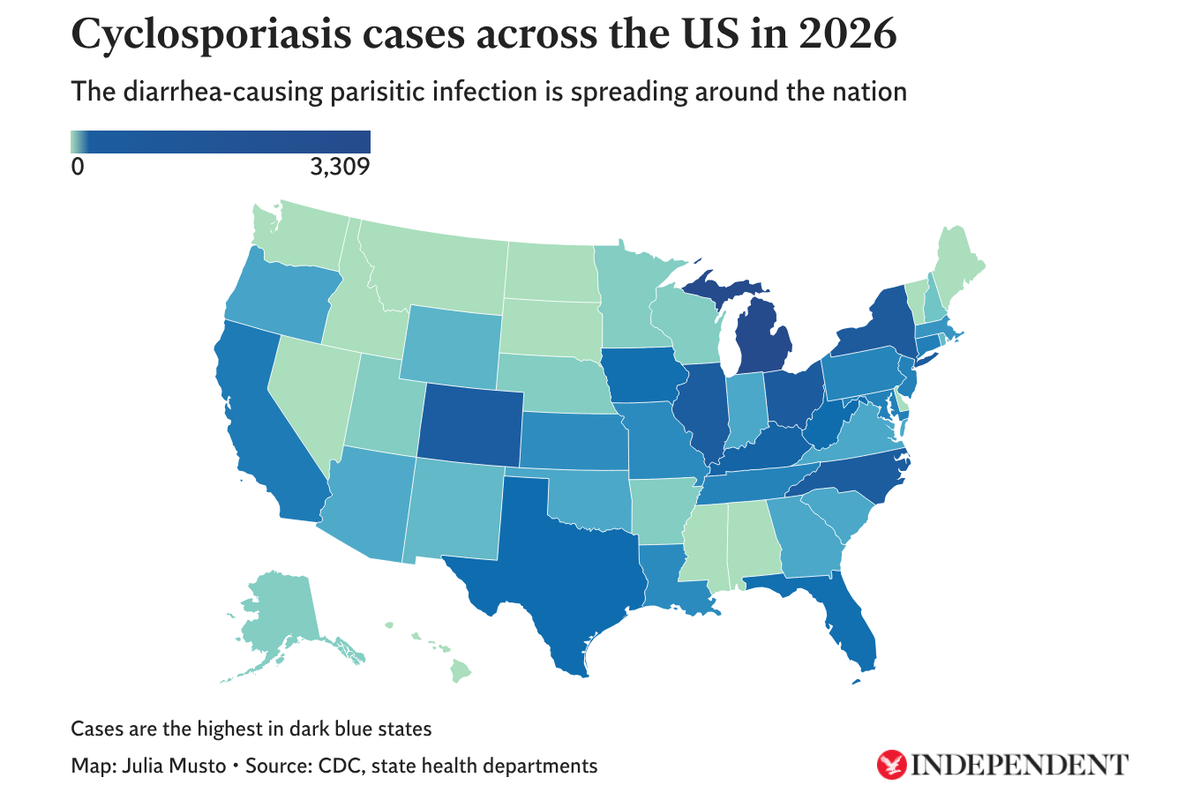
I watched a regional operations director lose their job last week because they thought a foodborne illness crisis could be managed with standard kitchen sanitation. They assumed that doubling down on bleach and telling line cooks to scrub harder would save them. Instead, they got hit by the reality of Taco Bell Cyclosporiasis, an ongoing outbreak that has crippled operations across dozens of states, forcing restaurants to yank fresh produce off the line. If you manage food operations, a franchise, or supply chains, assuming this is just another standard bacterial scare is a mistake that will cost you tens of thousands of dollars in wasted inventory, legal liability, and shattered consumer trust.
Believing Standard Sanitizers and Chlorine Can Kill the Parasite
Most kitchen managers handle food safety through a bacterial lens. You think in terms of E. coli, Salmonella, or Listeria. You assume that if you submerge your cilantro and lettuce in a standard chlorinated wash or use quaternary ammonium sanitizers, you've cleared the threat.
That is a dangerous lie. Cyclospora cayetanensis is not a bacterium; it is a microscopic, single-celled parasite protected by a tough, thick-walled outer shell called an oocyst. This shell makes the parasite highly resistant to chlorine, chemical sanitizers, and standard food wash systems.
If you rely on chemical washes to neutralize this parasite, you're simply rinsing the dirt off a pathogen that is still perfectly capable of infecting your customers. The only reliable ways to destroy these oocysts are extreme heat—cooking food to at least 70°C (158°F)—or freezing. Since you can't serve warm, cooked lettuce on a taco, chemical disinfection shouldn't be your shield. Your only real defense is stopping contaminated produce from entering your back door in the first place.
The Trap of Relying on Pre-Washed Bagged Produce
Buying pre-washed, shredded lettuce in bags seems like an operational win. It saves on kitchen labor, reduces knife injuries, and keeps prep times predictable. But when a parasite enters the supply chain, bagged produce becomes a massive liability.
In a large-scale processing facility, thousands of pounds of leafy greens from different farms are chopped and washed in massive, shared water flumes. If a single batch of lettuce contaminated with human feces enters that flume, the water acts as a vehicle to spread the oocysts across every single bag processed that day.
The Operational Shift: Bagged vs. Whole Head
Let's look at how this plays out in a real kitchen scenario.
The Wrong Approach (Bagged Greens): You buy pre-cut, triple-washed bagged salad mix. The bag says "ready to eat," so your staff dumps it straight from the plastic bag into the cold-holding line. A single contaminated leaf from an upstream farm has washed through the batch, contaminating dozens of bags. Within days, health department investigators are knocking on your door because twenty customers who ate different dishes are all suffering from explosive, watery diarrhea. You have to throw out your entire cold-line inventory, pay for emergency deep cleaning, and face a PR nightmare.
The Right Approach (Whole Heads): You accept the increased labor cost and buy whole heads of lettuce. Your prep cooks are trained to strip away and discard the outer two to three layers of leaves, which are the most exposed to agricultural water and soil contaminants. The staff cuts the lettuce in-house and washes the inner leaves thoroughly under cold, high-pressure running water rather than letting them soak in a shared sink. By refusing to buy into the pooled risk of massive commercial washing flumes, you drastically lower the odds of cross-contaminating your entire daily supply.
Swapping Suppliers Without Verifying the Regional Distributor
When news breaks that a major brand is facing a parasite scare, the typical knee-jerk reaction is to call your supplier and demand produce from a different grower. You think that by changing the brand name on the box from "Farm A" to "Farm B," you've isolated your business from the threat.
This ignores how the middle-mile supply chain actually works. Regional distributors frequently pool produce from multiple regional growers in the same cold-storage warehouses. They use the same transport trucks, and they sometimes repackage bulk items under generic distributor labels.
If your distributor's cross-docking facility is handling contaminated cilantro or lettuce, swapping growers won't protect you if the distributor's own environment or logistics chain is compromised. You have to audit the entire transit path. Ask your distributor for direct, unedited traceback documentation showing exactly where your specific lot numbers were cross-docked and stored. If they can't or won't give you that data within two hours, find a distributor who can.
Waiting for an Official FDA Recall Before Pulling High-Risk Inventory
Waiting for the Food and Drug Administration to issue a formal, public recall before you take action on high-risk produce is a recipe for operational ruin.
Tracing a parasite outbreak is slow, painful work. Unlike bacteria, which can be tracked rapidly using modern DNA fingerprinting tools, health officials investigating these parasites have to rely on slow, complex genetic testing and patient questionnaires. By the time the FDA officially links a specific farm to an outbreak and announces a recall, weeks have passed. The contaminated produce has already been eaten, your customers are already sick, and your brand is already dragging through local news reports.
Look at what happened in Michigan and Texas. Smart operators didn't wait for a federal mandate. They saw the local epidemiological spikes and voluntarily pulled lettuce, cilantro, and guacamole from their lines immediately. Yes, you take a short-term hit on food waste and limited menus. But that loss is nothing compared to the cost of defending a personal injury lawsuit from a customer who spent three weeks hospitalized with a parasite they caught at your establishment.
Navigating Taco Bell Cyclosporiasis in Your Supply Chain
During a widespread regional spike, your operational playbook has to change overnight. Managing a crisis like Taco Bell Cyclosporiasis requires you to understand that traditional rapid testing won't save you.
Because the parasite can take up to two weeks to make a patient sick, tracing the exact day a customer ate contaminated food is incredibly difficult. This means your local health department will look at your inventory logs for the entire past month. If your paperwork is a mess of handwritten scribble and missing delivery receipts, you won't be able to prove that your current batch of cilantro came from a clean source.
You must digitize your lot tracking. Every case of fresh produce entering your building needs to be scanned and logged with its harvest date, packing date, and farm source code. If an outbreak occurs in your state, you can run a query in seconds to verify if your inventory overlaps with the suspected harvest dates. If it does, you dump it immediately—no hesitation, no trying to "wash it extra well" to save a few bucks.
The Ultimate Reality Check: There is No Easy Shortcut
Let's be completely honest about what it takes to protect your business from agricultural parasites: fresh, raw produce is a permanent hazard.
You can buy the most expensive inventory management software, hire the best food safety consultants, and run daily kitchen audits. None of it guarantees 100% safety. If a wild animal gets into an irrigation canal miles upstream from the farm where your cilantro was grown, the oocysts are going to end up in your kitchen.
Survival in this industry doesn't come from pretending you can wash away every risk. It comes from having the operational discipline to amputate parts of your menu the moment a threat is identified. If you run a restaurant and you aren't prepared to look your customers in the eye and say, "We aren't serving lettuce or guacamole today because we aren't satisfied with our supplier's safety data," you don't belong in food service. The operators who survive are the ones who prioritize hard operational boundaries over short-term menu convenience.