The headlines coming out of Damascus sound like a clean win for the new government. Syrian Interior Minister Anas Khattab announced on X that security forces completely dismantled the terrorist cell responsible for the twin bombings that rocked the capital. They even slapped a label on the suspects, linking them directly to the Islamic State (ISIS).
But don't let the swift arrests fool you.
The fact that these bombs went off while French President Emmanuel Macron was literally in the city meeting with Syrian President Ahmad al-Sharaa is an embarrassment for the new regime. It shows that despite the fall of Bashar al-Assad in December 2024, Syria's security apparatus is leaking like a sieve. Al-Sharaa wants the world to believe he has everything under control, but this week proved that the ghosts of Syria’s insurgent past are still pulling the strings.
The Illusion of Control in the New Syria
When Ahmad al-Sharaa took power after ousting the Assad dynasty, he promised a complete pivot toward safety, economic rebuilding, and political openness. Macron’s landmark trip was supposed to be the ultimate stamp of Western legitimacy—the first visit by a European Union head of state since the regime change.
Instead, Macron got a front-row seat to a volatile security state.
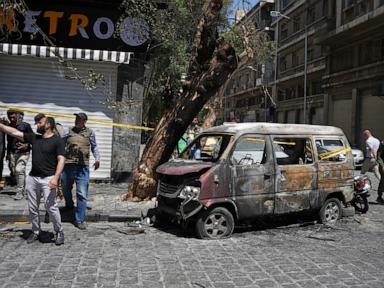
While the French President was talking diplomacy at the presidential palace, two crudely made explosive devices detonated about 10 kilometers away near the Ministry of Tourism and the hotel housing the French delegation. One bomb was stuffed inside a trash can; the other was rigged inside a parked car.
The regime tried to downplay the mess immediately. The Interior Ministry claimed security forces had actually spotted the bombs before they went off but simply ran out of time to defuse them. That is a tough pill to swallow. If your elite security teams can locate two separate improvised explosive devices during a high-profile diplomatic summit and still fail to stop them from killing one person and injuring 36 others, you don't have control. You have a major vulnerability.
How the Raids Went Down
Give credit where it's due: the tracking of the cell happened fast. According to Brig. Gen. Ahmad al-Dalati, head of rural Damascus internal security, investigators pored over CCTV footage from the blast sites. They spotted one suspect, put a tail on him, and let him lead them right to the rest of the group.
What followed was a sweeping, coordinated dragnet across the capital and its outer edges.
- Simultaneous Raids: Security forces hit multiple safehouses at the exact same time to prevent the suspects from tipping each other off.
- Key Locations: The operations targeted specific hotbeds in the southern countryside, including al-Husseiniya and Ash al-Warwar.
- The Intelligence Mix: The operation required a joint effort between local internal security forces and the General Intelligence Service.
They allegedly caught everyone involved. Yet, the government hasn't released a single name, photo, or shred of hard evidence connecting these people to ISIS. In a country desperate to prove it has left the rule-by-fear tactics of the Assad era behind, the lack of transparency is a bad look.
The PAA Angle: Why Target Macron?
People are asking why an ISIS-linked cell would choose this exact moment to strike. The answer is simple: maximum visibility.
ISIS doesn't need to assassinate a Western leader to win a media war. They just need to show that they can breach the secure zones of the capital whenever they want. By setting off explosions during Macron's visit, they completely hijacked the narrative. Instead of global news outlets focusing on Syria's economic rebirth or political reforms, the world spent the week talking about body counts and smoking cars in central Damascus.
This wasn't even the first warning sign. Just a week before the Macron incident, another bomb tore through a cafe right next to the main judicial complex in Damascus, killing 10 people. No group claimed that attack either, but the pattern is obvious. Insurgent factions are testing the cracks in al-Sharaa’s new administration.
What This Means for Sharaa's Legitimacy
Al-Sharaa is walking an incredibly tight tightrope. On one side, he’s trying to soothe religious minorities who are terrified of his Islamist-led coalition. On the other side, he’s begging Western governments for diplomatic ties and reconstruction money.
But Western capitals are deeply skeptical. They haven't forgotten that al-Sharaa used to lead Hayat Tahrir al-Sham, an organization with historical roots tied straight to al-Qaida.
Every time a bomb goes off in Damascus, it validates the skeptics. It tells international investors that the ground under Syria is still shifting. Macron put a brave face on it, posting on X that "nothing can undermine the desire of Syrians to live in a fully sovereign and secure Syria." But behind closed doors, European intelligence agencies are likely re-evaluating whether the new government can actually protect foreign diplomats.
Practical Next Steps for Following the Situation
If you are tracking the political risk or security situation in the Levant, watching the official state press releases won't give you the full picture. Here is how to actually monitor what happens next:
- Watch the Identity Disclosure: Keep a close eye on whether the Interior Ministry actually names the detainees or shows evidence of the ISIS connection. If they stay silent or quietly execute the suspects without a public trial, it suggests the arrests might have been a rushed show for the international community.
- Monitor the Southern Suburbs: The fact that the raids happened in places like al-Husseiniya shows that the rural fringe of Damascus remains highly volatile. Watch for increased military checkpoints and local curfews in these specific pockets over the coming weeks.
- Track Western Diplomatic Footprints: See if other European countries follow Macron’s lead or pull back. If embassies delay their reopenings or scale down staff, you’ll know the private security assessments contradict the public optimism of the Sharaa regime.