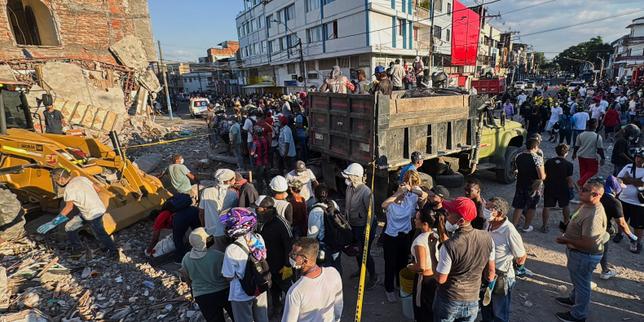
Ground shook violently across western Colombia on a quiet Monday morning. A magnitude 7.4 earthquake ripped through the region, leaving behind a grim trail of destruction. At least 132 people lost their lives, while hundreds of others sustained injuries. Images and video footage capturing collapsed facades and frantic rescue efforts quickly flooded global media channels. Yet, looking past the initial shockwaves reveals a complex geological event that demands a closer look.
Understanding the Epicenter and Depth
The catastrophe struck on August 10, 2026, right around 7:34 local time. Seismologists pinpointed the epicenter near San José del Palmar, a small municipality nestled inside the rugged Chocó department.
Unlike shallow tremors that often cause catastrophic localized pulverization, this specific event originated at a depth of roughly 96 to 107 kilometers.
- Moderate depth cushioned total annihilation in the immediate zone.
- Massive magnitude ensured the shockwave traveled vast distances.
- Neighboring countries like Ecuador and Panama felt the violent sway.
Even with the considerable depth, the sheer energy release proved overwhelming for older infrastructure. Buildings crumbled in cities like Pereira and Manizales, trapping residents under heavy piles of concrete and twisted metal.
The Immediate Political and Social Response
President Abelardo de la Espriella moved fast. Facing mounting casualty reports, the government declared a national state of catastrophe. This administrative step cuts through red tape, allowing emergency funds and military logistics to deploy instantly to the hardest-hit zones.
Rescue teams worked through the night under harsh conditions. Floodlights illuminated piles of rubble where search dogs sniffed for survivors. Hospitals in Risaralda and surrounding departments faced an influx of trauma patients, pushing medical personnel to their absolute limits. Transport hubs, including regional airports in Pereira and Quibdó, temporarily halted operations to allow engineers to inspect runways and terminal structures for hidden fractures.
Why This Disaster Highlights Regional Vulnerability
South America sits atop some of the most volatile tectonic configurations on Earth. Tectonic subduction zones continuously store immense pressure, releasing it through violent geological spasms. Following recent seismic shocks in neighboring Venezuela, this Colombian tragedy serves as a brutal reminder of infrastructure deficits.
Many residential buildings across the western departments lack modern seismic retrofitting. When a 7.4-magnitude tremor hits, unreinforced masonry stands little chance. Schools, community centers, and health clinics sustained heavy damage, disrupting community stability long after the initial ground motion stopped.
Practical Safety Measures Moving Forward
If you live in or travel through earthquake-prone zones across the Andes, preparation dictates survival.
- Secure heavy furniture, water heaters, and overhead shelving directly to wall studs.
- Identify structural safe zones in every room before an emergency strikes.
- Keep a well-stocked grab bag containing water, first-aid supplies, and emergency battery-powered communication devices.
Emergency coordinators emphasize that recovery will take months, if not years. Rebuilding damaged schools and hospitals requires strict adherence to modern seismic engineering codes to prevent history from repeating itself. The images broadcasting from Colombia show profound grief, but they also highlight a nation fighting collectively to recover.