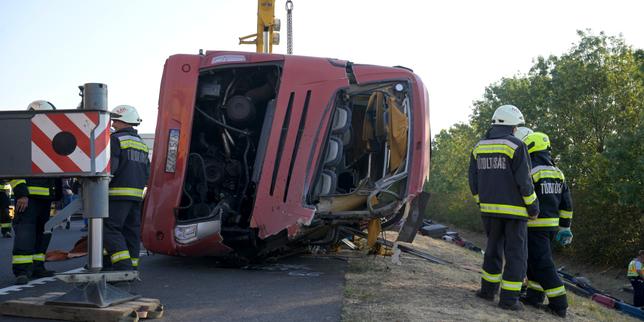
Twelve people lost their lives and at least ten others suffered critical injuries when a tourist coach registered in Poland veered off a Hungarian highway and flipped into a ditch.
The disaster unfolded around one o'clock in the morning on the M3 motorway near Mezőkeresztes, roughly 140 kilometers east of Budapest. The vehicle was carrying 57 passengers and two drivers on a long journey heading from Serbia back toward Poland. You might also find this connected article insightful: Why American Socialism Is Winning Local Power While Losing The National Argument.
The Timeline of the Disaster
Emergency services faced a horrific scene under the cover of darkness. Eleven passengers died instantly at the site of the crash, while another victim passed away shortly after arriving at a regional hospital.
Firefighters and medical crews had to smash windows and pry open twisted metal to drag trapped survivors from the wreckage. Beyond the fatalities and the ten people fighting severe wounds, medical personnel evaluated dozens of others who sustained minor cuts and bruises. As reported in recent coverage by TIME, the effects are widespread.
Preliminary findings released by local law enforcement point toward driver fatigue as the primary trigger. Investigators note that the coach drifted off a straight stretch of the motorway without braking before plunging into the embankment and resting on its side. Authorities placed the surviving driver in custody while forensic teams piece together the exact sequence of events.
A Dark Milestone for Regional Transport
This incident marks the deadliest road tragedy on Hungarian asphalt in over twenty years. Transportation safety experts look back to 2003 as the last time a catastrophe of this magnitude shook the country—a fatal collision at a railway crossing in Siófok that claimed 33 lives.
Long-distance coach travel remains statistically safer than personal automobiles, but overnight routes carry distinct, inherent hazards. Driver exhaustion on cross-border itineraries consistently threatens passenger safety across European transit networks.
State officials across Central Europe responded swiftly to the crisis. Hungarian Prime Minister Péter Magyar issued public condolences and thanked the emergency response teams who mobilized within minutes of the alarm. Polish leaders coordinated emergency consular flights and medical transport to bring the surviving citizens home.
The tragedy underscores the unforgiving nature of highway travel during the dead of night. Strict enforcement of driving hour regulations and mandatory rest breaks remain the only defense against the sudden onset of micro-sleep behind the wheel.