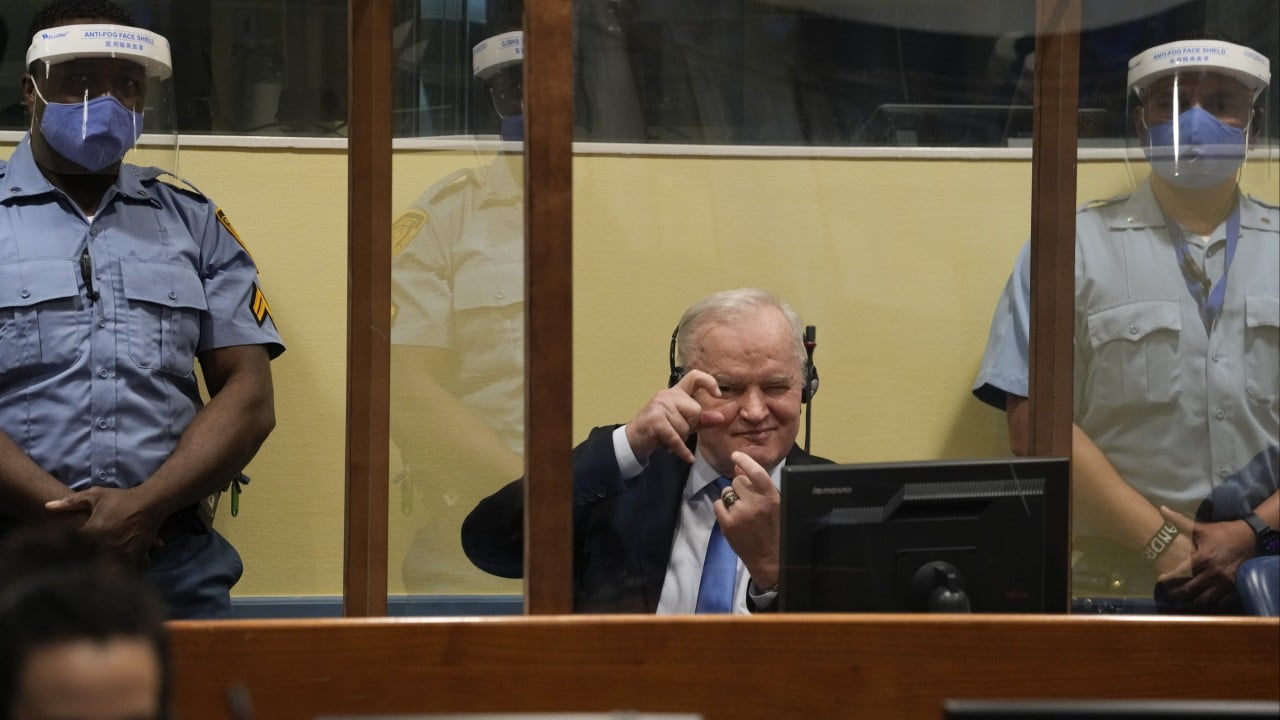
Ratko Mladic is dead. The man branded the Butcher of Bosnia has drawn his final breath at age 84 inside a United Nations prison hospital in The Hague. For survivors of the 1990s Balkan conflicts, his passing closes a dark chapter of modern European history. Yet, it offers little genuine closure. Mladic spent his final years serving a life sentence for genocide, crimes against humanity, and war crimes. His death ends a physical existence that outlived more than 100,000 victims, but the ideology he championed refuses to fade away.
If you look back at the Yugoslav wars, Mladic stands out not just for his brutality, but for how methodically he executed it. Born in 1942 in a region that is now Bosnia and Herzegovina, he rose through the ranks of the communist Yugoslav People's Army. When Yugoslavia fractured along ethnic lines in the early 1990s, Mladic pivoted instantly from communist officer to nationalist warlord. Appointed commander of the Bosnian Serb Army in 1992, he spearheaded a campaign aimed at carving out a ethnically pure Serb mini-state.
The Blueprint of Terror in Bosnia
Mladic didn't just fight a war; he engineered human catastrophe. Under his direct command, forces laid siege to Sarajevo for nearly four years. It remains the longest siege of a capital city in modern warfare. Snipers perched on high-rise residential blocks and artillery batteries dug into surrounding hills targeted civilians indiscriminately. Children walking to school, people queuing for bread, and families huddled in apartments were gunned down on a daily basis. Roughly 10,000 people died in Sarajevo alone.
His masterpiece of cruelty, however, unfolded in Srebrenica in July 1995. Declared a safe area by the United Nations, the enclave was supposed to offer sanctuary. Mladic's troops overran the town while Dutch UN peacekeepers watched, powerless or outmaneuvered. In footage broadcast around the world, Mladic strolled through the streets, patting a young Muslim boy on the head and promising safety to the remaining population. Hours later, the slaughter began.
Over the span of several days, his forces systematically rounded up at least 8,000 Muslim men and boys, marched them to execution sites, and bulldozed their bodies into mass graves. Mladic caught the entire operation on film, boasting on camera that he was gifting the town to the Serb people as revenge against the Ottoman Empire. He viewed the late-20th-century conflict through the distorted lens of centuries-old religious grievances, famously urging his men to "scorch the brains" of their enemies.
The Long Road to The Hague
For sixteen years, Mladic evaded justice. Protected by loyal elements within the Serbian military and hidden in plain sight across Belgrade, he lived as a fugitive while international investigators hunted him down. Even as political landscapes shifted and his political patron, Slobodan Milosevic, fell from power, Mladic maintained a network of silence.
That evasion finally shattered in May 2011. Serbian police raided a relative's home in the rural village of Lazarevo and arrested an aging, frail man who offered no resistance. Extradited to The Hague, Mladic spent the remainder of his life in a UN detention unit.
His trial was a spectacle of defiance and denial. He frequently disrupted proceedings, shouting at judges, claiming he did not recognize the legitimacy of the tribunal, and labeling the mountains of evidence against him as lies. In 2017, the International Criminal Tribunal for the former Yugoslavia handed down its verdict: guilty on 10 of 11 counts, including genocide, and sentenced him to life behind bars. An appeals chamber upheld that sentence in June 2021, sealing his judicial fate.
Why the Legacy Endures
Mladic is gone, but the ghost of his political project lingers across the Balkans. In parts of Serbia and the Republika Srpska entity within Bosnia, nationalist rhetoric continues to echo the very talking points Mladic popularized. Denial of the Srebrenica genocide remains widespread among regional politicians, and convicted war criminals are occasionally treated as folk heroes rather than pariahs.
When a man embodies the worst impulses of humanity, his death does not automatically translate into reconciliation. Mothers of Srebrenica who lost husbands, sons, and brothers spent decades fighting for a courtroom verdict. They got their day of legal accountability, but they live in a society where historical revisionism thrives.
The physical body of Ratko Mladic has failed him. He leaves behind a legacy defined by mass graves, shattered families, and a continent that swore "never again" too late.
Honor the victims by refusing to let history be rewritten. Educate yourself on the raw facts of the Srebrenica massacre, support regional human rights organizations working to unearth hidden mass graves, and reject ethnic nationalism wherever it rears its head.